




In my forthcoming book, Reincarnation and Psychology, I examine beliefs in reincarnation through a psychological lens, asking why such beliefs arise in the first place, how clinicians might thoughtfully engage with clients who hold them, and whether any credible empirical evidence ultimately supports them. The book also takes a critical look at claims presented as “scientific” evidence for reincarnation, among which the work of psychiatrist Ian Stevenson features prominently.
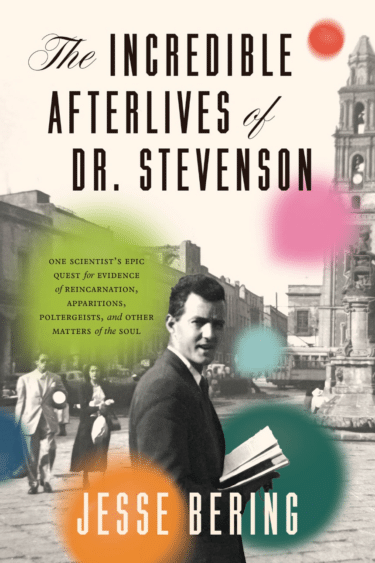
Stevenson’s extensive case studies of children who purportedly recall past lives have long occupied a central place in these discussions. In this context, Jesse Bering’s recent intellectual biography, The Incredible Afterlives of Dr. Stevenson, offers a timely exploration of Stevenson’s life, methods, and enduring influence.
Bering’s biography is, in addition, a highly engaging read, combining narrative flair with careful scholarship. He has long established himself as a serious and methodologically rigorous researcher, which makes him particularly well suited to tackle a figure as controversial as Stevenson.
Inevitably, Stevenson’s work invites dismissal from skeptics who regard his claims as quackery, and any sympathetic portrayal risks being met with suspicion. Yet Bering is no credulous admirer; precisely because he is not a fool, he is able to give Stevenson his due without abandoning critical judgment. While he stops short of endorsing Stevenson’s conclusions, he clearly comes to respect the scope and seriousness of his investigations. As Bering himself reflects,
After getting lost in the heady weeds of Ian’s many fantastical investigations, and often completely entranced by his scientific worldview, I still can’t say that I now believe in reincarnation… Yet I can say that the convictions I held so tightly at the start, that the idea of life after death is ‘no more than’ a cognitive illusion, got jostled loose a bit somewhere along the way on this journey with Ian.
For all its strengths, however, I find Bering’s treatment somewhat too charitable. Stevenson did make genuine efforts to confront the endemic problems of fraud and weak methodology in parapsychology, but he remained, in important respects, a rather naive investigator. He endorsed figures such as Sai Baba, now widely regarded as a fraud, and at one point lent support to the reincarnation claims of Edward Ryall – another dubious case he later withdrew. These are not trivial lapses, and it is notable that Bering does not address them.
Even if Stevenson could be sharply critical at times – famously remarking that there are so few competent parapsychologists that they could all fit in a phone booth – his discernment appears uneven. As Bering himself observes, Stevenson’s early intellectual environment was steeped in Theosophy, and “Ian’s musings were coloured by his early exposure to Theosophy and his mother’s influence.” Even granting his lifelong efforts at objectivity, it is difficult to rule out the possibility that these formative influences subtly shaped both his interests and his conclusions.
Bering further enriches his narrative by interweaving many of the cases Stevenson himself investigated. The typical pattern is by now familiar: a young child reports memories of a previous life, and at least some of these details appear to correspond to a deceased individual. As Bering recounts, Stevenson initially held J. B. Rhine’s experimental parapsychology in high regard, but grew disillusioned when tighter controls failed to yield robust results. He consequently shifted his focus to spontaneous cases, arguing that scientific observations need not always be repeatable to be valid. In Bering’s portrayal, Stevenson frequently laments what he sees as the dogmatism of the scientific establishment, insisting that the absence of a full explanatory framework does not justify dismissing a phenomenon outright.
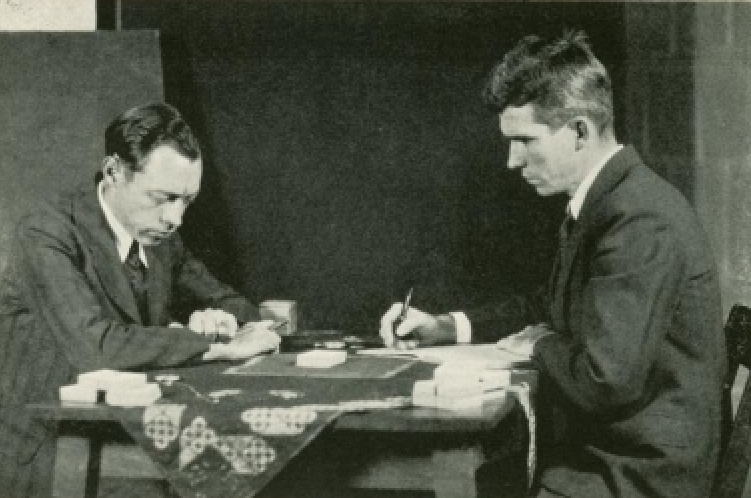
That point is reasonable as far as it goes, but it comes with an important caveat: when a claim is not repeatable, the evidential bar must be set especially high. As Carl Sagan famously put it, extraordinary claims require extraordinary evidence. The difficulty with Stevenson’s work is that the evidence, while sometimes intriguing, remains consistently modest. It resembles what the Belgian skeptic Etienne Vermeersch described as the “Lourdes effect”: effects that are suggestive but never decisive – at Lourdes there are no amputated limbs growing back, only ambiguous improvements in cases of healings. Likewise, Stevenson’s cases never quite rise to the level of a knockout demonstration; there is almost always some residual space for fraud, error, or misinterpretation, even if he took steps to minimise such possibilities.
Here David Hume’s classic insight is instructive: when confronted with an extraordinary report, the rational task is to weigh whether it is more likely that the testimony is flawed or that a deeply entrenched regularity of the natural world has been overturned. This does not mean we should dogmatically exclude reincarnation; intellectual seriousness requires remaining open, at least in principle, to its possibility. But to warrant overturning so much of what we take ourselves to know about mind and nature, the evidence would have to be overwhelmingly strong, and Stevenson’s cases – interesting though they sometimes are – fall noticeably short of that demanding standard.
In any case, even if Stevenson had managed to produce a genuinely decisive, beyond-doubt case, this would still fall short of establishing reincarnation. At that point, we would run into a deeper philosophical problem: personal identity. Bering largely sidesteps this issue, but it is central to the analysis I develop in my own book. Derek Parfit famously suggested that we might begin to take reincarnation more seriously if, for example, a contemporary Japanese woman were to present detailed and verifiable memories of being an ancient Celtic warrior – complete with accurate knowledge of the location of a long-buried treasure that she could not plausibly have acquired by ordinary means. Even in such a striking case, however, the question would remain: in what sense would she be that warrior?
Philosopher Bernard Williams pressed this problem forcefully with his discussion of Guy Fawkes. Suppose someone produces highly accurate memories of being Fawkes; we might be tempted to accept the claim. But if another individual were to present equally compelling memories of the same life, they cannot both be Guy Fawkes – and this strongly suggests that neither is. Memory, therefore, cannot be sufficient to ground personal identity.
Parfit himself was prepared to conclude that strict identity may not ultimately matter, but this sits uneasily with the motivations of most reincarnation enthusiasts, for whom the appeal of the doctrine lies precisely in the promise of personal survival. Without a coherent account of identity, even the strongest imaginable empirical case would leave the central claim of reincarnation philosophically unresolved.
This, in turn, raises a broader question: does the fact that Stevenson ultimately came up short mean that his life’s work was a complete waste of time? Bering cites Harold Lief’s famous remark that “either he is making a colossal mistake, or he will be known as the Galileo of the 20th century,” but suggests that the truth lies somewhere in between – and on this point, I largely agree. Stevenson did not prove what he set out to prove, yet he did attempt to tackle an extraordinary claim with greater methodological care than many of his predecessors, and for that he deserves a measure of respect.
The more difficult question is whether the pursuit itself should continue. A significant portion of Bering’s narrative recounts Stevenson’s persistent efforts to secure funding, including his close relationship with Chester Carlson, the inventor of Xerox, who became the principal patron of his research and supported it with millions of dollars. This naturally invites a practical and ethical question: should we continue to devote substantial resources to such inquiries? My own inclination is that it may be time to call it quits. Stevenson gave the problem a serious and sustained effort, and the results remain inconclusive at best.
The same could be said, more broadly, of parapsychology as a whole. Figures such as Rhine and Stevenson need not be dismissed as cranks; they were, in many respects, earnest and intellectually serious investigators. But if decades of increasingly careful work have failed to yield compelling evidence, it is reasonable to conclude that this particular chapter of inquiry has run its course – and that limited research funds would be better allocated to more promising and empirically tractable areas of study.