
Denialism is no stranger to health policy: President George W. Bush’s climate-change denialism; US Congressman Dan Burton’s vaccine-autism hysteria; Indiana governor and vice president Mike Pence’s denial of evidence-based HIV prevention; U.K. member of Parliament Andrew Bridgen’s anti-COVID-vaccine misinformation; and, of course, former South African president Thabo Mbeki’s AIDS denialism. Any state-sponsored denialism is egregious. To this list we can add perhaps the most wide-ranging denialist, Robert F. Kennedy, Jr. as US Secretary of Health and Human Services (HHS).
Kennedy is a broad-spectrum denialist. While most policymakers champion one form of denialism, he embraces them all – from vaccines causing autism, to HIV not causing AIDS. He rebukes experts, rejects peer review, changes data to suit his beliefs, and has his own facts. He is skeptical of germ theory and suspicious of pharmaceutical companies. This is not denialism about one disease or crisis. Denialism appears to have become his worldview.
And yet, on February 13, 2025, the US Senate confirmed Kennedy as Health Secretary, placing him in charge of the nation’s principal health agencies and giving him substantial influence over US and global health.
RFK, Jr.’s time at HHS gives us an unfortunate opportunity to see what happens when such expansive denialism acquires power to make policy. Kennedy’s actions display the familiar hallmarks of denialism: cherry-picking research, pushing back the goalposts, conspiratorial thinking, distrusting scientific experts, and following bad science. The table below traces just a sample of his policy actions across several areas of public health. They are too plentiful to explore in a single article. Instead, I will focus on vaccine policy – Kennedy’s preoccupation, and one of the most consequential parts of his agenda.
Cherry-picking
Denialists select research findings that confirm what they already believe and ignore those that do not. Throughout his Senate confirmation hearings, Kennedy cherry-picked research on vaccine safety, false associations between vaccines and autism, racial differences in immunology, and more. A particularly colorful example came when he touted a study by Anthony Mawson that purported to show a link between vaccination and autism among 47,000 nine-year-olds in Florida’s Medicaid system. Kennedy insisted, “I just want to follow the science.” But even the cherries he picks can be rotten. The study he chose was widely criticized for major methodological problems, and Mawson had previously coauthored vaccine research articles that were retracted. Meanwhile, Kennedy ignored the mountains of research that fails to find any link between vaccines and autism.
As HHS Secretary, RFK, Jr. again cherry-picked research to justify restricting mRNA vaccines. In May 2025, HHS removed routine COVID-19 vaccination recommendations for healthy children and pregnant women. The department later terminated or scaled back 22 federal mRNA vaccine-development investments. Announcing that decision, Kennedy stated:
We reviewed the science, listened to the experts, and acted. BARDA (Biomedical Advanced Research and Development Authority) is terminating 22 mRNA vaccine development investments because the data show these vaccines fail to protect effectively against upper respiratory infections like COVID and flu. We’re shifting that funding toward safer, broader vaccine platforms that remain effective even as viruses mutate.
So, what were “the data” behind this sweeping decision? Follow the link in the HHS announcement and you arrive at Zenodo, an online research repository, and an unpublished document titled “COVID-19 Vaccine Harms Research Collection” (DOI: 10.5281/zenodo.15787612). Its origins are revealing. The collection grew out of the authors’ contributions to TOXIC SHOT: Facing the Dangers of the COVID Vaccines, a book with a foreword by Senator Ron Johnson, himself a vaccine denialist. The bibliography is curated for reports of vaccine injuries, while omitting reputable reviews and meta-analyses of mRNA-vaccine safety published in credible scientific journals.
Pushing back the goalposts
As Tara Smith and Steven Novella explained in their classic 2007 article, “HIV Denial in the Internet Era”, pushing back the goalposts means changing the threshold of evidence required to accept a theory. Kennedy has repeatedly changed what counts as evidence of vaccine harm, at times treating the mere occurrence of an adverse event as proof that a vaccine caused it.
Consider the vaccine preservative thimerosal. In 2005, Kennedy was convinced that the mercury in thimerosal was linked to autism. When evidence failed to support that claim, he expanded it to include an array of developmental disorders, including attention-deficit/hyperactivity disorder (ADHD). He continues to disregard evidence showing that thimerosal is not linked to autism, ADHD, or other developmental disorders. This broader conception of potential harm was reflected in CDC/ACIP’s subsequent recommendation that influenza vaccines contain no thimerosal, a decision that could complicate vaccine supply and delivery.
Conspiracy thinking
During his January 2025 confirmation hearings, Senator Tim Kaine asked Kennedy, “As a general matter, do you find it hard to tell what is a conspiracy theory, and what isn’t? Is that kind of a general deficit that you find in your own analytical abilities?” Kennedy answered, “My father told me, when I was 13 years old, he said, ‘People in authority lie, and that the job of a citizen, in every democracy … is to maintain a fear, or a skepticism.'”
The exchange may reveal something important about Kennedy’s psyche, but that is a subject for another discussion. What matters here is that his conspiracy thinking has shaped his vaccine policies – and, indeed, policies far beyond vaccines. Kennedy rejected amendments to the World Health Organization’s International Health Regulations, citing concerns about medical surveillance, censorship, and national sovereignty, even though the amendments did not give WHO authority to impose lockdowns or other health measures on member states.
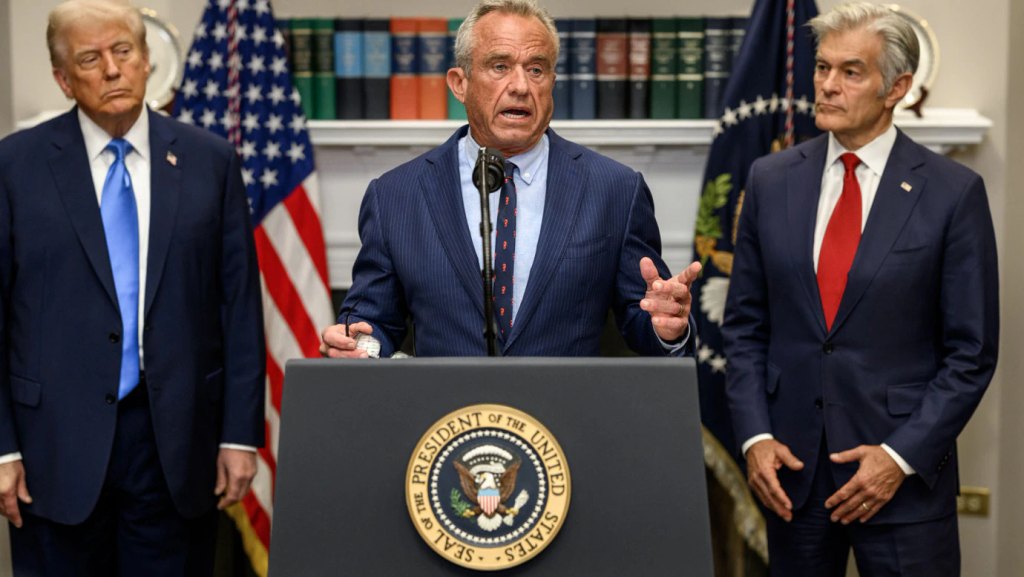
RFK, Jr. has also spent years spreading censorship conspiracies, where the ‘scientific orthodoxy’ suppresses the truth about everything from AIDS to zoonosis. He claims that the scientific establishment has suppressed the truth about vaccines and autism. At a September 22, 2025, White House autism event, he said that research on links between vaccines and autism had been “actively suppressed in the past”, and described parents who attributed their children’s autism to vaccination as having been ignored or manipulated by the medical establishment. When conspiracy thinking becomes a worldview, it infiltrates every decision.
Distrusting scientific experts
Denialists in positions of power notoriously assemble advisory panels to support decisions they have already made. Advisory panels vary enormously in their influence. Some merely advise; others effectively shape policy. The CDC’s Advisory Committee on Immunization Practices (ACIP) shapes policy. And the US Federal Advisory Committee Act (FACA) requires expertise on ACIP, mandating that the committee be “fairly balanced in terms of the points of view represented and the functions to be performed.” But RFK, Jr. had a different plan.
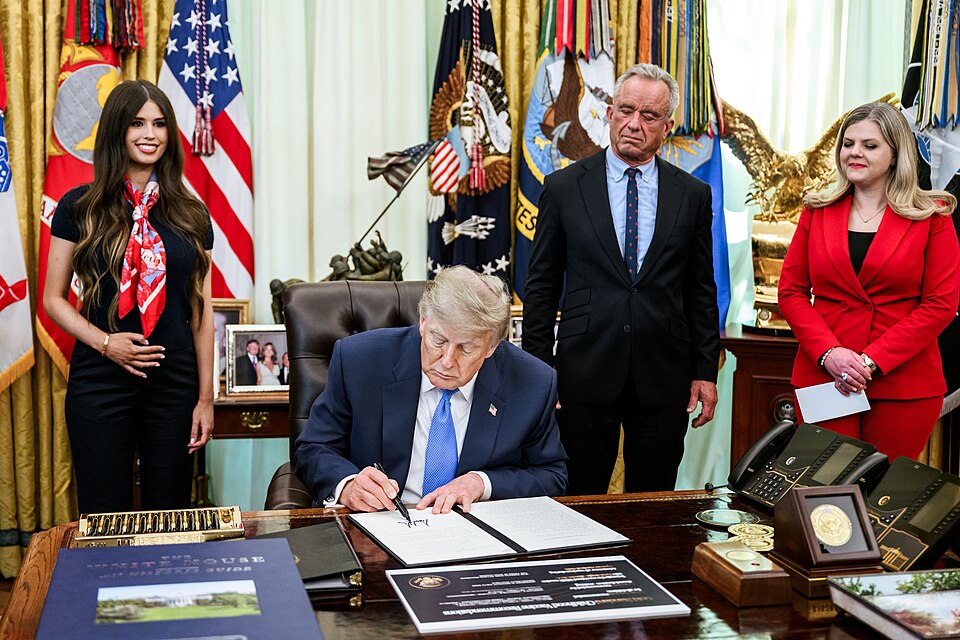
Among his first actions as HHS Secretary, Kennedy removed all 17 sitting ACIP members. He then appointed a smaller committee that included several prominent vaccine denialists, among them Vicky Pebsworth, a board member of the anti-vaccine National Vaccine Information Center. It was reasonable to expect that this ACIP under RFK, Jr. would chip away at vaccine requirements and recommendations. And chip away it did.
One example was ACIP’s decision to end the universal hepatitis B birth-dose recommendation for infants born to mothers who test negative for hepatitis B. The committee’s reconsideration relied in part on presentations from Cynthia Nevison on the burden of hepatitis B and Mark Blaxill on vaccine safety.
Nevison is an environmental scientist whose training is outside infectious disease, pediatrics, and vaccinology. She has advocated a vaccine-autism connection and has ties to the anti-vaccine group SafeMinds. Her presentation attributed declines in childhood hepatitis B to better screening and interventions other than vaccination, underplayed the risks of maternal transmission, and emphasized risks posed by US immigrants.
Blaxill, another vaccine denialist, exaggerated vaccine risks. Put Nevison’s diminished account of vaccine benefits beside Blaxill’s inflated account of vaccine risks, and Kennedy had the support he wanted for ending the universal recommendation.
The change drew harsh criticism from major medical organizations, including the American Medical Association, the American Academy of Pediatrics, and the Infectious Diseases Society of America. It has also been found to violate the FACA (see above), causing chaos in US vaccine policy.
Following bad science
In place of vaccines, Kennedy has promoted a host of alternatives: nutrition to strengthen immunity, vitamins and supplements to bolster resistance, sanitation and clean water to prevent illness, avoidance of environmental toxins, and natural or “herd” immunity. Some of these are sensible elements of general health or sanitation. None can substitute for vaccination. Treating them as vaccine alternatives mixes sound health advice with claims unsupported by evidence.
This bad science has found its way into HHS recommendations. Kennedy has promoted vitamin A and cod liver oil in discussions of measles. Vitamin A has an established role in supportive treatment for measles, whereas cod liver oil does not. But discussing either in the context of measles vaccination has sown confusion. In a Kaiser Family Foundation survey, 31 percent of parents believed that vitamin A could prevent measles. Against this backdrop, clinicians treating the Texas measles outbreak reported children who had received excessive vitamin A and developed signs of toxicity, including abnormal liver function.
Denialism is making health policy. Now what?
Kennedy’s time at HHS is a disaster in progress. Faced with so many threats from such a powerful authority, it is easy to become hopeless or complacent. History shows that denialism in public health policy eventually runs its course. It also shows how devastating the aftermath can be. An estimated 330,000 South Africans died, and 35,000 infants were needlessly infected with HIV, as a result of Thabo Mbeki’s AIDS denialism.
Denialism in South Africa was defeated by organized, nonviolent protest. Spearheaded by the Treatment Action Campaign, the movement drew on the methods of earlier activism, including the US Civil Rights Movement and AIDS activism. So far, there has been no comparable uprising against Kennedy’s health policies. His denialism presents a different challenge because it is not confined to one disease or one disputed intervention. It ranges across vaccines, infectious diseases, environmental health, medicines, nutrition, and the institutions that produce scientific knowledge.
The lesson from South Africa is not simply that denialism kills. It is that denialism is a mass killer when it is state sponsored. RFK, Jr.’s policies may eventually provoke a backlash as measles deaths mount, whooping-cough outbreaks continue, and foodborne disease persists. Or it may take the return of a vaccine-controlled disease such as polio, the next pandemic, or another impending threat.
With Kennedy, denialism has moved from challenging health policy to making it. The question now is how much damage he will do before evidence once again becomes the basis for health policy.
Denying AIDS: Conspiracy Theories and Pseudoscience in a Post-COVID World by Seth C. Kalichman is out now, published by Springer Nature.
References
- Kennedy RF. The real Anthony Fauci: Bill Gates, big pharma, and the global war on democracy and public health. Children’s health defense. Skyhorse Publishing; 2021.
- Mawson A, Binu J. Vaccination and neurodevelopmental disorders: a study of nine-year-old children enrolled in Medicaid. Sci Public Health Policy Law. 2025.
- Smith TC, Novella SP. HIV denial in the Internet era. PLoS Med. 2007Aug;4(8): e256.
- US Department of Health and Human Services. (2025). HHS Winds Down mRNA Vaccine Development Under BARDA. August 5, 2025.
- US Senate. Robert F. Kennedy, Jr. Confirmation hearings, 2025 – Day one; day two.
| Table. Tracing Key Actions to RFK, Jr.’s Denialism Across Public Health Domains | ||
| Public Health Domain | Denialistic Claim | Health Policy Action |
| Vaccine recommendations and policies | Kennedy has been a leading anti-vaccine advocate since 2005, when Rolling Stone published his article ‘Deadly Immunity.’ He has most often focused on thimerosal and other vaccine components, as well as the number of vaccines administered, as causes of an array of childhood disorders. | June 2025: Kennedy removed all 17 sitting members of the CDC Advisory Committee on Immunization Practices and replaced them with a smaller panel that included several prominent vaccine skeptics. |
| May 2025: Kennedy removed routine COVID-19-vaccine recommendations for healthy children and pregnant women. | ||
| August 2025: HHS terminated or reduced 22 mRNA vaccine-development investments. | ||
| December 2025: HHS stopped routinely recommending the hepatitis B vaccine at birth for babies whose mothers test negative for hepatitis B. | ||
| January 2026: CDC adopted a reorganized childhood immunization schedule that reduced the number of universally recommended vaccines. | ||
| July 2025: HHS recommended that children, pregnant women, and adults receive only influenza vaccines without thimerosal. | ||
| August 2025: HHS eliminated federal financial incentives connected with hospitals reporting staff vaccination rates. | ||
| September 2025: HHS instructed Vaccines for Children program participants to honor applicable state religious and conscience exemptions to childhood-vaccine mandates. | ||
| January-August 2025: During the US measles outbreak, Kennedy emphasized vitamin A and cod liver oil for treating measles. An HHS essay described vaccination as a personal decision and stressed sanitation and nutrition in the historical decline of measles. | ||
| June-July 2025: The United States demanded changes from the global vaccine alliance as a condition of continued support, including removal of thimerosal-containing vaccines and changes to COVID-vaccine policy. | ||
| July 2025: Kennedy and Secretary of State Marco Rubio formally rejected the 2024 amendments to the WHO International Health Regulations. | ||
| AIDS denialism | Poppers and other drug use – not HIV – caused the deaths of gay men in the 1980s. Kennedy devotes one-third of his book The Real Anthony Fauci to repeating and endorsing the universe of AIDS-denialist claims. | March-April 2025: Dr. Jay Bhattacharya was confirmed and took office as NIH Director. His stated HIV strategy has emphasized implementing existing prevention and treatment interventions, with less emphasis on NIH’s traditional discovery mission of developing new HIV-prevention technologies. HHS’s termination of mRNA vaccine-development projects also potentially diminished a technology under investigation for HIV vaccines. |
| Autism | Increase in autism is a true “epidemic”; environmental and medical exposures, especially vaccines, have not been adequately investigated because health authorities have dismissed or suppressed evidence implicating vaccines. | 2025–2026: HHS initiated a new investigation of vaccines and autism, bringing vaccine – autism activist and pseudoscientist David Geier to play a critical role in the effort; directed CDC to change its website to explicitly state that the prior conclusion “vaccines do not cause autism”, is not evidence-based and that studies supporting a link have been ignored by health authorities. |
| Psychiatric drugs / SSRIs | Psychiatric medications are substantially overused, and antidepressant SSRI medications are connected with mass shootings. | May 2026: HHS launched a psychiatric-deprescribing initiative, including clinician communications, Centers for Medicare & Medicaid Services (CMS) payment guidance for deprescribing, prescribing-trend reports, training, and development of formal clinical guidance. |
| Community water fluoridation | Fluoridation at customary levels causes neurodevelopmental injury. | April 2025: Kennedy announced plans to end CDC’s recommendation of community water fluoridation and joined EPA’s reconsideration of fluoride standards. He also encouraged state and local removal efforts. |
| Cellphone use | Cellphone and wireless radiation are important causes of cancer and other illness. | January 2026: FDA removed webpages stating that evidence had not linked cellphone use to health problems; HHS began a new electromagnetic-radiation health study. |
| Prenatal use of acetaminophen and folate | Prenatal acetaminophen and folate exposure lead to abnormalities, including autism. | September 2025: FDA issued a nationwide notice to physicians concerning acetaminophen use during pregnancy and initiated a process to change labeling to describe a possible link to autism. |
| Terrain theory / infectious-disease priorities | Pathogens of all types are less important in disease than nutrition, toxins, immune ‘terrain,’ and chronic-disease susceptibility. | August 2025-March 2026: HHS and NIH elevated nutrition and chronic-disease prevention in research and medical education while terminating or redirecting infectious-disease and pandemic-preparedness projects. |
| Food dyes, additives, and ultra-processed food | Food dyes and additives cause cancer and other chronic diseases, representing mass poisoning of children. | April-July 2025: FDA began an initiative to revoke or secure elimination of eight synthetic-dye authorizations; HHS pursued a federal definition of ultra-processed foods. |
| Pediatric gender dysphoria | Social and environmental factors like herbicides explain gender dysphoria, and gender-affirming medical care is broadly unsafe or ineffective. | December 2025: HHS issued a declaration against gender-affirming care, and CMS proposed restrictions on funding and on hospitals participating in Medicare and Medicaid. |
| WHO and international pandemic governance | WHO pandemic rules are mechanisms for forced lockdowns, censorship, and loss of US sovereignty. | July 2025: HHS and the State Department rejected the 2024 International Health Regulations amendments. The United States completed its withdrawal from WHO in January 2026. |