



There is, unfortunately, a maternity care crisis in the UK. According to a 2024 report from the Care Quality Commission or CQC – the regulator of the NHS – maternity services in England were so inadequate that cases of women receiving poor care and being harmed in childbirth are in danger of becoming “normalised”. Issues identified include staffing crises causing such delays in patients being seen that some just discharge themselves without receiving care, a lack of equipment, inadequate recordkeeping around incidents that have resulted in serious harm, and a reported lack of follow-up care for patients suffering after receiving poor treatment. As a result, the NHS launched an inquiry into 14 different NHS trusts for their poor maternal and neonatal care over the last 15 years.
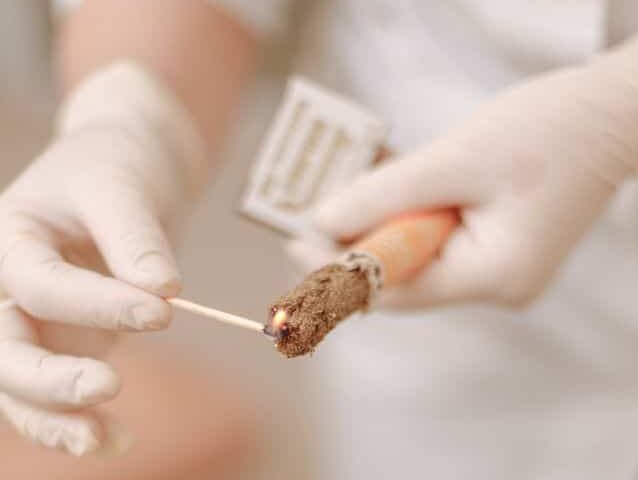
None of this should have come as a surprise, because journalists, campaigners and patients have been making this case for years – including Shaun Lintern at The Times and Sirin Kale at The Guardian, as well as campaigners like Catherine Roy. In 2022, The Times reported that patients were being offered water injections by the NHS to relieve pain during childbirth. Some midwives were even found to be performing moxibustion – the Traditional Chinese Medicine practice of burning herbs near to the skin – in order to try to encourage breech babies to turn in the womb.
The Daily Mail reported on acupuncture being used in maternity care, which according to patient leaflets written by staff at Chelsea and Westminster Hospital helps women ‘avoid epidurals’. Meanwhile, York and Scarborough Teaching Hospitals say aromatherapy can ‘promote’ vaginal delivery, while NHS Ayrshire and Arran tout its benefits for preventing the use of strong painkillers, such as opiates, and Nottingham hospitals have been using aromatherapy to treat infections, ‘hysteria’ and help prevent labour complications.
Among a sea of concerning headlines, these stood out. The idea that aromatherapy oils – whether inhaled or used as part of a massage – can have appreciable effects on pain, infection, or labour complications seems unlikely, given the absence of a clear mechanism of action. What could it be about the application of specific oils to the skin that might cause a breech baby to self-correct?
This is also an area in which I have a degree of experience, having been primarily responsible for the NHS reevaluating, and then stopping, the provision of homeopathy in (at the time) Clinical Commissioning Groups around the country. Keen to understand the role of aromatherapy on the NHS better, in 2023, I sent Freedom of Information requests to all NHS Trusts, asking to see their policy on the use of aromatherapy, whether they engage with an aromatherapy provider, how much they’ve spent on aromatherapy, how many patients had received this treatment, and for what conditions.
NHS Aromatherapy
In total, 41 NHS Trusts confirmed that they offer aromatherapy: 19 as part of palliative care for cancer patients, and 22 for use in maternity care. It is hard to take issue with its use in palliative care – as long as nobody is claiming aromatherapy can cure or treat cancer, and as long as it is not relied on for symptom relief where proven medical treatments exist, there is little downside to offering people aromatherapy if it brings them comfort. However, the same cannot be said of maternity care, where aromatherapy appeared to be used in order to delay or avoid other medical interventions.
What’s more, official guidance to the NHS from the National Institute for Health and Care Excellence (NICE) states that midwives and medical professionals should not
offer or advise aromatherapy, yoga or acupressure for pain relief during the latent first stage of labour. If a woman wants to use any of these techniques, support her choice.
Officially, midwives can only administer aromatherapy if the patient explicitly asks for it – and as such, it is not routinely commissioned by any NHS Trust. This perhaps explains why, overall, Trusts were unclear how much they spent on aromatherapy: one Trust told me they spent £30k per year, while others spent mere hundreds of pounds on essential oils to administer – and for some trusts, those oils were provided by a charity or by patients themselves. However, the majority of the 19 Trusts confirmed that they either employ an aromatherapy practitioner to train midwives, or fund aromatherapy courses for midwives as part of their Continual Professional Development credits.
This CPD training appears to be key, because while NICE guidance is clear that aromatherapy should not be offered, and can only be provided if patients if they specifically request it, in practice it’s easy to see how much wiggle room that leaves in privacy of the treatment room for well-meaning midwives who have been trained to see aromatherapy as a valid solution.
Disturbingly, very few Trusts were able to confirm how many patients had been given aromatherapy for complications during labour. One Trust had clear figures – 51 in 2021, and 49 in 2022. However, another Trust could only estimate that the figures were in the “20-30 patients per month” region. Other than that, Trust after Trust responded that they do not hold such information, with some offering that it may be in individual patient notes, if anywhere.
It is hard to imagine this being true for any other kind of medical intervention given at a hospital. One would imagine that hospitals keep track of how many patients received an epidural, and Trusts would be expected to keep records on how many patients were given codeine or penicillin, because they are medicines and as such they have effects and side-effects. Yet aromatherapy was being administered like it was a treatment in the majority of these 19 Trusts, but it was not treated like it was a medicine.
Aromatherapy… for what?
So far, we have learned that in NHS Trusts, an unknown number of patients are being given aromatherapy during labour, by an unknown number of midwives, at an unknown cost. But for what symptoms? Here, at least, we have at least some indication – because while none of the Trusts were able to quantify how many patients were given aromatherapy for each indication, they did at least share their aromatherapy policies, the contents of which were eye-opening.
NHS Blackpool, for example, told me that they use clary sage to “enhance uterine action”, and for pain relief. The same Trust uses jasmine for anxiety… and to “enhance uterine action”, and for pain relief. Lavendar is “calming”, and is used for pain relief – as is chamomile, with the added benefit of treating anxiety. Frakincense, similarly, is noted for its ability to treat anxiety and pain, but was also officially listed by NHS Blackpool as “uplifting”. According to this policy, maternity patients in Blackpool had five different essential oil options for pain relief – none of which would actually relieve pain.
NHS Doncaster and Bassetlaw had a wider selection of oils, including bergamot, black pepper, chamomile, clary sage, frankincense, jasmine, lavender, mandarin, peppermint and tea tree. As well as the usual pain relief (three oils) and anxiety (five oils), midwives were told they could treat coughs and colds with frankincense and tea tree, combat panic and fear with chamomile and frankincense, soothe trauma and shock with tea tree, heal wounds with lavender, treat thrush with tea tree, combat stretch marks with chamomile and lavender, and manage a retained placenta with clary sage and jasmine. If seeing the list makes you angry, fret not – according to NHS Doncaster and Bassetlaw’s aromatherapy guidelines, midwives could treat that anger with an inhalation of chamomile.
Meanwhile, NHS Frimley can give patients ylang ylang to balance the emotional upheaval of labour and impending parenthood, while using lavender to enhance uterine action, and clary sage and jasmine to induce labour. NHS Homerton can administer frankincense to alleviate depression, while treating infected sutures with lavender. NHS University Hospitals Leicester lists bergamot as an ‘anticoagulant’ and ‘anti-spasmodic’. NHS Morecambe Bay lists clary sage as an ‘anticonvulsant’.

NHS Northern Care Alliance lists five different aromatherapy options for use as an antiseptic to inhibit the growth of bacteria, with lavendar as a disinfectant, mandarin a “tonic for the liver”, and clary sage is noted for its aphrodisiac qualities – something Morecambe Bay also noted.
The cost of pseudoscience
This kind of pseudoscience has consequences. In 2015, NHS Morecambe Bay’s maternity department was the subject of its own special investigation, the Kirkup report, due to its serious failures over the previous decade. Currently, Nottingham University Hospitals is subject to a special inquiry, after a spate of deaths of newborn babies or their mothers. That inquiry has confirmed there are 62 cases currently under review from the hospital. Not all of those are to do with the provision of aromatherapy, but it does form at least part of the picture.
Unfortunately, these cases are far less rare than they ought to be. In March 2021, Rana Abdelkarim died at Gloucestershire Royal Hospital in March 2021 after her midwives failed to spot a bleed post-birth. In May 2020, at the same hospital, Larua Harvey’s baby Margot died of a hypoxic brain injury, which would have been avoidable had she been seen by a doctor. The hospital Trust admitted that the observations noted during labour should have led to a referral to the obstetric team, rather than being left to midwives.
At the time, Gloucestershire had stillbirth and newborn death rates more than 5% above the average for similar units. Reading the Fitness to Practise report following two deaths at the unit, it’s clear that women who were experiencing distress during labour would request to see a doctor, but that request would often be denied. In one witness statement, a patient…
described how she asked to be transferred to Gloucester obstetric ward multiple times during labour when she was in [her midwife’s] care. She stated that her requests were at 11:00, midday and 13:00.
…When she had asked at around 11:00, [her midwife] said she wanted to try some oils. [the patient] stated that [her midwife] did not ask if this was ok.
When [the patient] asked at midday because she was “struggling so much”, [her midwife] said she had heard [the patient], but wanted her to try one more position. [the patient] stated that when she had asked at 13:00, [her midwife] told another midwife in the room at that point to call an ambulance but by that time it was too late as labour was progressing.
An ambulance was called at 13:08, but the delay to treatment meant that the baby did not survive. Had the midwife not wasted two hours with massage and aromatherapy, and actually listened to the needs of her patient, perhaps the baby could have survived. It’s not the only preventable death that midwife oversaw, and she has subsequently been struck off – but the issue is clearly larger than the mistakes of individuals.
This all represents serious failings within the NHS, and there are serious questions to answer as to why the levels of care have been so poor. Some of the reasons are depressingly predictable: women’s pain is not afforded adequate importance, and therefore it goes untreated and unheard. This is even more the case for women of colour, where studies show even trained medical professionals routinely make assumptions that people of colour have a higher pain tolerance. One inquiry found that a quarter of patients experienced race discrimination during their care between July 2021 and March 2025, including being denied pain relief even when they saw white patients nearby being given gas and air at the first time of asking.
Beyond misogyny and racism, there is the question of why aromatherapy seems to be so accepted, and the answer can be found in the policy document from NHS Stockport. It cites a study that claims aromatherapy “offered the women another choice and this empowerment had allowed them to cope”, and that “aromatherapy influenced women’s perception of pain and reduced the uptake of epidurals and opiates”. The same study noted that aromatherapy facilitates “normality in childbirth”.

What is a ‘Normal Birth’?
The idea of normality in childbirth, often referred to as “natural birth”, is exceptionally pervasive on the NHS. It is based in the belief that the best kind of birth is one with minimal medical intervention – which means no caesarean section, no epidural, and no medication. NHS Gloucestershire – the site of those various avoidable tragedies – explicitly outlines in their aromatherapy policy document that the aim of essential oils during labour is “to promote normality in childbirth”. It then highlights that another benefit of essential oils is that they are “cost effective in reducing obstetric intervention”. In other words, it is cheaper to have a midwife apply some oils first, than for a doctor to be called in to see the patient.
This is a major scandal, and aromatherapy’s contribution is just one part of a bigger and more complex picture, but it is evidently indicative of those bigger failings. Across the 19 Trusts, ten different essential oils were listed for their painkilling properties.
Consider how many of the oils were listed for their painkilling properties: bergamot, black pepper, chamomile, clary sage, cypress, frankincense, geranium, grapefruit, jasmine, lavender, mandarin, neroli, orange, peppermint, rose, and spearmint. Perhaps it is genuinely the case that such a wide array of flavours and smells have incredible painkilling properties when specifically administered during labour – or, more likely, it is an illustration of women’s pain being ignored. Why let the patient see that doctor and get that injection she keeps asking for? After all, haven’t women been giving birth for forever – naturally – long before painkillers were around? Shouldn’t women just grit their teeth and suffer? That’s natural birth, that’s normality.
In those cases where patients in labour are fobbed off with ineffective analgesics, the best-case scenario is that women suffer with pain they do not need to experience, that does them absolutely no good.
However, then consider some of the other indications listed – for treating anxiety (nine oils), depression (eight), fear (eight), and panic (two). These are policies that set a formal permission structure for ignoring the feelings and concerns of women in labour. It is, effectively, NHS-licensed gaslighting. It’s all in her head – maybe try her on some orange to enhance her mood, some frankincense for “emotional healing”, and some peppermint for “self confidence”.
I’m sure that labour, even when everything is going very well, involves rather a lot of anxiety and fear and panic, and perhaps in those best-case scenarios reassurance might genuinely be all that’s required. But then there are times when the anxiety and panic reported by women in labour is justified, because something is actually and seriously wrong. In those cases, to delay obstetric intervention while you try one more position and one more aromatherapy massage can be the difference between a near miss, and a tragedy.
It is ironic that so much of this is presented to patients in the language of choice, and individuality, and empowerment. Because while it might smell sweet with its notes of clary sage and lavender, at the core of it is still just the old medical misogyny of bite your tongue and grit your teeth, women, because doctor knows what’s best for you, and after all, we’ve got our budget to think about.