




In the aftermath of the death of Jason Arday, there has been considerable reporting on the network of white supremacists who support the views of the people who, apparently motivated by racial animus, made a spectacle of claims that Arday had improperly used or plagiarised others’ work in his dissertation. Some of that reporting comes from the editor of this publication, even.
Given that the members of these networks variously describe themselves as “race realists” and “race scientists”, it may be worth considering the history of race science, which is a topic that I have had the misfortune to study.
There is no scientific basis for race in humans
First, it is important to recognise that there is no such thing as “race science” within the scientific canon. In the study of the animal kingdom, the most widely used authority over taxonomy is the International Commission on Zoological Nomenclature, whose taxonomic code does not define race at all. The American Anthropological Association’s project Understanding Race asserts that racial categorisation does not explain human genetic variation, or as I sometimes put it, knowing an individual’s complete genome does not reliably predict that person’s race.
Nevertheless, ever since the modern concept of race was invented in the European middle ages, the idea of racial hierarchy – which is after all the purpose of the racial construct – has been used as a justification for genocide, slavery, and other forms of oppression. It has also been taken up by scientists, particularly those whose work benefits from the power structures that are built upon a belief in racial hierarchy.
Regular readers of this publication may have noticed the recent republication of a 1993 piece on Sir Francis Galton, with an update emphasising his role in coining the term eugenics, and popularising the concept in the scientific community of the late 19th and early 20th centuries. But race science long predates eugenics per se.
When Linnaeus added Homo sapiens to his taxonomy in the 10th edition of Systema Naturae (1758), he divided humankind into four subspecies: europaeus, asiaticus, americanus, and afer, complete with the (sadly still-familiar) colour associations of white, yellow, red, and black, respectively. Modern taxonomy is largely driven by genetic similarities and differences, and while there are clear genetic markers that can identify relationships at both the individual and population level, marking associations within family groups and ethnic groups, there are no genetic markers that track with racial groups anything like what Linnaeus described, nor anything like what modern “race scientists” or “race realists” describe.
The role of race science in the 20th century
Following Galton’s popularisation of eugenics as both a term and a field of study, organisations sprang up to bring together academics, researchers, civil servants, and various people with social and economic influence around the propagation of race science.
In London, the Eugenics Education Society was founded in 1907 by the daughter of an Admiral of the Royal Navy, and by 1910 the Society was pushing for legislation that would detain paupers in workhouses, and arguing that impoverished people should not be allowed to have children, for fear that they would pass on their degeneracy to the next generation.
Around the same time, beginning in 1902, a zoology professor at the University of Chicago named Charles Davenport secured funding from the Carnegie Institute to found the Eugenics Record Office in Cold Spring Harbor, New York. Davenport was later a co-founder alongside cell biologist Henry H. Laughlin of the Eugenics Research Association and the American Association for the Advancement of Science, another pro-eugenics organisation. These three groups, all headed by Davenport and Laughlin, coordinated both research and policy efforts with the Eugenics Education Society in London, forming a network of race scientists that will be all too familiar to anyone who has followed the reporting of current events.
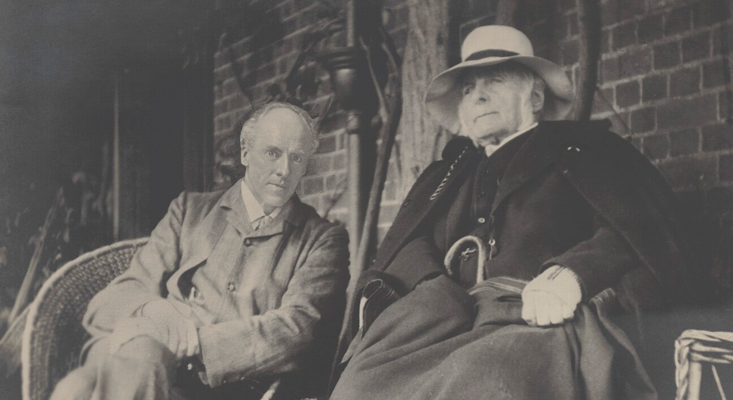
The research that these organisations supported was not only in the fields of biology and genetics, and a considerable part of the advancement in statistics during the early 20th century was conducted, according to the researchers themselves, in order to provide scientific tools that would demonstrate racial hierarchy and white supremacy.
Karl Pearson founded the first ever university statistics department at UCL (University College London), and was an avowed eugenicist. His successor to the Galton endowed chair was the statistician Ronald Fisher, who also edited the journal Annals of Eugenics and a member of the Eugenics Society, which was the same organisation originally founded as the Eugenics Education Society in 1907. Lewis Terman, the creator of the first IQ test, was a member of the American Eugenics Society and the Eugenics Research Association.
These explicitly racist networks also recruited high-status members to advance a political agenda that would lead to laws forcing sterilisation of people deemed to be of inferior genetic stock in Canada, the United States, Sweden, Denmark, and Germany. While the victims of compulsory sterilisation included people of many races, they vastly were disproportionately people who were in racialised minority groups.
In Canada, the last eugenic sterilisation laws were finally repealed in 1973. Sweden repealed its law in 1976, and Denmark in 1967, though Denmark’s government continued the involuntarily implantation of intrauterine devices in Inuit women and girls in Greenland through the 1990s (and continues to separate Inuit parents from their children). In the United States, some states still have eugenic sterilisation laws on the books, and while the last court-ordered forced sterilisation appears to have been in 1974, non-consensual sterilisation of incarcerated women and girls has continued in the United States into the 21st century.
What reality are race realists talking about?
It’s nearly 150 years since Francis Galton coined the term eugenics, though, as we have now seen, the concept of race science is certainly older than that. For some five or six decades thereafter, eugenics was considered mainstream science, with active research programs in both genetics and statistics being supported by wide networks of eugenicists.
That all changed with the revelation of the shocking horrors of the Holocaust: the endgame of eugenics is genocide, and the widespread revulsion that came from that recognition pushed hard at the pendulum of social acceptance and mainstream ideology.
Still, even in the aftermath of the Holocaust, eugenics was not eradicated: forced sterilisations continue to this day and, even as I write this, we find ourselves reckoning with a new generation of ideologues who pretend that their racism is scientifically supportable.
Knowing that eugenics is a tarnished brand, they call themselves “race realists”. But, from a scientific point of view, race in humans is a purely social construct, with no grounding in the genetic analysis that we currently use to classify taxonomic groups. Perhaps that’s why they’ve retreated from calling themselves “race scientists.”
The reality is, race and racism are pervasive, persistent social constructs, which serve to oppress racially minoritised groups. There is no biological explanation to support disparate racial outcomes, and yet racial hierarchies do exist, and that injustice is exactly the reality that race realists wish to maintain.