

The public debate over AI is quickly becoming fertile ground for new conspiracy theories. It’s starting to acquire some of the same conspiratorial features that distorted public discussion during the Covid-19 pandemic and contributed to resistance to public health measures. This is concerning, because decisions about how such a consequential technology should be developed and governed require careful argument and reliable evidence, not unfalsifiable claims about hidden motives. And the time to act is now, before conspiratorial beliefs take hold, become entrenched, and are harder to combat.
To understand why conspiracy theories keep happening, and why AI is starting to attract them, it helps to first define what they are and why people believe in them.
A conspiracy theory is anything that explains an event or set of circumstances as the product of a secret plot by powerful actors pursuing malevolent ends. Conspiracy theories are not inherently false, and organisations really do coordinate in secret, conceal damaging information, and mislead the public. But conspiratorial beliefs become problematic when allegations of secret coordination and ill intent become the only explanation for events, especially when contrary evidence is dismissed or reinterpreted as further proof of the plot.
Suspicion that AI companies are withholding information or acting in self-serving ways are reasonable concerns. But the belief that they are deliberately developing AI to eliminate jobs so that citizens become economically dependent on universal basic income goes much further. It turns a legitimate concern about job displacement into evidence of a coordinated plot that is the sole explanation for why AI is being developed.
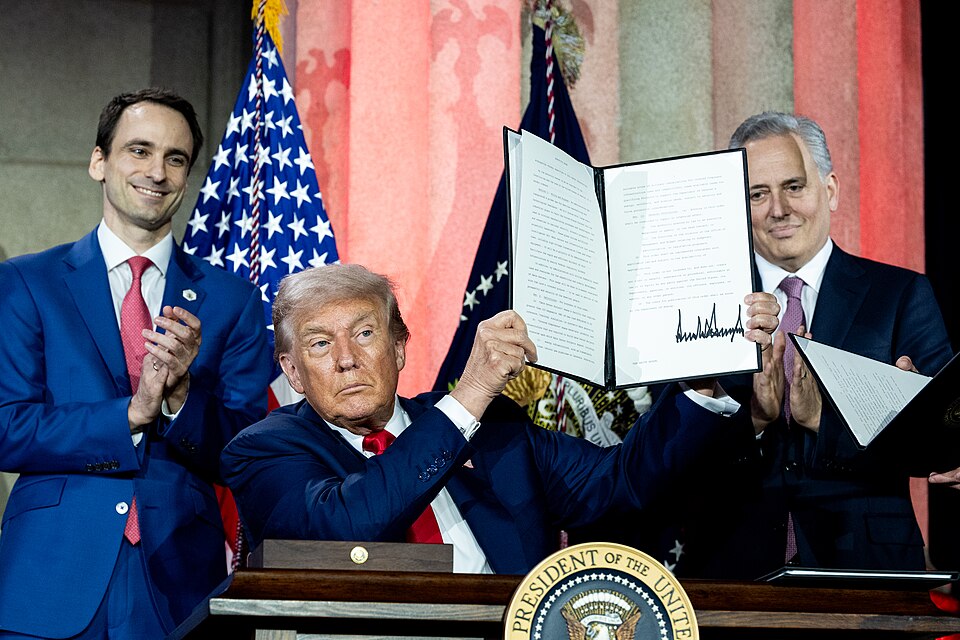
Conspiratorial rhetoric can also be used to dismiss serious questions. Donald Trump recently called warnings about rogue AI a “hoax”, and described efforts to restrict AI and data centers as a “sick conspiracy” that would benefit China. Rather than engage with the debate around AI risks and restrictions, he treated it as part of a hidden effort to help a foreign adversary, without offering evidence that such a plot exists.
As to why people believe in them, individuals adopt conspiracy theories because they satisfy certain universal psychological needs: the desire to make sense of uncertainty, the need to feel secure and in control, and the wish to feel a sense of belonging and connection to others. These are not the only influences on conspiratorial thinking, but they help explain why certain subjects become especially susceptible to conspiracy narratives. Notably, AI tends to activate all three of these needs.
Starting with uncertainty, as a new and rapidly changing technology, some uncertainty about AI’s effects is unavoidable. No one can say with certainty how quickly its capabilities will advance, which occupations it will transform or eradicate, or what its broader impacts on society will be. Even the people building the most advanced AI systems disagree sharply about what comes next. Recent warnings about catastrophic risks heighten uncertainty, as do acknowledgments from developers that even they cannot always explain how AI systems work or predict how they will behave. In other words, it can be difficult to know what is happening with AI now, much less what will happen next.
Such a high level of uncertainty, especially for a technology that is already beginning to change society, can make the conviction and apparent clarity offered by conspiracy theories more appealing. A conspiracy theory replaces a complex and confusing situation with a comprehensible story that has a clear cause. By attributing events to actors with discernible motives, conspiracy theories appear to explain both what has happened and what is likely to happen next. Even when that story has a bad outcome, the sense of knowing how things will unfold is often more comfortable than sitting with the uncertainty – uncertainty like how AI will impact our world, and affect us personally.
At the same time that AI is creating uncertainty, it is also undermining personal control: the feeling that you have agency and the ability to make choices in your own life. AI challenges that sense of control in a variety of ways. Fear of losing a job to AI has been present since the technology entered widespread use, compounded by the number of executives citing it as a reason for layoffs. In addition, we are increasingly encountering AI in the workplace, with some employers mandating and tracking AI use. Consumers struggling to resolve problems are also finding themselves dealing with AI systems, sometimes with little ability to reach an actual human. This lack of control is starting to show up in people’s attitudes about AI. A 2025 Pew Research Center survey found that 57 percent of Americans said they had little or no control over whether AI was used in their lives, and 61 percent wanted more control.
The relationship between losing a sense of personal control and conspiracy beliefs is well established in research. When people lack personal control, they compensate by looking for evidence that the world is at least controlled by someone. For some, this can take the form of increased belief in an interventionist god or support for more government control. For others, conspiracy theories offer a darker version of this by suggesting that sinister powerful people are controlling outcomes. When our own lives feel out of control, we prefer such conspiratorial explanations to the possibility that events are random, and no one is in charge. If someone is causing the problem, then at least that person or group can be identified and perhaps resisted, leaving open the possibility that control can eventually be regained.
Finally, disagreements about AI and how it should be used are beginning to divide people along existing social and organisational lines. Recent surveys find substantial differences in attitudes by age, gender, race and ethnicity, and political affiliation. Workplace surveys also reveal large gaps between executives and frontline workers in their beliefs about AI.

These differences do not automatically produce conflict. But when attitudes toward AI become tied to group identity, people may grow more distrustful of outsiders and more reliant on members of their own group. Conspiracy theories thrive in that environment because they strengthen belonging by casting one’s own group as virtuous and outsiders as naive or threatening. As groups become more insular, conspiracy beliefs receive less outside scrutiny and more reinforcement from fellow members.
The trouble with conspiracy theories is that, like psychological junk food, they can briefly satisfy these needs without actually meeting them. They impose certainty on uncertainty, but that certainty requires constant repair when events do not unfold as predicted. Putting hidden actors in charge of events does not actually give believers greater control over their own lives. And group solidarity built around an enemy also depends on keeping that enemy threatening. The result is that people end up returning again and again to conspiracy theories for another temporary sense of certainty, control, or belonging that ultimately leaves the deeper needs unfulfilled.
This is why prevention deserves at least as much attention as correction. Research on prebunking, or preemptive debunking, shows that preparing people to recognise misleading arguments before encountering them can reduce their susceptibility. And it has the advantage of intervening before a false claim has become entangled with identity and belonging. That’s why the time to start countering AI conspiracy theories is now, before they spread and take hold more widely.
For skeptics, the challenge is to oppose unsupported claims without becoming an unpaid public relations arm for the institutions being criticised. AI companies have commercial incentives, make mistakes, and prioritise their own interests ahead of the public’s. The key is to scrutinise these companies without treating every allegation of a hidden plan as credible. Skeptics can explain how conspiracy narratives work while also pressing for greater transparency, meaningful control over whether and how AI enters people’s lives, and debate that does not treat positions on AI as tests of partisan loyalty.
AI has not yet become the next great magnet for conspiracy theories. But uncertainty about its future, diminished personal control, and emerging partisan conflict are creating unusually favorable conditions. If those conditions persist, debate could quickly move away from evidence about AI’s actual risks and benefits. It could instead become a fight over which hidden enemy is really in control.
References
- How Americans’ opinions and use of AI differ by age | Pew Research Center
- The gender gap in AI in the US | Pew Research Center
- Racial and ethnic differences in how US adults use and view AI | Pew Research Center
- Democrats are now more worried than Republicans about AI and its impact on jobs | Pew Research Center
- AI in Americans’ lives: Awareness, experiences and attitudes
- AI at Work: What People Are Saying | BCG
- Leaders Assume Employees Are Excited About AI. They’re Wrong.
- Public Opinion on Artificial Intelligence Varies Widely by Age, Gender, Race, and Frequency of Use