
For the past few years Indian social media and the internet as a whole has been filled with advertisements for ‘Astrotalk’, an astrology app that claims to make accurate predictions of marriage dates and employment status of troubled individuals using as little information as the name of a person and their birthdate. The best part? The first prediction is always free, and successive predictions are as inexpensive as 50 cents per minute for phone calls, and as little as a dollar for a 10-minute texting session with the astrologers.
Fortune-tellers may not be capable of predicting accurate future outcomes at the best of times, but even the 15,000 Astrologers on the Indian astrology app ‘Astrotalk’ would not have expected that this unlikely start-up would become a billion-dollar valuation company.
The man, the myths and the maths behind astrotalk
The story begins with Mr Puneet Gupta, a young IT entrepreneur from India. Puneet was originally – and ironically – a skeptic. Being an IT professional, an engineer and a well-educated youngster, astrology seemed like an unconvincing idea. Yet he met with an astrologer who prophesied the downfall of his then entrepreneurial project. Eventually, Puneet’s startup failed miserably and his belief in astrology, fortune-telling, numerology and other such practices was initialised.
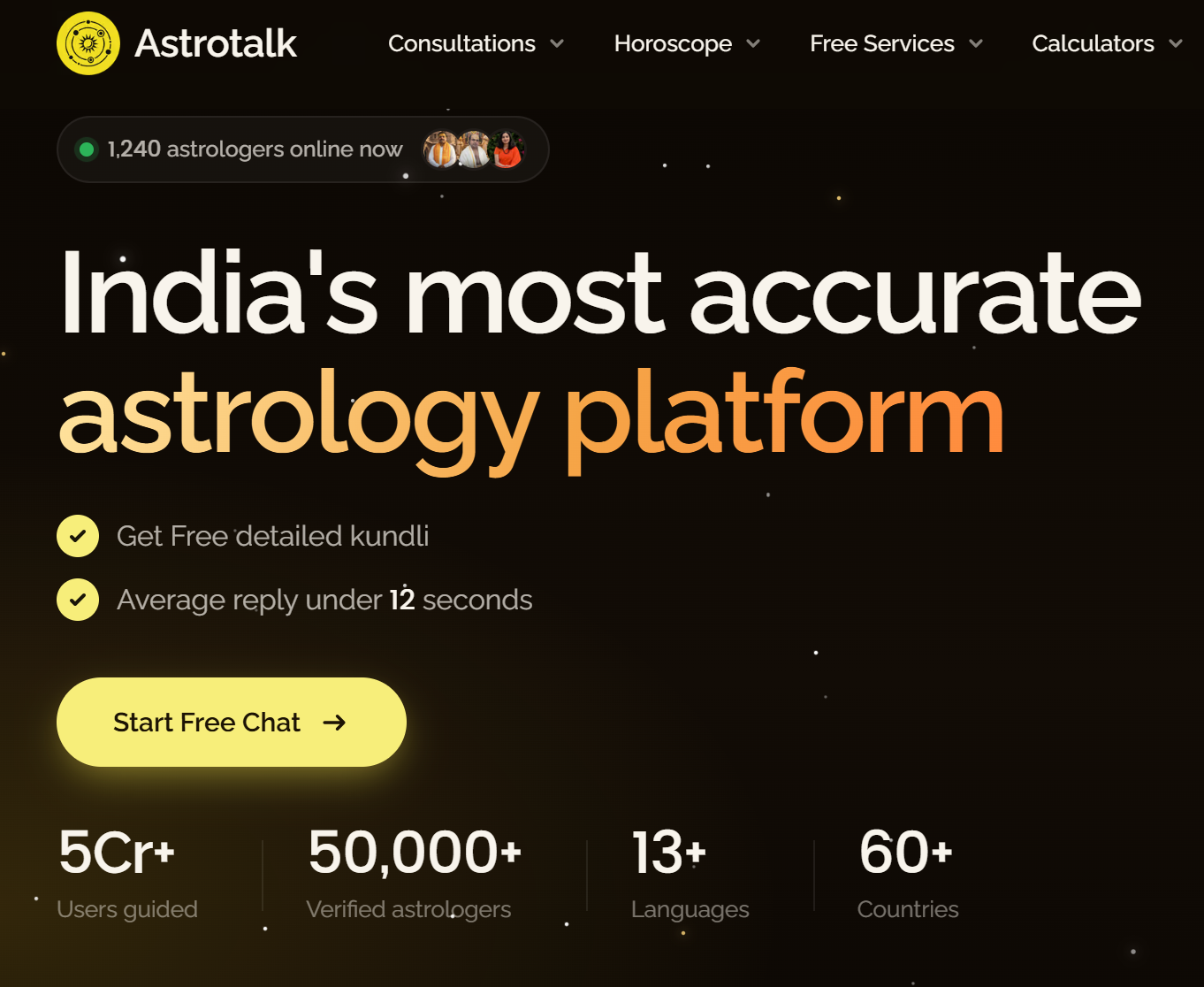
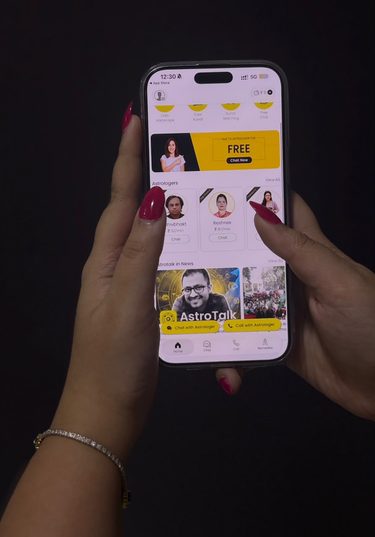
This led him to set out on the path of bringing people like himself across India and beyond closer to astrology. He started ‘Astrotalk’, an all-purpose application and website for all things astrology, which has become a billion-dollar company since its inception in 2017. The application connects people from their mobile phones to over 15,000 ‘certified’ astrologers, providing numerological calculators, marriage advice, employment predictors, daily astrology blogs, horoscope readings, and much more.
Astrotalk’s current operating revenue is around $115 million. The company also turned a profit of almost $29 million in the financial year 2025, and has raised $34 million in investments. It currently employs around 100 people, and claims to connect 50,000 ‘verified’ astrologers to customers in 60+ countries across the globe.
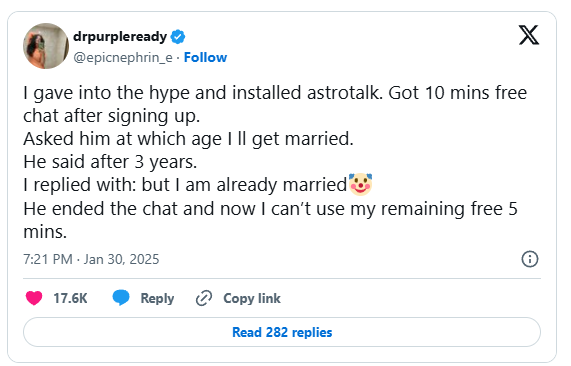
At this point even you might start to believe in the possible magic of the app. Unless, you read about one user who exposed the company’s façade. She asked an astrologer on the app when she could expect to get married and the astrologer gave her a sound answer, “after three years”. Except, the woman was already married.
Subsequently, many online have been trolling the app for its unscientific claims. Memes ridiculing Astrotalk are common – yet its number of users continues to rise. Astrotalk is one among many who have capitalised on the vulnerabilities of those who need therapy or maybe even a friend to talk to.
The masala for its success
The youngsters of our times, especially from developing countries like India, are vulnerable, anxious, lonely and unemployed. They have issues with their love lives and marriages, their mortgage, and their employment prospects. Many are suffering from mental health struggles, and even clinical depression. Mental health taboo is still very prevalent in Indian society and psychological help is expensive.
Meanwhile, Indian religious history and cultural context has a rich background of astrological literature, folklore, mythological stories, customs and traditions – so much so that people hire astrologers, tantrics and yogis for company and product-launch rites, house-warming dates, illness relief measures, new car colour choices and a bizarre array of other purposes.
Practically, Puneet has moved a very pervasive offline service online, making it more accessible to the generation that may otherwise have been the least likely to be its victim. Religion, culture, history, tradition, mythology, mental health crises, loneliness, anxiety, fear, helplessness and now even technology are the harbingers of this billion-dollar superstition.
But what’s the problem?
In my previous article for The Skeptic, I outlined how minor superstitious beliefs snowball into a series of ideas that can lead to horrendous crimes. In this case, coincidental accuracy of astrological predictions can re-affirm people’s trust in the supernatural. Rationality is a rarity here in India, and movements promoting scientific temperament are rare and miniscule. Apps such as Astrotalk are denting the efforts of the scientific education provided to the masses.
A believer of astrological predictions is more likely to also believe in supernatural solutions to real-world problems. In India, this immediately further enforces their trust on Godmen who have been embroiled in prostitution scandals, sexual abuse allegations, assault convictions and murder charges.
Moreover, since astrology apps are so accessible and inexpensive compared to therapy, vulnerable victims of superstition who are already suffering from a variety of life issues could conveniently reject therapy, medicine and maybe even socialisation as possible solutions to their worldly problems.
As the world debates data centres, semiconductors, and artificial intelligence technology, India’s obsession with unscientific ideas such as astrology only creates greater obstacles for a more evidence and rationality centric society – even as The Indian Constitution embodies the idea of scientific temperament as one of the fundamental duties of the citizens. While I personally do not recommend a governmental ban or regulation of these applications, holding them accountable for wrong predictions would be a good start.
If the citizens will continue to rely on palm reading for finding solutions to their problems, they probably would not trust their hands in shaping their own future.