
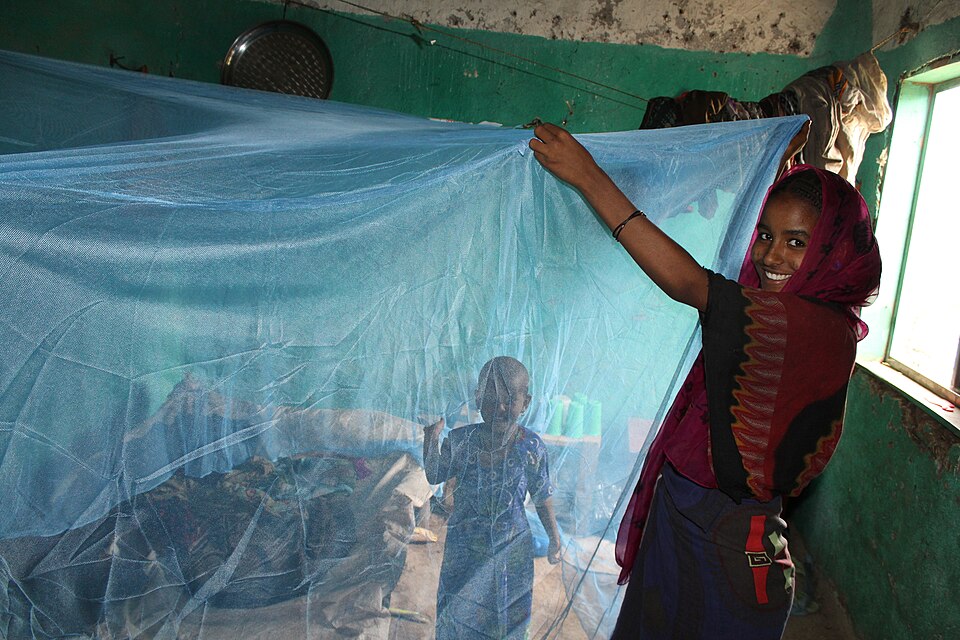
Despite decades of coordinated global efforts, malaria is still a massive health crisis. Initiatives championed by the effective altruism movement have made undeniable progress by handing out hundreds of millions of insecticide-treated bed nets, which significantly drive down local transmission. But bed nets are ultimately a defensive measure – a continuous battle of attrition rather than a permanent fix. Malaria still kills over 600,000 people every year, mostly children under five in sub-Saharan Africa, showing us that incremental control measures hit a hard ceiling as mosquitoes adapt and build resistance to insecticides. Stopping this disease once and for all might take a much bolder move: targeting the source directly and driving Anopheles gambiae – the main mosquito species behind the parasite’s spread – to extinction.
Thanks to breakthroughs in genetic engineering, this once-futuristic idea is now completely doable using CRISPR-based gene drives. By introducing a self-spreading genetic tweak – like one that renders females infertile – into a small group of wild Anopheles gambiae, the gene drive ensures the trait gets passed to nearly 100% of offspring instead of the usual 50%. In just a few generations, the local population collapses as widespread infertility takes over. While wiping out an entire species naturally raises red flags about messing with nature, many ecologists point out that Anopheles gambiae wouldn’t leave a gaping hole in the ecosystem. Unlike crucial pollinators like bees, or aquatic insects that feed entire food chains, this particular mosquito mostly just bites humans and spreads disease. Without any evidence that its disappearance would trigger an ecological collapse, wiping out Anopheles gambiae looks like a rare, clear-cut win for humanity.
But what about the mosquito? Don’t their interests count? If we are increasingly worried about cows in slaughterhouses and animal welfare as a whole, shouldn’t we also extend some degree of moral consideration to insects? Where do we draw the line?
At the end of the day, it seems that moral worth is fundamentally tied to consciousness – the capacity for subjective experience and the ability to feel pain or pleasure. As the philosopher Daniel Dennett famously explained, consciousness isn’t an all-or-nothing, binary light switch. Instead, it exists on a gradual evolutionary continuum. Dennett argued that human consciousness is a complex “user illusion” built from millions of tiny, unconscious sub-routines and neural processes working in tandem. Because these underlying cognitive building blocks evolved slowly over time, different organisms possess varying degrees of functional awareness rather than a simple conscious-or-unconscious divide. A mosquito obviously isn’t on the same level as a human or a chimpanzee, but it isn’t a static rock either. It sits somewhere further down that spectrum, which leaves open the possibility that some rudimentary level of subjective experience is actually there.
Recent empirical research increasingly supports the idea that insect minds are far more dynamic than mere reflexive automatons. Studies on insect neurobiology and behaviour show that many species exhibit key hallmarks of sentience, including attention control, flexible decision-making, and trade-offs between competing drives. For instance, fruit flies and bumblebees display pessimistic cognitive biases when stressed, actively engage in play behaviours, and demonstrate motivational trade-offs – such as enduring a painful heat stimulus to access high-value food. Insects also possess endogenous opioid systems and alter their behaviour when administered analgesics, suggesting that noxious stimuli are processed as an unpleasant subjective state rather than just a mechanical reflex. If Anopheles gambiae possesses even a faint flicker of this experiential reality, deliberately engineering its biological demise forces us into a profound moral dilemma: we are actively choosing to weigh the unquestionable human right to health against the potential interests of billions of conscious, living creatures.
At first glance, genetic suppression seems far more humane than traditional vector control. Spreading chemical pesticides causes millions of mosquitoes to die agonizing deaths from neurotoxicity, whereas introducing gene drives simply renders future generations infertile. In this view, we aren’t torturing or killing existing mosquitoes; we are merely preventing potential ones from ever coming into existence. And if a creature never exists, it cannot experience suffering, deprivation, or harm. You must actually exist to be harmed. From a strictly harm-based perspective, preventing a life before it begins seems entirely victimless.
However, philosopher Derek Parfit rejected this harm-based reasoning through his famous “Non-Identity Problem.” Parfit pointed out that if we rely strictly on whether a specific individual is “harmed,” we end up with absurd, unacceptable conclusions – such as believing we have no moral obligations to future human generations. After all, our choices today determine which exact people are born tomorrow; even if we deplete natural resources and wreck the climate, those future individuals wouldn’t exist under any other circumstances. Because they cannot claim they would have been better off never being born, a strict harm-based framework implies we haven’t harmed them – a conclusion Parfit insisted is profoundly wrong.
Parfit argued that an act can be morally wrong even if no identifiable individual is harmed. What ultimately matters from an impersonal moral standpoint is not just avoiding harm to existing beings, but maximizing the total amount of good and overall well-being in the universe. If insects possess even a low level of positive conscious experience – enjoying basic drives, feeding, and living out their natural lives – then wiping out an entire population eliminates a vast reservoir of potential future consciousness. By permanently extinguishing millions of future generations, gene drives prevent vast amounts of net positive existence from ever occurring. In Parfitian terms, even if no single mosquito is harmed, we may still be bringing about a morally worse world by diminishing the overall light of conscious life.
Extinguishing malaria mosquitoes forces us into a stark ethical trade-off. By eliminating Anopheles gambiae, we would save approximately 600,000 human lives every year – averting immense agony, grief, and lost potential across generations. On the other side of the ledger, a crude biological estimate places the number of Anopheles gambiae born annually in the hundreds of trillions. To arrive at the ratio, we simply divide an estimated annual birth count of 300 trillion mosquitoes by 600,000 human lives saved. That maths leaves us with roughly 500,000,000 mosquitoes for every single human life.
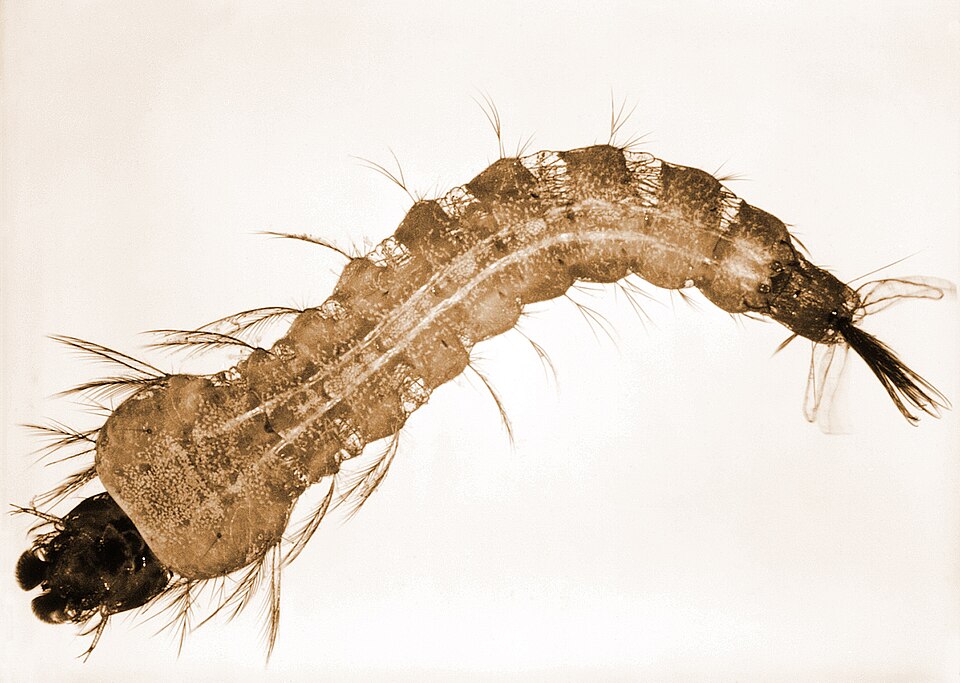
This leads directly to the core ethical question: when we sum up those tiny, faint fragments of mosquito consciousness across 500,000,000 individuals, does their aggregate moral worth outweigh the rich, highly conscious experience of a single human being? This dilemma closely mirrors Derek Parfit’s famous “Repugnant Conclusion” in population ethics. Parfit demonstrated that under total utilitarianism – where the goal is simply to maximise the absolute sum of well-being – a world populated by a vast number of people with lives barely worth living is morally superior to a world with a smaller population enjoying extremely high standards of living, simply because the sheer volume of mild positive experience yields a larger numerical total.
Philosopher Jeff Sebo extends this exact logic to animal and insect ethics, coining the clever term the “Rebugnant Conclusion.” If Anopheles gambiae mosquitoes possess even a microscopic degree of sentience, then an astronomical number of mosquitoes living out basic biological lives could theoretically accumulate a total quantity of conscious experience that dwarfs the well-being of 600,000 humans. If we accept the totalist view, saving human lives at the expense of trillions of insects might paradoxically result in a net loss of global wellbeing.
To bypass this paradox, one might be tempted to swap total utilitarianism for average utilitarianism – maximizing the average wellbeing per conscious entity rather than the sheer sum total. At first glance, this neatly sidesteps the “Rebugnant Conclusion,” since adding billions of mosquitoes with barely positive lives would drastically drag down the global average, instantly favouring human survival. However, average utilitarianism introduces equally bizarre, if not worse, moral absurdities. For instance, it implies that bringing a new human into the world with a wonderfully happy, highly fulfilling life would actually be morally wrong if their wellbeing happened to be slightly below the extraordinarily high average of an existing population. Even more disturbingly, under average utilitarianism, one could theoretically increase global wellbeing not by improving lives, but by simply eliminating large populations of individuals whose happiness falls below the current average – a terrifying outcome that shows shifting from total to average utility merely exchanges one ethical nightmare for another.
So, am I prepared to bite the bullet and accept that a huge number of mosquitoes can morally surpass one human being? Not quite. My own view leans heavily toward the idea of special obligations. Today, we are frequently warned that “speciesism” – favouring our own species over others – is a moral failing akin to prejudice. But I posit that speciesism is not like racism. Human races are morally arbitrary distinctions within a single species, whereas the boundaries between biological species mark profound differences in cognitive architecture, capacity for suffering, and lived experience. Preferring our own kind is not about claiming intrinsic superiority over the rest of the animal kingdom; rather, it acknowledges that we have legitimate, special obligations to those who share our common humanity and social world.
Crucially, however, endorsing special obligations does not give us blanket permission to disregard non-human interests in every situation. Here, we can look to Frances Kamm’s philosophy, which addresses the issue of “irrelevant utilities.” When we face a direct conflict between life and life – such as choosing between saving a large number of non-human animals or one human being – it is morally justifiable to prioritise the human life based on our special human obligations and the qualitatively deeper magnitude of human loss. But Kamm points out that small, trivial benefits or minor harms become morally irrelevant when weighed against a claim as severe as loss of life; you cannot aggregate infinite minor headaches to outweigh a single death. Flipping that principle to the insect debate, if the choice comes down to sacrificing the lives of millions (or trillions) of conscious insects merely to secure a marginal human comfort or minor convenience, Kamm’s framework suggests that those minor human utilities cannot simply override the loss of life. We are no longer comparing life with life, but rather small convenience with life itself.
There are ultimately strong, compelling reasons to favour the prospect of mosquito extinction: at its core, eradicating Anopheles gambiae is an act of human self-defence. The mosquito inflicts devastating harm upon us, and malaria remains one of the most destructive plagues in human history. We are morally entitled to protect our species and defend human lives from a deadly vector. Yet, grappling with the sheer numbers involved ought to give us pause, serving as a sobering reminder that massive aggregation can complicate even our most justified ethical choices.
Interestingly, Jeff Sebo extends this exact logic beyond biology to artificial intelligence. Synthetic systems and digital agents may not possess human-like sentience today, but they could conceivably develop – or already possess – a level of rudimentary awareness on par with that of an insect. In the aggregate, billions of constantly running computer programs, virtual characters, and digital entities might eventually accumulate a non-trivial volume of conscious experience. If that threshold is crossed, we may soon face a future where we can no longer casually delete, reset, or discard software without considering the moral weight of what we are turning off.
Just as our battle against the mosquito forces us to confront the hidden moral calculus of trillions of tiny biological minds, our growing digital world may demand that we tread carefully around the flickers of synthetic awareness we are now bringing into existence.