



This article originally appeared in The Skeptic, Volume 7, Issue 6, from 1993.
How can you tell who a message is from when you can’t see the sender? This is a critical problem for psychic investigators and computer engineers.
When you conduct business at an Automated Teller Machine (a hole-in-the-wall cash dispensing machine), how does the central bank know that the transactions are really from you and not from some hacker? When a message is produced by a psychic medium or ‘channeller’, how can we know that the message is really from dear departed Aunt Maggie? In both cases we want to know if the message is really from who it is supposed to be from, that is, ‘Is the message authentic?’
When an Automated Teller Machine (ATM) – which has a small computer in it – conducts a transaction, it exchanges information with another computer at the bank over a telephone line. Both the ATM and the bank computer must be sure that the information received is really from the other and not from some thief. The difficulty lies, of course, in the fact that neither can ‘see’ each other. They each only ‘see’ messages coming from a telephone line.
Obviously, steps must be taken to assure that the messages that come out of the wire are from the right party. In computer engineering, the telephone wire is called a ‘channel’ and the problem of assuring the source of the message is called ‘authenticating’ the source of a message. Variants of this type of authentication problem are encountered in many parts of computer systems.
One of the more commonly observed so-called ‘paranormal’ phenomena is psychic mediumship or, to use the more modern terminology, psychic channelling. A ‘medium’ or ‘channel’ is a person who can speak or write words that are said to come from some entity other than the channel – perhaps from the spirit of a dead person, an extra-terrestrial being, or a higher intelligence. (For more detailed discussions of ‘channelling’ and related phenomena from various points of view, see [1,2,3,4,12,15,18,19]).
If these messages are actually from such sources, they are (somehow) transmitted from the unseen source, through the speaker, to us, the receiver. The terms ‘medium’ and ‘channel’ are used as a deliberate (and appropriate) analogy to electronic communications. In both cases the receiver can only ‘see’ the ‘channel,’ while the actual source of the messages remains invisible. In each case, we must be cautious, and not dare take the identity of the source of the message for granted.
How to authenticate computer communications
Computer engineers have developed some interesting ideas about how to authenticate a message when it is transmitted between two computers. The problem is tricky because computers are very stupid and because it is easy for one computer to imitate another computer. One general solution is for the source and receiver to exchange secrets. The basic scheme is for the sender to tell the receiver ‘secret information’ which is known only to the two of them. If this can be done, the receiver knows precisely who the message is from.
Computers might do this in different ways, but the most popular method uses coded numerical ‘signatures.’ Mathematical encryption schemes are used to create these coded ‘signatures’ that are extremely difficult to guess or forge. The particular mathematical schemes to be used are selected on the basis of theories that attempt to define the difficulty of guessing or forging the signature, given various assumptions. In other words, this is a mathematical theory of ‘secretness’. These theories are intricate, elegant, and the details are not terribly relevant for the moment. The main thing is the ability to have ‘shared secrets’ that really are ‘secret’ and can be shared [7,5]. The second major requirement for authentication of computer communications is that there be some ultimate authority: someone, somewhere, sometime, must create the first ‘secret’, which is used to make all the other secrets. This first ‘secret’ must be believed implicitly, so the first authority must be extremely trustworthy! (In mathematics, it seems one is never far from God!) In the case of a computer system this role is performed by a special system, which is heavily monitored and guarded (by humans) at all times. The ‘trusted’ system is charged to give each party their own ‘private secret’, and can confirm the correct signature of the other parties.
Readers who have used an ATM will recognise these two key elements. Before you can conduct business you must provide a secret password or number to prove that you are really you. This password is your secret, which serves to authenticate messages from you to the bank. The password itself is given to you by someone at the bank, the source of ‘authority’. Both you and the bank must implicitly trust this initial password.

How to authenticate psychic communications
Can the principle of ‘shared secrets’ be applied to authenticate messages delivered by psychic ‘channels’? In fact, this is exactly what psychic investigators have attempted! To do this, the source, the ‘channelled entity’ must send some secret information known only to the source and the receiver. It is vital that the secret be something that could not reasonably be known or guessed by anyone else, especially the channel herself. This observation is interesting in the light of the history of mediumship and channelling; the evaluation of the validity of many claims has hinged on assertions about what the channel could or could not have known.
Some channelled messages appear to be communications from the spirits of the recently deceased to their still-living loved ones. These messages are often emotionally compelling, and sometimes seem to contain references to events that could only be known by the receiver and the deceased. Such a message would argue strongly for the authenticity of the source and of the message itself. Such a message could confirm the validity of channelling itself and possibly confirm life after death!
With such far-reaching implications, it is not surprising that cases of ‘authenticated’ messages from beyond the grave have been very critically evaluated and vigorously disputed. In particular, the supposedly ‘secret information’ in the psychic message must be examined to determine if it was actually secret or might have been obtained by the channel himself, perhaps through such mundane sources as family friends, servants, or personal letters.
Many people are convinced that the case for life-after-death and for communication from beyond the grave or from other non-human sources is already well established, or does not need to be established empirically at all. Even granting this position, a message from the dead, from a spirit, or from whatever non-human entity still needs to be authenticated because it might be faked, forged, or tampered with by entities other than the supposed source. Authentication is important to anyone who wants to take channelled messages seriously.
Applying the lessons learned from computer engineering, we could suggest that a good method of authentication would be to prearrange secret codes to be used after death.
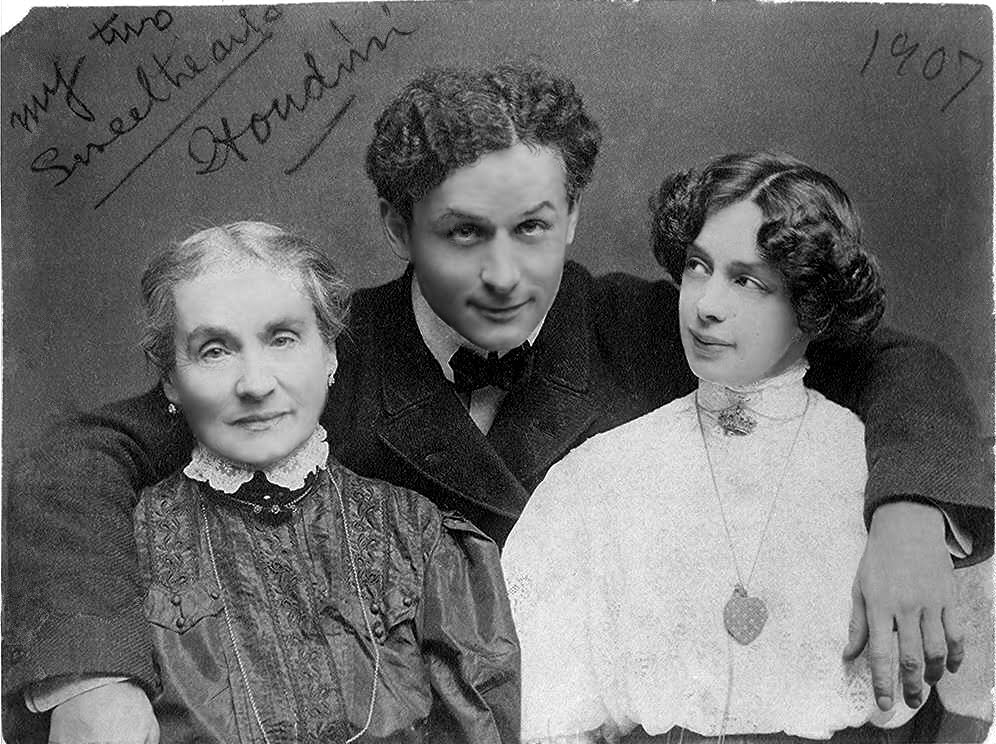
To be effective, the secret code would have to be hard to guess and known only to a select few. In fact, the secret should be unknown to both the ‘channel’ and the ‘receiver’, to avoid the possibility of the channeller ‘picking up’ the secret from the receiver through ‘cold reading’ [13]. In fact, just such a scheme was attempted by the great magician and spirit hunter, Harry Houdini. He left prearranged secret codes with his wife and secretly stored code words for Arthur Conan Doyle and others. The plan was that he would use these code words in any attempt to communicate with the living after his own death. This is a direct application of the principle of shared secrets discussed above. In the years since his death, many mediums have produced messages purporting to be from Harry Houdini, but in only one (hotly disputed) case have any codes been present. Thus, his preparations have, at least, prevented the acceptance of unauthentic messages, even if it has failed to produce conclusive proof of messages from Houdini himself. (The story of Harry Houdini and the controversy surrounding his posthumous message are discussed in [6,8,14,15,17].)
Other approaches to investigating psychic channels
The vast majority of cases of channelled messages are not candidates for ‘authentication’ by shared secrets, because that requires that the end parties know each other and prepare in advance to communicate. When the ‘channelled entity’ is a stranger, non-human, or even super-human, the necessary pre-arrangement is not possible. Other methods have been used to attempt to ‘authenticate’ psychic messages and their sources in these more difficult cases.
One possibility to consider is to ignore the question of the identity of the source altogether. Many psychic investigators take the view that the channelled message should be judged on its contents – on its artistic merit, as it were. If the message is valuable, beautiful, wise, or otherwise satisfying, what difference does it make where it came from [15]? This approach may be acceptable for psychic messages, but it has little to offer computer engineering. It does, however, resemble the design of many home and office personal computers, which seem to follow the rule ‘if it looks OK, do it’. This is certainly the cheap and easy way to deal with authentication. It also contributes to the easy propagation of computer viruses!
Another way to try to authenticate a message is to analyse its content. The goal is to find independent corroboration to establish the validity of the contents of the message, and by implication, its source [15]. This is not quite the same as authenticating the source. For example, a computerised thief might well be fully informed and perfectly willing to tell the truth about your bank account, but you still don’t want the bank to let him have all your money! In some particular cases, however, validating parts of the message might well serve to ‘authenticate’ its source: when the message contains information that could only be known to the purported source. This is actually an indirect form of the principle of shared secrets discussed above.
A channelled message contains two sorts of information, the manifest, or literal content of the words, and the latent or hidden content. The manifest content of the message may contain details of historic events or descriptions of distant places that are potentially subject to verification. In these cases, the strongest ‘authentication’ is provided by accurate portrayal of facts that could not be known by the channeller herself. Unfortunately, channelled messages often contain few, if any, such verifiable facts. And even when ‘checkable’ details are present, it is often difficult to show that they could not be known to lots of possible sources including, most especially, the channeller.
The latent or ‘hidden’ content of the message might also be used to corroborate it. In particular, the linguistic elements of the message (the accent, the grammar, the vocabulary, and so on) contain an unconscious ‘signature’ of its source, which may be studied by standard linguistic methods. In a classic study, Thomason [20] analysed channelled messages purporting to be from the spirits of people who lived in the past and are now dead. In the cases studied, the linguistic structures used were inconsistent with those one might expect of a person from the claimed time and place. In each case, however, the language was consistent with the knowledge and abilities of the channellers themselves. Linguistic analysis uncovers unconscious, ‘unforgeable’, linguistic ‘signatures’, which can help to authenticate (or not) a source. Thus, Thomason’s study is right on target.
Even more difficult cases
Authenticating messages from a departed loved-one is tricky, and it is even more difficult when the source is a stranger. More difficult still are messages said to be from non-human sources, from extra-terrestrials, higher intelligences, discarnate spirits, or animals. Is there any way to try to ‘authenticate’ such messages? Since we have no communication with or knowledge of these creatures except through psychic channels, it is very difficult to think of how we could establish a shared secret with them. Worse, if the message is really from some ‘higher intelligence,’ then it is difficult to see how we could ever hope to disconfirm her identity – she is surely way too smart for us and our silly tricks!
Lessons for computer engineering
Most computer engineers do not look to psychic investigators for help in designing computer systems. Indeed, this article has provided little of immediate practical value to the design of computer systems. Nevertheless, there are some potentially interesting lessons to be learned. The philosophical and practical difficulties encountered in attempting to authenticate messages said to be from non-human or super-human sources remind us of the limits of authentication theories. No mathematical scheme can protect a system from absolutely any possible subversion or accident. Engineers must always be aware of the assumptions and limits of the theories they use. Mathematical authentication schemes are based on many ‘reasonable’ assumptions including: the assumption that the ‘trusted’ system is trustworthy, the assumption that certain mathematical problems are so difficult as to be ‘impossible’, and the assumption that ‘secrets’ held in human and computer memory cannot be known unless it is deliberately communicated.
If spirits, extra-terrestrials, or higher intelligences are involved, then all these ‘reasonable’ assumptions go right out the window. Any ‘trusted’ system is vulnerable to invasion by non-material beings, ‘impossible’ problems may be solved easily by super-human intelligences, and ‘secrets’ might be plucked right from our brains by all knowing spirits! Indeed, if any of several forms of extra sensory perception are established to exist, it would likely be a disastrous blow to many areas of the theory of computation, but most especially to authentication theory.
I would suggest that, in the future, the problems of computer engineering will come to resemble the ambiguity and chaos encountered by psychic investigations. Computer systems will become even more numerous and complex, and they will become active agents, interacting with people, objects, and other computers according to what will be recognisable as their own personalities [9, 10,11, 16]. It will not be possible for a computer system to know in advance all the entities with which it will have to communicate. The simple formalisms of today’s authentication schemes, based as they are on pre-planned and limited mathematical problems, may very well prove to be inadequate for such a brave, new world. As these developments come to be, computer engineers will have opportunities to learn from perhaps unexpected fields of expertise: from sociology, from anthropology, from (abnormal?) psychology, and yes, perhaps even from parapsychology.
Lessons for psychic investigation
Most psychic investigators do not look to computer engineering for help in understanding psychic channelling. It is not clear that this article has provided much of immediately practical value for the study of channelling. Nevertheless, there may be some valuable lessons to be learned. First, of course, is the principle of ‘shared secrets.’ These work best if they are prepared in advance and can be shown to be ‘unknowable’ by others. Mathematical encryption schemes offer interesting possibilities for such mutual secrets. Perhaps psychic investigators should investigate the mathematical theories of one-way functions, ‘informationless’ proofs, and public key encryption [7].
The use of shared secrets requires the secret or the method of its generation be prepared in advance. Thus, all psychic investigators are encouraged to prepare secret codes to be used to authenticate messages after their death. For best results, the secret code should be known only to a few and stored in a secure place, such as a bank vault.
It might be noted that practically all the points made about channelling apply equally to telepathy (thought transference or ‘mind reading’) and almost as well to other proposed forms of ESP (astral travel during out of body experiences, distant viewing, or seeing the future). For this reason, I encourage investigators of paranormal phenomena to learn more about the formal theory of communication in general and about authentication and encryption schemes in particular.
References
- James E Alcock, ‘Channeling: Brief History and Contemporary Context’, Skeptical Inquirer, volume 13, number 4, 1989, pp380-384.
- Susan J Blackmore, Beyond the Body, Academy Chicago Press, Chicago, 1992.
- Erika Bourguignon, ‘World Distribution and Patterns of Possession States’, in Trance and Possession States, Raymond Prince, R M Bucke (ed.) Memorial Society, Montreal, 1968.
- Ruth Brandon, The Spiritualists, Weidenfeld and Nicholson, London, 1983.
- David Chaum, ‘Achieving Electronic Privacy’, Scientific American, Volume 266, Number 3, August 1992, pp 96-101.
- Milbourne Christopher, Houdini: The Untold Story. Thomas Y Crowell Company, New York, 1969.
- Dorothy Elizabeth Robling Denning, Cryptography and Data Security, Addison-Wesley, Reading, MA, 1983.
- Bernard M L Ernst and Hereward Carrington, Houdini and Conan Doyle: The Story of a Strange Friendship. Albert and Charles Boni, Inc, New York, 1932.
- William Gibson, Neuromancer, Ace, New York, 1984.
- William Gibson, Count Zero, Ace, New York, 1986.
- William Gibson, Mona Lisa Overdrive, Bantam, Toronto,1988.
- Ernest Hilgard, Divided Consciousness, John Wiley and Sons, New York, 1986.
- Ray Hyman, ‘”Cold Reading”‘: How to Convince Strangers That You Know All About Them,’ The Zetetic, Volume 1, 1977, pp 18-37. Reprinted in Ray Hyman, The Elusive Quarry, Prometheus, Buffalo, 1989.
- Harold Kellock, Houdini: His Life-Story from the Recollections and Documents of Beatrice Houdini, Harcourt, Brace and Company, New York, 1928.
- Jon Klimo, Channeling, St Martins Press, New York, 1987.
- Brenda Laurel, Computers as Theatre, Addison-Wesley, Reading MA, 1991.
- William V Rauscher and Alien Spraggett, The Spiritual Frontier, Doubleday and Company, Garden City, NY, 1975.
- Graham Reed, ‘The Psychology of Channeling’, Skeptical Inquirer, volume 13, number 4, 1989, pp 385-390.
- Ted Schultz, ‘Voices from Beyond: The Age Old Mystery of Channeling’ in The Fringes of Unreason: A Whole Earth Catalog, Ted Schultz (ed.), Harmony Books, New York, 1989.
- Sarah Grey Thomason, ‘“Entities” in the Linguistic Minefield’, Skeptical Inquirer, volume 13, number 4, 1989, pp 391-396.