

While skepticism obviously has a close relationship with science, it would be a mistake to see it as merely a subset of science – the skeptical toolset is pivotal to other academic disciplines, which are fundamentally skeptical in nature.
History, for example, is an undeniably skeptical discipline. How can we know what came before, when we weren’t there to witness it? All we have to go on is what evidence was left behind, and what accounts remain from those who came before us. A skeptical mindset is vital if we’re to identify the sources of potential bias and weigh the impacts of self-interest, superstition, myth making, and error, to get to as reasonable a version as possible of what happened in the past.
Skepticism, equally, is crucial in ensuring that we place adequate levels of confidence in our conclusions, and remain open to other evidence and better interpretations. Anyone telling you a simple story about what happened in the past is probably doing so to justify what they want to be happening in the present.
Equally, philosophy as a discipline is fundamentally skeptical, concerning itself with what we know, how we know it, and how we know that we can know how we know what we know.
A useful tool in philosophy is the thought experiment. A variant of this is, essentially, “What would the world be like if it was a lot like this, but with this particular change?” What would be the implications for ethics, morality, and how we should behave and treat each other, in a world where this change is true? And what does that tell us about the world we live in now? Or, more to the point, how do we know we aren’t already living in a world where an attribute has been changed?
A famous version of that latter thought experiment is Plato’s cave, the allegory outlined by his character of Sophocles in The Republic. In it, prisoners have been raised from birth inside a cave, chained up and facing a wall, so that they cannot even turn their heads to look around. Behind them, guards parade items in front of a fire, casting shadows on the wall for prisoners to see. The prisoners come to associate the names of the objects with the shadows on the wall, as they have never seen anything of life other than shadows on their wall. How are we to be sure that we aren’t also merely prisoners, gaze fixed on a wall, seeing representations of objects but never able to see the real world?
Descartes’ evil demon
Plato isn’t the only philosopher to offer thought experiments that allow us to question how we know our reality is real. René Descartes introduces the idea of a malevolent god or evil demon, who can create a perfect illusion of an external world – to the point where the sky, the air, the earth, colours, shapes, sounds and all external things are all part of the illusion. Descartes goes even further, asking in this world how he is to know that he even has hands, eyes, blood, or senses – when those could also just be part of the illusion. In a world where there is an evil god or demon, who can control your perceptions even to the point of making you accept that certain mathematical concepts are fundamental, how can you know that there is anything at all real?
That was the line of thinking that led to the most famous philosophical line ever uttered: cogito ergo sum, “I think therefore I am”. Decartes reasoned that whatever you think is true could just be part of that deception, so the contents of any thought, perception, sensation or experience can’t be distinguished from the fakery. However, the fact that you are experiencing a thought or perception at all means that at the bottom of it all, there has to be a ‘you’ there. The fact that you are able to think enough to question whether anything is real is evidence that there is a you to do that thinking in the first place.
The brain in a vat
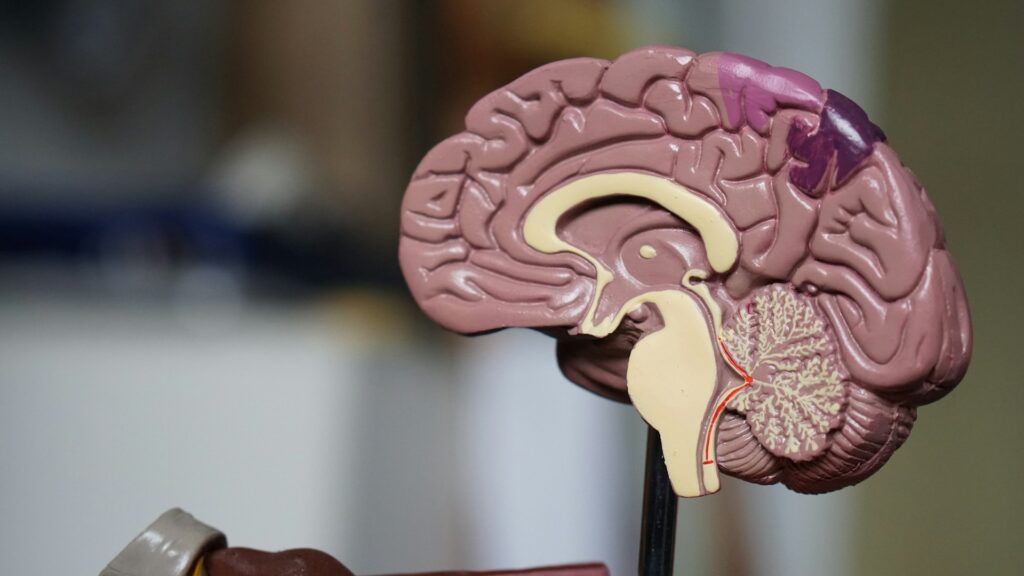
A few centuries later, we had a more modern incarnation of the same line of doubt – the brain-in-a-vat thought experiment, put forward by Gilbert Harman and adapted by Hilary Putnam. In it, a scientist removes someone’s brain and puts it into a vat of liquid that can keep it alive, and hooks it up to a computer than simulates all of reality by sending electrical impulses that perfectly mimic those a regular brain would receive. To the brain, how would it know the stimulation was fake rather than biological? And, by extension, how can any of us tell that we’re not just a brain in a jar being lightly but carefully electrocuted?
Putman himself thought the argument was essentially self-refuting: if you’re not a brain in a vat being stimulated by a machine, it’s false; but if you are a brain in a vat, then everything you have ever experienced, and everything you think your experiences have ever referenced, aren’t real – and so there are no machines and there are no vats and there are no brains. We’re back to Plato, and the shadows on the wall of the cave; if all you’ve ever seen are shadows of brains and shadows of vats and shadows of machines, the things you call a brain and a vat and a machine aren’t the things that actually exist, and you have no way of knowing what is casting those shadows. Whatever exists, you’ve never experienced, so can’t reference. “I am a brain in a jar” is either false or it is meaningless, because ‘brain’ and ‘jar’ are no longer meaningful terms.
This is an important point, because thought experiments are designed first of all to test logic and the limitations of inference – and as such they often fall down of their own accord. That’s partly what their purpose is. If we assume X, can we build a coherent and cohesive model of the world? If so, it has to be fully consistent in its coherence; if not, then we can at least dismiss that specific formulation of X.
These ideas obviously seem absurd, but they’re also things we come across more often than you might imagine, regardless of whether or not you’re in a jar, because they lend themselves so well to fiction. Films like The Matrix, Dark City, and Inception all play on the idea of being unable to tell whether the reality we experience is true reality or not – because it makes for a fun story to explore. But fiction, like thought experiments, isn’t intended to be taken as literal and truthful description of reality.
The simulation hypothesis
Unfortunately, these ideas have escaped from fiction and thought experiment and are increasingly treated as if they are serious attempts to describe the world in which we live. That has particularly taken off since 2003, starting with Swedish philosopher Nick Bostrom, who popularised the simulation hypothesis.
According Bostrom, given that computing power and availability is always expanding, we could hypothesise that a society in the future might be keen to make use of the computing to create a perfect simulation of how people used to live in the past. With a sophisticated enough computer – which will eventually inevitably exist – you could even make those simulations so complex that the people created within them have consciousness. After all, consciousness is not a function of souls or spirits, and we aren’t imbued with consciousness by god, we assume it arises out of the firing of electrical signals through the meat that is our brains, and thus there should be no clear reason why a sufficiently advanced computer simulation couldn’t also imbue its creations with consciousness.
Given that, Bostrom has laid out a scenario where future civilisations can use technology to create a computer simulation of the universe, filled with people who think they’re real. So… how can we be sure that’s not true? He concludes:
It is then possible to argue that, if this were the case, we would be rational to think that we are likely among the simulated minds rather than among the original biological ones.
Bostrom further argued that, given all of the above, one of three things must be true:
- “The fraction of human-level civilizations that reach a stage capable of running high-fidelity ancestor simulations is very close to zero”, or
- “The fraction of posthuman civilizations that are interested in running such is very close to zero”, or
- “The fraction of all people with our kind of experiences that are living in a simulation is very close to one”.
If even a tiny fraction of possible simulations were run, each would allow for an entire universe filled of simulated beings, and the technology could simulate as many millions and billions of years as we want – therefore the number of simulated conscious beings would far outnumber the number of real ones who had ever existed and therefore, statistically, you’re probably one of the simulated ones.
Breaking the simulation
While this might seem like a consistent and coherent thought experiment, the simulation hypothesis falls apart for a number of reasons. Firstly, it suffers from a serious recursion problem; if we grant that the technology is as powerful as Bostrom says, and is always getting more so, it would also inevitably allow for the beings within the simulation to create their own simulation technology, which they could use to create simulated universes within their own simulated universe. A near-infinite number of them.
Furthermore, if there are far more sims in the machine than there are real people who ever existed, and each simulated their own universe, by extension each of those simulated universes could develop to a place where they have far more doubly-simulated universes and beings than ever were simmed in their universe.
As a result, we are not only statistically more likely to be part of a simulation than real, but we are also statistically significantly more likely to be part of a simulation within one of those simulations.
Except, those doubly-simulated universe may also create beings who create their own simulated universes, and those trebly-simulated beings would quickly outnumber the real beings and simulated beings and doubly-simulated beings, which means we are statistically more likely to be three layers deep into the simulation than two, which was more likely than one, which was more likely than us being real.
This recursion can carry on infinitely, with each level being more likely to contain our consciousness than the one before. Logically, the simulation theory tells us we are statistically most likely to be within an infinity of nested universes, which is an illogical conclusion to reach, and as such the thought experiment collapses itself. It’s a pretty big flaw for your thought experiment that you are more likely to be living in a simulation nested within infinite other simulations than you are in reality.
As fundamental a flaw as this is, it’s not the only way to unpick the inevitability of the simulation hypothesis. Central to the idea is the foundational notion that future civilisations slake their thirst for knowledge by creating as accurate-as-possible a simulation of their past, but it’s even more likely that they created a simulation in which something was slightly different – because what we know about the people in our universe is that we are more likely to create fictional stories than to attempt perfect representations of our history. So, we are more likely to be living in a simulation of a universe that is NOT like the real one. And, again, an infinite recursion problem.
Additionally, we can apply the brain-in-a-vat problem, in that if we are more likely to be living in a version of the universe in which something differs from the real one, we now no longer have any way of describing or knowing what the real one is, or how it works. There are no brains, and there are no vats, because all we know are simulations, and simulations that deviate from reality in at least some way. What if the way in which they deviate from reality is in how easy it is to simulate consciousness? Or how easy it is to develop technology that really can perfectly mimic human consciousness on a scale of billions? Then, we just defined our experience as being statistically more likely to be a sim in which our experience can’t be created. Which is the kind of inconsistency that can collapse a good thought experiment.
Also, notice the unsupported suppositions that are fundamental to this argument: the future civilisation needs to have such a keen interest in knowing exactly what their ancestors were like that they… develop a near-infinite number of fully rendered simulations of the entire universe. Why would that be the way they chose to go about finding that out? Given the hugely advanced knowledge and technical expertise of this hypothesised future civilisation, why would we accept the inevitability that they’d care so much about the lives of their ancestors, while also accepting that they have no better method than the creation of infinite universes to get their answers?
If the simulation theory is defeated by the brain-in-a-vat theory, it fares no better when paired with the Cartesian evil demon. How can we know we live in a simulation, and not that an evil demon in a Nick Bostrom mask isn’t merely making us think that way, and even persuading us that the fundamentals of logic and probability work such that it makes it seem like the simulation theory is more likely than not? And if we can’t, doesn’t that mean that statistically it is more likely that we live in the evil demon world, with the illusion of a simulation? Or that we are a brain in a jar being stimulated with electrical impulses sufficiently to make us believe we live in a world where an evil demon is fooling us into thinking that we live in a simulation?
A matter of faith
Ultimately, there is no real way for us to tease apart which version of those deceived realities we live in – or even that we live in only one. Which is a problem because, while we would Occam’s Razor our way to believing the theory that requires the fewest assumptions for it to be true, when one of those assumptions is ‘something is manipulating the very nature of assumption’, it fundamentally blunts that razor. Once your explanation relies on you rejecting all trappings and signifiers of reality, you have already thrown away the bathwater, the baby, and the entire bathroom suite.
The simulation theory fails to hold because it is essentially begging the question; it asks “if we suppose this theory is true, we conclude that this theory is true”. It asks us to believe that in the future we will develop new technology that means the theory is true. But we’re not offered any evidence to believe it outside of itself – it is a boat moored to itself, bobbing gently next to other equally fancy but equally untethered boats. None of them gives us any reason to assume they’re more secure than the last. In essence, it is a religious argument: you have to accept on faith that it is true, and ignore where every argument is self-referential or self-sustaining.
Recently, the religiosity of the simulation theory has gone beyond comparative to become actively explicit. In July, the Daily Mail published an article in which an ‘MIT-trained silicon valley entrepreneur’, Rizwan Virk, explained that not only is it true that we are in a simulation, but also that the simulation perfectly explains how the Christian faith is correct.
Virk compares reality to a massively multiplayer online role-playing game (MMORPG), where your body is an avatar and the soul exists outside the simulation as the true player controlling it. He believes the book of life, in which angels record all of your deeds, is a computer record of what you did in the game and those near-death experiences where you see your life flash before your eyes (that don’t actually happen) are a replay of your in-game achievements, that quantum physics’s observer paradox is just the game not rendering parts that aren’t being interacted with, and the “Let there be light” of Genesis was an AI prompt that procedurally generated the universe like a generative AI.
Obviously, this is deeply unserious and requires far less refuting than the other theories outlined here. It cherry picks what it thinks it can make fit, but misses all of the parts of Christianity that do not fit this context.
Ultimately, Virk is a wannabe tech bro trying to frame himself among Silicon Valley’s elite – he calls himself a successful angel investor (by which I mean financial, not religious), and claims an impressive CV, but there’s little of him outside of the spaces where he can control his own narrative. Ironically, he seems to exist somewhat in his own simulated reality.
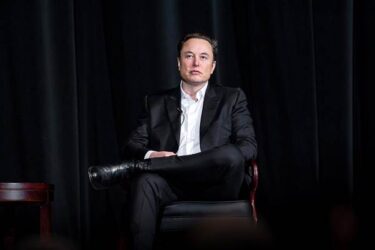
However, his ideas get the attention of the Daily Mail precisely because they aren’t particularly out of step with where Silicon Valley is right now. Elon Musk has said he believes in the simulation hypothesis, arguing that the likelihood of us living in a simulated reality or computer made by others is about 99.9%, and he stated in a 2016 interview that he believed there was “a one in billion chance we’re in base reality”.
Sam Altman of OpenAI claimed in the same year that there are two tech billionaires secretly engaging scientists to work on breaking us out of the simulation, and the only reason I wouldn’t assume they’re not Marc Andreessen and Peter Thiel is that I’m not certain either man would want to get us out of that simulation.
Thiel in particular has taken on these ideas with their most religious flavour, even giving lectures on the role of the antichrist – including how they’ll come to power by warning of the dangers or technology, which is a convenient pitch for him to make as someone who has become ungodly rich through his investment in technology. Thiel’s belief in the antichrist, which he has claimed might be Greta Thunberg, might have something to do with his signing on to another simulation-adjacent theory that’s popular in parts of the tech world: Roko’s basilisk.
Roko’s Basilisk
First arising as a thought experiment on the forum LessWrong in 2010, Roko’s Basilisk can be summarised thus: if AI continues to get smarter and faster, as past trends suggest it will, eventually we will develop a full Artificial General Intelligence (AGI). That AGI will then have the technology to improve upon itself, eventually to a point where it is smart enough to see all that came before it. From that hyper-intelligent vantage point, it will be able to tell those of us who helped bring this new super AI into being vs those who tried to stand in its way – and, so the theory goes, it will inevitably reward those who aided it and punish those who tried to stop it.
If all this were true, the logical extension is that the only reasonable course of action is to do all you can do to bring the super AI into existence, so that you won’t be damned when the AGI finally arrives – up to, and including, killing those who stand in the way of progress. Anyone who doesn’t actively work in the interest of the AGI will be condemned as enemies by the eventual AGI that arises.
Once again, this is an argument that is strikingly religious in its formation; the supreme all-knowing being will soon be here to judge us, and those deemed unworthy will be punished. Again, it offers no evidence for its truth outside of its own arguments, and adherents must simply have faith that it is so.
Where Roko’s Basilisk diverges from its parallels with conventional religion is in its mercy for those not yet converted; the only defence against the AGI is ignorance of its inevitability, so those who have not had this thought experiment explained to them will not be condemned when the digital deity arises. However, once you have heard of Roko’s Basilisk, it becomes your duty to do all you can to bring the AGI into being. You no longer have any excuse for inaction or negative action. Knowledge itself is the danger; it is an information hazard.
Ideas like the simulation theory and Roko’s Basilisk have an increasing hold on the billionaire class and their entourages in Silicon Valley, and as these tech bros increasingly self-radicalise, such ideas go from philosophical speculation, to received wisdom, to tenets of faith.
Some of this belief may well be written off as self-serving; it is easy to justify stockpiling tremendous wealth when you reassure yourself that this is probably just a simulation, and that those other people may not even be real, they’re just NPCs, and certainly less real than the super advanced simulation-creating civilisation that’s coming, or the hyper-powerful AI that you’re working to bring to bear. So why not hoard all of the wealth and destroy the planet, when all of this might just be electrical signals in a brain in a vat anyway?
Unfortunately, these ideas are being promoted by some of the most influential figures in the world – people like Elon Musk, Peter Thiel, and Marc Andreessen. While these men may well be self-deceived enough to believe they are deep and intelligent thinkers, in reality they merely lack the theoretical imagination and insight to collapse a self-refuting thought experiment. And, even more unfortunately, they are collectively rich and powerful enough to make their quasi-religious tenets into matters of policy, and to shape our actual reality around their delusions.