




There is no good argument against electric vehicles anymore, or against renewable energy – both are proven technologies. Both are better than the alternatives we’ve tried. But the misinformation that has been doing the rounds for over a decade is still being pushed, predominantly by right-wing news channels, political figures big and small, right-leaning celebrities, and armchair experts.
Reported in the Washinton Post, EV sales in the US have been quadrupling since 2019. While that levelled off a bit in 2025, there were still 1.5 million sold that year. It is where they are not selling that is interesting. Summed up crudely, Democratic-leaning states buy them, Republican states do not. Not yet.
In the USA, there has been a plentiful supply of disinformation produced by right-wing news outlets and social media channels, but it is also crucial to take account of the well-established culture war. The culture war rule seems to be this: if the Democrats like a thing, no matter what that is, Republicans must hate it.
That left-right split sometimes gets confusing. Consider the effect the occasional trillionaire Elon Musk had. Unlike many an oil billionaire, or media baron, Musk doesn’t deny climate change. He’s about as far right as they come, and yet he builds and sells EVs all over the world. We should salute him for that, at least.
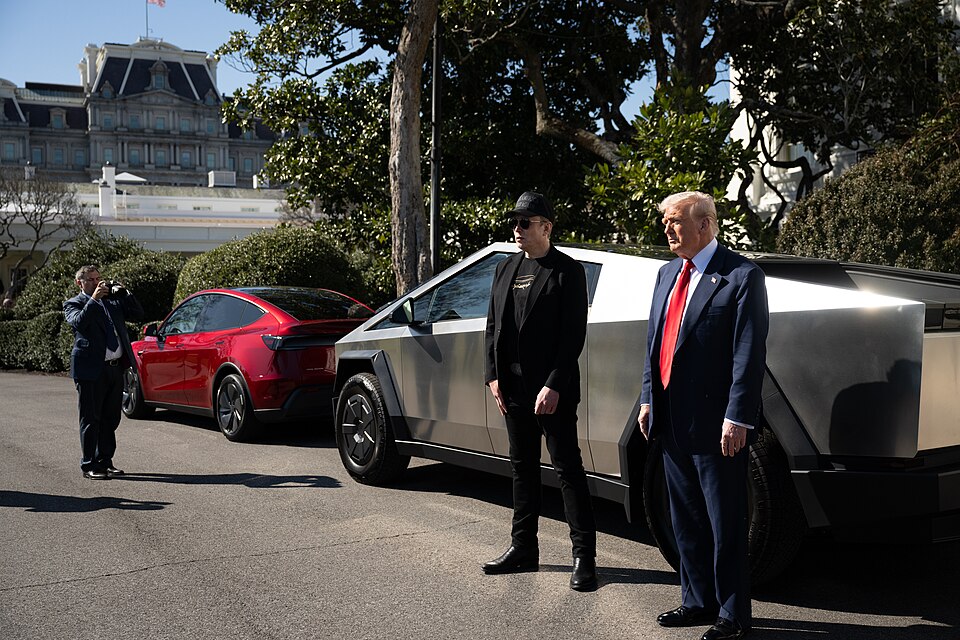
Yet, Elon was briefly pals with Donald Trump, who for years has aggressively advocated for coal, gas and oil, and against green energy and electric vehicles. Trump suddenly changed his tune when Elon and his bank account turned up at the White House. Trump famously had Teslas paraded out front. He even made a show of pretending to buy one.
Telsa’s brand loyalty was devastated around the world by the association. The period after Trump’s stunt saw conflicted Democrats selling their Teslas, or slapping apologetic stickers on the bumper. The Anti-Elon Tesla Club was born. Interestingly Republicans did not suddenly start buying Teslas. The culture war didn’t extend that far.
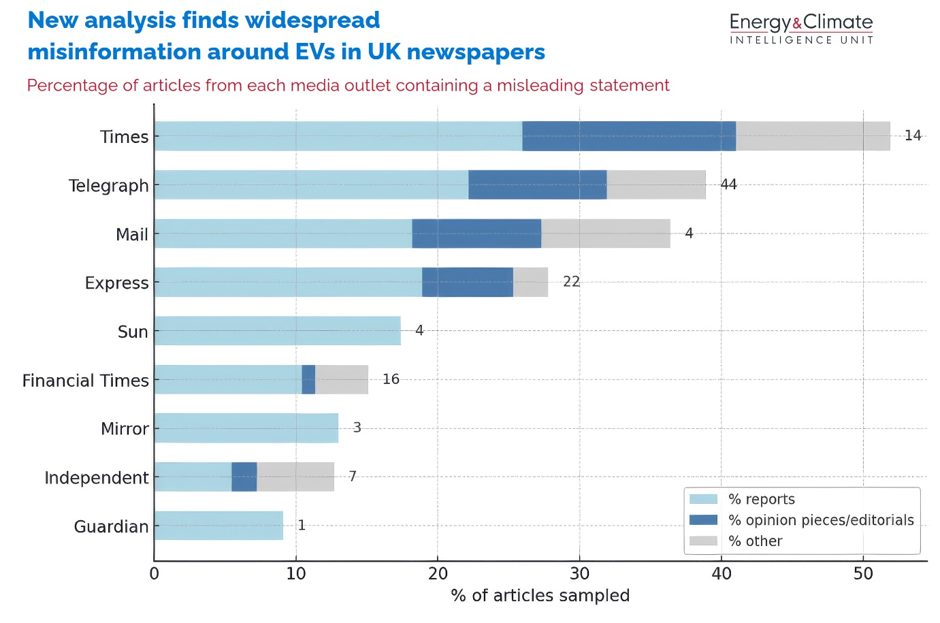
Here in the UK this year, EV sales overtook petrol car sales, despite acres of anti-EV disinformation from our own right-wing press and political figures. Data from the Energy and Climate intelligence unit, a non-profit organisation that supports informed debate on energy and climate change, shows the scale of output of false facts and opinion pieces. Colin Walker, Head of Transport at ECIU explained:
You’ve had this strange situation with many newspapers suggesting demand (for EVs) is falling when sales are up.
The data shows how much more misinformation, and reportage in general, there is around EVs from right-wing news sources. And yet while the press, GB News and various populist figures have tried to stoke up a culture war against anything green, it just doesn’t have the impact here that it has in the US.
In the recent London mayoral election, most of the right and far-right candidates in the race proposed scrapping ULEZ, the newly established Ultra Low Emission Zone. ULEZ is a project that has halved Greater London’s nitrogen dioxide concentrations – a key pollutant linked to respiratory disease.
In the run up, Conservative candidate Susan Hall authored 49 opinion pieces in the Evening Standard, the Express, and the Daily Telegraph. In them, she promised to scrap ULEZ, while sharing a lot of misinformation and promoting conspiracies. She also told lies about the green concept known as The 15 Minute City. She stirred up a lot of anger. She didn’t win.
There seems to be no editorial oversight, no fact checking by right-wing newspapers on what their commentators write, when it comes to EVs. If it is filed as an ‘opinion’, it appears to be impervious to editorial standards, and goes unchallenged. Here’s an example: Nadine Dorries, ex-Tory and Reform UK member, is an outspoken critic of EVs. A one-time owner of an all-electric Renault Zoe, she gave the car back and began telling the world (via the Daily Mail) that she now hated EVs.
To give credit, she at least had some first-hand experience (with a rather regrettable choice of EV) but the paper used the story to reinforce many common misconceptions.
Even lower down the pecking order is Katie Hopkins. She has never owned an EV, and is someone whose bigoted language and opinions are so extreme she was kicked off Twitter. Even GB News had to say no. This former contestant on The Apprentice represents a common type of EV commentator: someone who has no cohesive argument to make or knowledge of the subject, just lots of hate for – this week at least – EVs. We might see Katie as someone simply generating an income from TikTok clicks by saying offensive things and untruths while waving her arms a lot. We might think there’s a type of balance too, since pro-EV TikTokers can feed of it, rage against it, and everyone makes a little money. But she is also helping to buoy up and extend the life of the overall anti-EV campaign. Some of it always lands.
She announced, for example, that EVs weigh three times more than standard vehicles. It’s a commonly trotted out ‘fact’. She makes the common denunciation of EVs, stating they are charged up using power from coal and thus they are not green. In truth, EVs are heavier, but only around 20% heavier than an equivalent petrol or diesel car. The UK ended its use of coal power in 2024.
While Big Oil’s influence on Donald Trump might have been eclipsed temporarily by Big Elon, it is still among the most powerful lobby groups in the world. When Nigel Farage takes to his chair on GB News and reinforces yet another common myth – that EVs lose 50% of their power in cold weather – it’s important to note he does so on a channel is funded by a group based in the United Arab Emirates. The 50% power loss myth, like the myth about EVs catching fire, are reiterated everywhere online. EVs typically lose about ten miles of range in winter. They also gain ten miles range in the summer. As for the fire-scare stories, petrol and diesel cars are 20 times more likely to catch fire. However, older EV batteries, if they do catch fire, are harder to extinguish.
Trump’s “drill, baby, drill“ mantra shows his colours are nailed to the fossil fuel mast. His attitude to free, renewable energy is more baffling. Speaking about wind turbines (he calls them windmills) he claimed in 2025 that they “kill millions of birds“, and that:
It’s the most expensive energy there is. It’s many times more expensive than clean natural gas, so we’re going to have a policy where no windmills are being built.
If that message isn’t confusing enough, let’s consider another oil-and-gas man, Vladimir Putin. When he threatened Europe by turning off the big Russian gas tap, he inadvertently succeeded in speeding up Europe’s transition to renewables. Instead of scaring anyone into submission, his action only focussed that coalition of more sensible nations on their post-fossil fuel mission.
The cheap and not very cheerful world of Russian political interference will continue. We’ve seen massive bot farms spewing out disinformation, deep sea digital infrastructure attacks, and thuggish street-level violence and poisonings. It is hard to see how any of this helps the cause of Russian energy and food security.
Russian and China appear to be charging ahead, but in opposite directions. One offers to Build Your Dream, the other offers to perpetuate your nightmares.
Are all oil-based economies so twisted? Let’s spend a slightly confused but happier minute looking at Norway. Norway is a sort of self-disciplined Tony Montana in a world of petrochemical cartels. Norway is a pusher (of oil) but not the user.
Currently Norway is the EV capital of the world. In January this year only seven new petrol cars were sold nationally, while more than 2,000 EVs were sold in that same month. Across the whole of 2025, over 95% of new car sales were EVs.
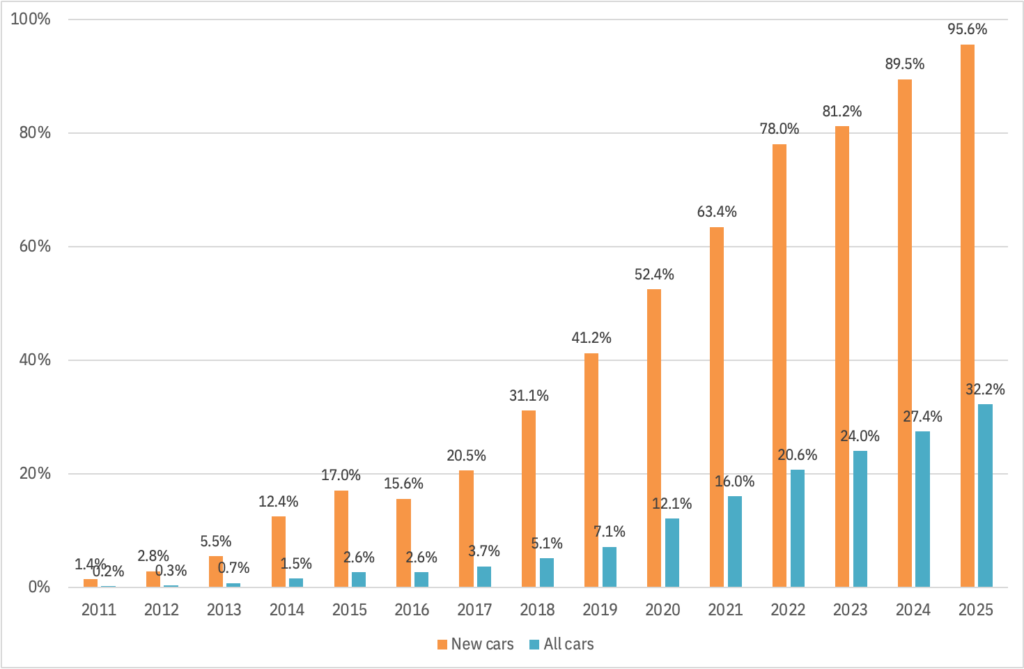
Norway has a right wing. It has far right parties and media. What they don’t seem to have is a problem with EVs or renewable energy. Part of the reason might be the package of incentives offered to EV owners, things like tax exemptions on imported EVs, toll-exemptions on motorways, discounted ferry passage and free use of designated bus lanes.
Sylvi Listhaug, leader of Norway’s populist right-wing Progress Party (FrP), generally supports electric vehicles, but takes issue with the state-mandated promotion of them. There doesn’t appear to be any serious or even unserious resistance. The rest of Europe follows. Denmark has witnessed huge growth, with EV sales soaring from 2% to 68% over the last decade. EV market share has also surpassed 33% in the Netherlands, Finland, Belgium and Sweden.
A right-wing case for EVs
Given endorsements from Elon Musk and Donald Trump, there’s no real reason why EVs should be so politically toxic to the right-wing voter in America.
Consider the Trump-voting alpha male, obsessed with speed, loves his freedom. He hates being controlled by the system. He hates taxes. By rights, he should love EVs, but is more likely to lament, ‘I’m not going to buy a Biden-mobile!’
EVs may not growl and splutter, but they accelerate with more g-force than ICE cars (no, not that ICE). Top speeds are scary. Lots of them look fast too. They pass that macho bullshit benchmark people seem to want.
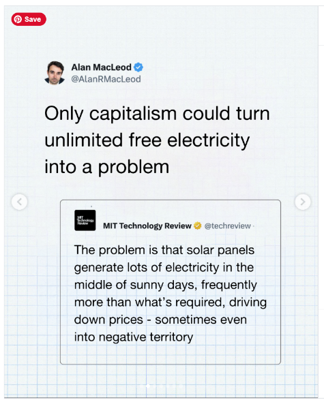
They also fit the self-sufficient lifestyle dream. You can charge them at home for free using solar panels and you can keep the surplus power off grid in a set of Tesla batteries fixed to the side of your house. The price of sunshine doesn’t fluctuate. It is tax free. Better still, those golden beams won’t get trapped in the Strait of Hormuz.
Battery power, solar power, wind turbines, hydro – these things offer a route to independence, to a cheaper, freer existence. Does this not describe the American dream?
A note from the author
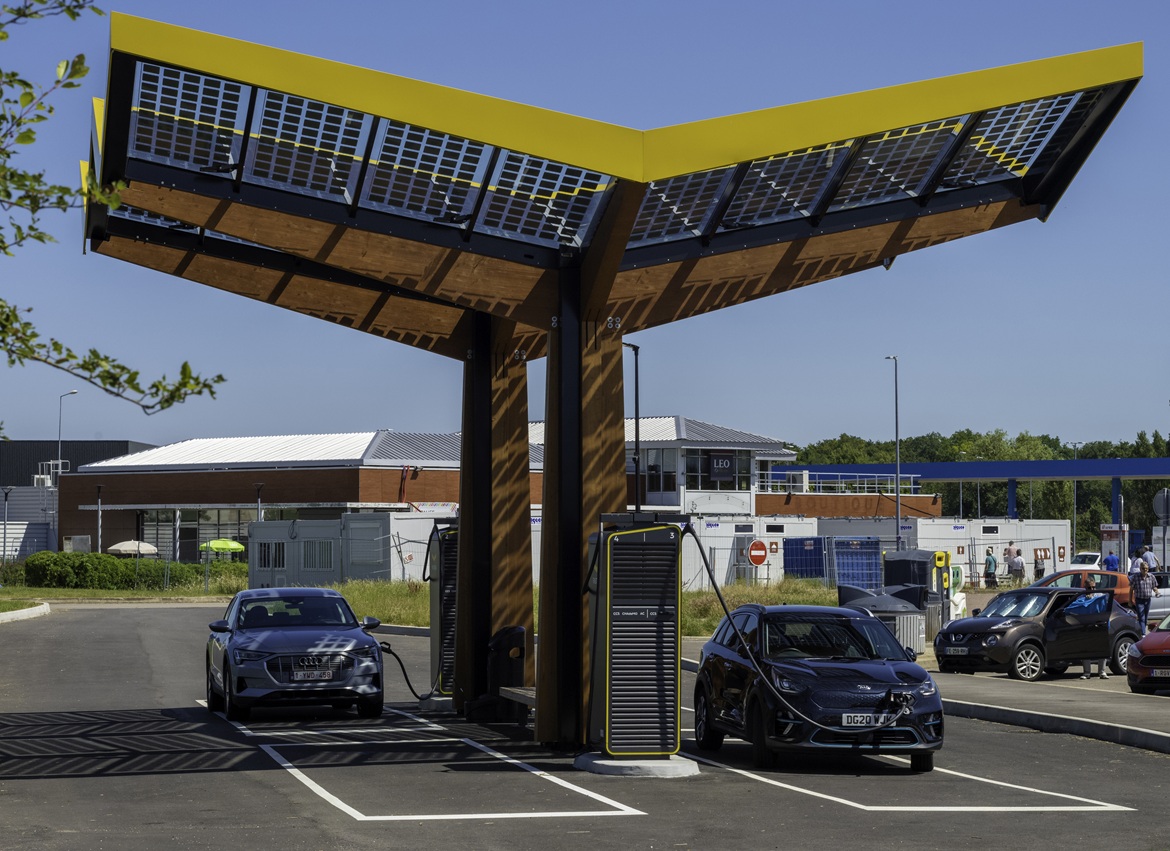
You might have guessed that I am an EV owner and have been for the last 7 years. My reason for buying one was simple – to kill off the oil industry. Unlike Nadine Dorries’ Renault Zoe, the car I picked wasn’t total crap (perhaps because I did my research, like any good skeptic). The battery hasn’t degraded one bit, so far.
But to be clear, EVs are just cars. Cars clog up our streets, they run over children, they help perpetuate a myth of status. Buses, trains and bikes are the real answer to our mobility problems. And we’ll get there because it just makes sense.
As for renewable energy, around the world, right and far right politicians continue to claim it won’t work and can’t work – even though it does work and is working.
The poorest nations in the world, situated around the equator, will be transformed by new green technologies. Who would want to get in the way of that? And even if someone wanted to, how could it be stopped?
In Bangladesh right now a 550 watt solar panel costs about the equivalent of $100. The average income there is $150 a month. People are going to invest. Bangladesh is experiencing a rapid, economy-wide boom driven by plummeting costs and heavy government tax breaks.
So why not the next country over? Why not anywhere the sun shines?