



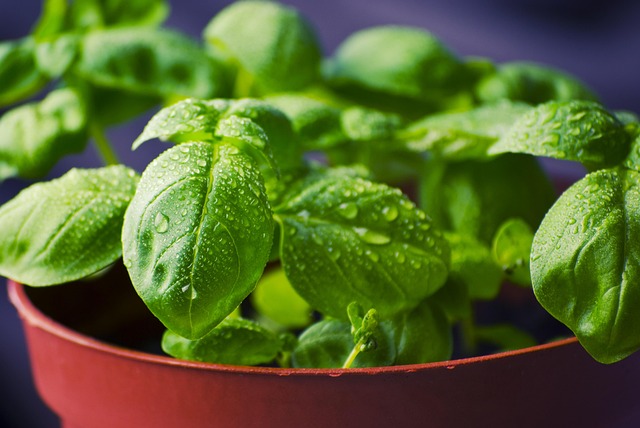
Earlier this year, an Indonesian journal of religious studies published an article titled “Influence of Qur’anic Recitation on the Growth Process of Basil Plants.” The authors observed two basil plants: one exposed to Qur’anic recitation and one not. After fifteen days, the former was in excellent condition, while the latter presented curved leaves, dark spots, and small holes. According to the authors, such observations, supported by several photographs, confirmed Qur’anic “healing” and its application to non-human living beings.
The article was not an isolated anomaly, but a fragment of a deep-rooted and persistent phenomenon in the Muslim world. The Qur’an is the sacred text of Islam, believed to have been revealed 1,400 years ago. There is a widespread belief that it enjoys special authority in scientific matters, an idea often extended to the hadith – the texts reporting deeds and sayings of Prophet Muhammad. This underlies popular theories and practices.

In matters of health, for example, hijama (that is, bloodletting performed with cups) is enthusiastically embraced because it was praised by the Prophet (in Sahih al-Bukhari, Book 76, Hadith 19, #5697). For the same reason, or because they are mentioned in the Qur’an, the healing properties of several natural products are extolled. And as the Indonesian article shows, health-giving virtues are attributed to the Qur’an itself. Its recitation is also used as a therapy on the basis of the idea that it drives away the jinn that cause illnesses (or genies, creatures mentioned in the Qur’an).
Another beloved idea, propagated by popular preachers, is that the Qur’an contains extremely accurate descriptions of facts verified by science only centuries after its revelation, and that such precision confirms the Qur’an’s divine origin. This regularly comes up in class when I ask my Moroccan undergraduate students whether Islam and modern science are compatible. Their favorite example, often heard from schoolteachers, is that the Qur’an precisely illustrates embryonic development (in 23:12-14). In reality, scripture makes references that are rather allusive, in line with notions embraced by scientists in ancient Greece and Rome.
Finally, among Muslims, forms of resistance to evolution are very popular, very similar to the creationism well known, for example, in the United States. We can label these phenomena, taken as a whole, as pseudoscientific.
I explore such ideas and approaches in my Islam and Pseudoscience (Cambridge University Press, 2025), which is part of a series on Islam and the natural sciences that I edit with astrophysicist Nidhal Guessoum. Having a philosophical background, I took as a point of reference the debate over pseudoscience developed by philosophers such as Massimo Pigliucci and Maarten Boudry. As always with philosophical ideas, experts debate whether and how pseudoscience can be precisely defined. Those who have an interest in denying the existence of pseudoscience could exploit this to argue that the concept is baseless.
I certainly have not solved the problem of defining pseudoscience, which perhaps requires a sharper mind than mine, but this has never been my ambition. I have adopted a critical and pluralist perspective. I first considered the various practices and theories related to Islam that several critics informally call “pseudoscientific”: discussions of the supposed scientific information in the Qur’an, Islamic creationism, and practices related to hygiene, nutrition, health, and illness supported on a scriptural basis. I read such approaches through the theories advanced by philosophers who propose some definition of pseudoscience. Sometimes pseudoscience is clearly identifiable, other times less so.
For example, if someone publishes an article arguing that the speed of light can be inferred from the Qur’an, we are clearly dealing with a pseudoscientific argument. If someone extols honey as healthy and nutritious emphasising that it is praised in the Qur’an (in 16:69), the argument may be risky (honey is not always good for everyone), but perhaps we are dealing with a somewhat enthusiastic and naive scriptural exegesis.
I leave the choice to my readers: we can split hairs and label only specific statements as pseudoscientific, or we can brand an entire approach as such because it invokes science in one way or another but is superficial and flawed. But that’s precisely my point: the moment we explore the most popular discourses and practices in which science and Islam are brought together, we discover a plethora of flaws: weak arguments, partially or completely incorrect information, and so on. For me, this was the true outcome of my research.
In discussing intersections of Islam and pseudoscience, three key points should be kept in mind. First, such pseudoscience is also denounced by Muslim critics, including scientists such as Nidhal Guessoum. They too think that Islam and science can be reconciled, but propose models that exclude pseudoscience, and regard pseudoscience as risky also from a religious perspective: realising its flaws, someone may lose their faith, if they became convinced of the soundness of Islam on a pseudoscientific basis.
Second, there is no evidence that pseudoscience impacts the Muslim world more than other parts of the world.
Finally, it cannot be argued that the pseudoscience in question is intrinsically or exclusively Islamic. It is true that in all these cases the reference is Islamic scripture. Sometimes, a particular passage creates a theme or challenge not present in other religions, such as the tradition describing Adam as 30 metres tall (in Sahih al-Bukhari, Book 60, Hadith 1, #3326). Other times a problem seems mitigated because of specific scriptures – for example, fewer Muslim creationists advocate for a young earth, perhaps because of the greater vagueness of the creation story in the Qur’an (but Muslim exegetes may also have learned to sidestep certain issues as a result of observing the debate in the West). That said, the phenomena in question have counterparts in other religions and cultures: for example, cupping is claimed as traditional even by the Chinese.
In this regard, differences can be found in quantity rather than quality: for example, there are scientific readings of the Bible, but the “miraculous scientific precision” of the Qur’an seems unmatched in terms of diffusion and popularity. There are documented examples of collaboration or importation, as in the case of Christian creationism recycled verbatim by Muslim authors.
Sometimes one finds pseudoscientific theories from different parts of the world or cultures side by side in the same text: significantly, in the article about basil plants and Qur’anic recitation, the authors make reference to Masaru Emoto’s 2005 The True Power of Water, suggesting an analogy between his ideas and theirs (the former being notoriously pseudoscientific). But most importantly, from an analytical perspective, the logical and methodological fallacies, the inaccuracies in information, and the psychological and social dynamics that pseudoscience in the Muslim world exploits and encourages are identical to those found in other parts of the world.
I have long been convinced, and I constantly emphasise, that pseudoscience in tandem with religion fuels profound misunderstandings on two levels: not only is it burdened by flaws of various kinds, but it also creates an illusion of uniqueness and privilege with respect to one’s own culture or faith. The flaws become evident by using logic and scientific information. The illusion of uniqueness dissolves with comparative study.
If pseudoscience exists and thrives, in the Muslim world or anywhere else, it is also due to the state of education and science appreciation. In addition to studying pseudoscience, I propose, as an educator, to critically address it in the classroom. Ultimately, pseudoscience should not just be the subject of complex theoretical debate among experts. If one thinks that a lie or falsehood is being spread (the “pseudo-” in “pseudoscience”) they have a moral obligation to correct it publicly, or at least to expose young minds to critical alternatives.
Denouncing the intersections of pseudoscience and religion does not mean embracing scientism – that is, exalting science above everything – but rather establishing boundaries between science and religion (along with possible areas of overlap), while also emphasising their respective limits. The challenge when engaging with Muslim students is to encourage a critical view of pseudoscience without suggesting that religion should be abandoned.
These, however, are delicate and contentious points, and I do not claim I have solved them. I hope to see more critical discussions not only among philosophers and scientists, but also among education experts in the Muslim world.