



“WHAT THE FUCK ARE YOU LOOKING AT?” came the shout. “Nothing, sorry” was my somewhat cowardly response. It was approaching midnight on a Saturday night sometime in 1994 and I was living out a much less funny version of Kevin Bridges’ bus stop routine. I’d caught the eye of the wrong person, and he was in the mood for a fight. My timidity kept me off the casualty list, and he stumbled off looking for someone more combative. Just for the record, he was very white, and very Glasgwegian.
It wasn’t the only time in my younger days I was offered a fight. Or drugs. Or sex (as a business transaction). My stories of such city-centre encounters were never met with much in the way of surprise. Many of my male friends experienced similar things, and my female friends were frequently the target of unwanted attention in other ways too.
This makes it all the more confusing when reading contemporary stories of ‘chaos’ in Glasgow city centre. There seems to be an amnesiac kind of vibe to them, as if crime and disorder is somehow a new phenomenon. The front runner (well, walker) of the newly concerned citizens is deputy leader of Reform UK in Scotland, Thomas Kerr, whose now infamous ‘Walk around Glasgow City Centre’ video of July 2026 caused quite the stir amid ongoing protests and counter-protests about immigration.
His video, set to a backdrop of dramatic yet presumably royalty-free music, features shocking footage of various non-white people not just standing, but also sitting, and occasionally even talking. There are also some bin bags piled up against a junction box.
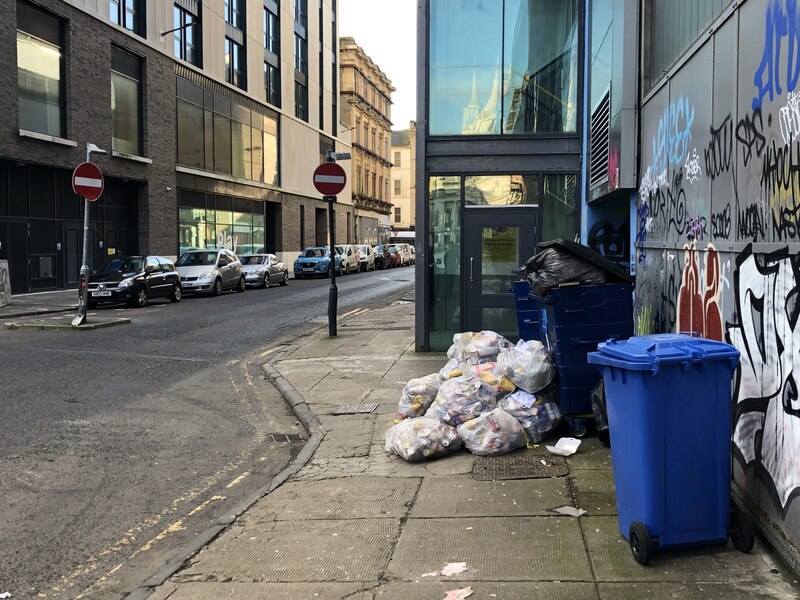
If you aren’t already reeling from this, Thomas returns to the screen, and claims to have spotted drug dealing, drug use, consumption of alcohol, people “hanging around”, and also “four migrants staring at a young girl”. Strangely none of those were caught on camera, so whether any of this actually happened or not we’ll never know. We can almost certainly say that he was only guessing that the alleged oglers were migrants, probably using some kind of colour chart. We definitely do see people hanging around, but that’s not actually a crime despite the type of concern it causes with people who empathise with the Neighbourhood Watch Alliance from Hot Fuzz.
Kerr may of course be particularly sensitive when it comes to drug use, as both his parents were heroin users, but that makes it all the more baffling that he thinks the drug problems of today are something new. Glasgow was a record-breaker for drug deaths back in the 90s. In national terms the numbers in Scotland have risen steadily since then, although recent minor falls have been noted.
What we see in Kerr’s video though is the less than subtle implication that the root cause of all the city centre’s problems are immigrants. This baseless insinuation is symptomatic of a wider problem in Scotland and the rest of the UK, in which blame for the country’s problems is levelled at its newest arrivals, rather than acknowledging the multitudinous other factors at play.
One potential explanation of this comes from a poll in July which found that four in five Scots (80%) overestimate the number of refugees in the UK, as reported by STV news. The channel’s initial Facebook post reporting the poll was so badly overrun with anti-immigrant comments that it was deleted, and later reposted with comments turned off.
While it’s most likely that such skewed perceptions are fuelled by misinformation campaigns and scaremongering journalism, there are other issues at play. So, let’s take an imaginary walk together round Glasgow City Centre to consider the impact of asylum seekers and refugees in terms of numbers and crimes. Feel free to add the dramatic music of your choice.
Concentration of residence
Asylum seekers and refugees are much more likely to live in larger cities. Glasgow has the highest proportion of asylum seekers in Scotland. It’s also the biggest city in Scotland, so you have a lot of (native) people looking around, seeing what appears to be a high proportion of (perceived) asylum seekers/refugees, and assuming that they’d see the same elsewhere. To help disavow you of this notion, try taking a wander around the streets of Kilmacolm sometime, although please proceed with caution in case you’re identified as ‘not local’.
A lack of labelling
Life isn’t like a computer game where you can easily look up a character’s profile. If you spot someone in the street and they look and/or sound different to you, that shouldn’t cause you to immediately assume they are a refugee/asylum seeker. According to the 2011 census, six percent of people in Scotland had a primary language other than English, but in Glasgow that percentage sat much higher, at around twenty five percent. The people speaking these other languages may not resemble the guy with the kilt on the box of Scott’s Porage Oats, but that doesn’t mean they’re not UK citizens, or aren’t here with valid reasons and supporting documentation.
Gathering points
The city centre is where people tend to go to meet up, socialise, do business, go shopping, and get up to various other pursuits. You’re much more likely to see people out and about. As has always been the case, this concentration of people naturally includes crime, but there’s nothing in the actual data that suggests any dramatic migrant-fuelled increase. Of particular note is the ‘other crimes’ category below, which includes drug-related crime. The most recent data we have shows lower levels than we experienced in the early 2010s, but it’s unlikely that Kerr will thank the influx of migrant numbers for that reduction in the same way that his supporters blame them for any increases (see my previous article for a particularly unpleasant example of that).
| Year | Violence | Sexual Crimes | Dishonesty | Damage / Reckless | Other Crimes | Misc. Offences |
| 2010 | 7,982 | 1,034 | 28,349 | 11,912 | 15,204 | 7,981 |
| 2011 | 7,421 | 1,112 | 27,104 | 11,201 | 14,887 | 7,654 |
| 2012 | 7,013 | 1,205 | 25,998 | 10,544 | 14,332 | 7,312 |
| 2013 | 6,744 | 1,287 | 24,881 | 9,998 | 13,901 | 6,998 |
| 2014 | 6,512 | 1,364 | 23,774 | 9,441 | 13,522 | 6,744 |
| 2015 | 6,398 | 1,452 | 22,667 | 8,998 | 13,201 | 6,512 |
| 2016 | 6,589 | 1,534 | 22,112 | 8,744 | 13,112 | 6,398 |
| 2017 | 6,901 | 1,612 | 21,998 | 8,512 | 13,044 | 6,287 |
| 2018 | 7,334 | 1,701 | 21,887 | 8,398 | 13,112 | 6,201 |
| 2019 | 7,998 | 1,784 | 21,774 | 8,312 | 13,201 | 6,144 |
| 2020 | 10,784 | 1,797 | 14,820 | 6,771 | 12,834 | 1,869 |
| 2021 | 10,825 | 1,927 | 13,667 | 6,114 | 11,694 | 1,723 |
| 2022 | 11,641 | 1,993 | 16,549 | 6,252 | 11,830 | 1,804 |
| 2023 | 11,588 | 1,991 | 17,804 | 6,061 | 12,284 | 1,778 |
| 2024 | 12,150 | 2,202 | 18,714 | 5,593 | 13,398 | 1,920 |
Source: Scottish Government recorded crime statistics
Age and gender
Asylum seekers tend to trend younger, which makes them statistically more likely to be involved in cases of antisocial behaviour, violence, and drug crimes. This age-related factor needs to be taken into consideration during your imaginary Glasgow city centre walk.
The impression that we have many more male asylum seekers than female ones also needs to be addressed, because men commit more crimes than women. The reality though is a little more complicated. In terms of asylum applications, the majority of applicants are indeed male, but this majority reduces significantly when considering the wider picture, because the story doesn’t end with that application. After these (mostly) males are granted refugee status, they are allowed to follow the UK Family Refugee scheme and apply to have their (mostly) female partners and children join them. Or at least, that was how it worked until the Labour Government suspended the scheme in September 2025. The obvious knock-on effect of this is a reinforcement of that initial male majority, with no restorative process. Campaigns are ongoing from organisations such as the Refugee Council to have the suspension lifted.
Poverty
Consider this headline from the Daily Mail: “A VERY luxurious welcome to Britain! Beautiful 16th century country house – complete with four poster beds, open fireplaces and lake views – has been hosting migrants in its 49 historic bedrooms for THREE YEARS”.
The ongoing campaign from right-wing media sources to demonise asylum seekers has significantly contributed to misconceptions about the hardships that they face. The grim reality of what they’re actually entitled to as asylum seekers is at odds with that portrayal, and if you bear in mind that they’re not allowed to work then you’ll understand that you’re more likely to see them out and about during the day.
For those who have been granted full refugee status, the rates of poverty are still high. Finding meaningful employment is difficult due to many factors such as a failure to have qualifications recognised, language barriers, childcare problems, and classic old-school discrimination.
One particularly unfortunate knock-on effect of poverty is crime, and that of course applies to UK nationals as well as immigrants, so perceptions of immigrants as more likely to commit crime are either not true, or are artefacts of demographics and living conditions.
In conclusion
It seems that claims of a devastating flood of migrants fuelling the decline of western civilisation are only a reality for those who are ideologically inclined to want to believe them.
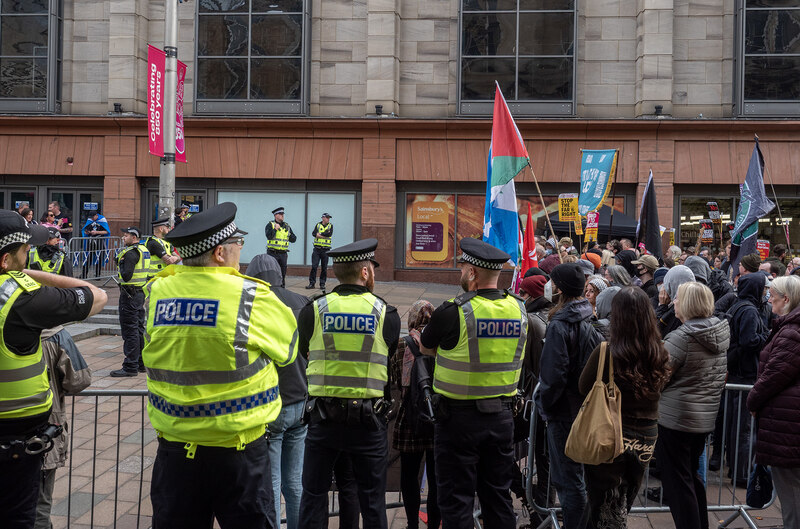
Despite that, I hope you enjoyed our imaginary city centre walk together. If you feel that it didn’t really hit the heights of excitement and would like something more chaotic, then perhaps we can reschedule it for a more suitable time, such as when the pubs close, the day of an old firm football match, or perhaps during a ‘patriotic protest’, where you can gorge on as much home-grown and predominantly white violence and disorder as your stomach can cope with.
Either that or hop in a DeLorean and go help me take on that guy from 1994 – I could’ve done with the backup.