



In my recent article, I talked about zombie facts, pieces of information routinely spouted by many people despite not being true. My own academic specialisation – history – is unfortunately rife with examples that should have long ago been laid to rest.
1. Viking and Norse warriors wore helmets with horns on them.
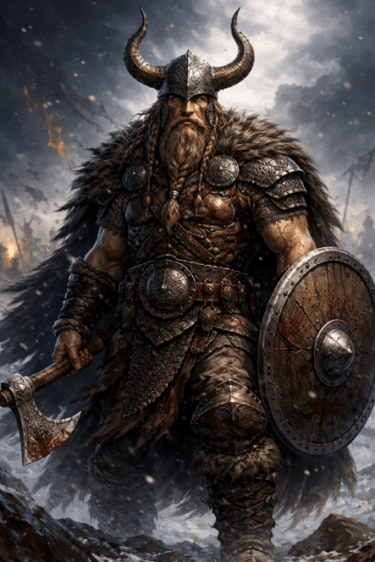
Ask anyone – even ChatGTP – to draw or describe a Viking warrior and they will likely depict the helmet as having horns sticking out either side.
Check any pictures of Scandinavian countries’ football fans, they are often wearing plastic helms with protruding horns. The idea of horned helmets has become completely synonymous with the Norse inhabitants now, and in their history.
However, it is complete myth.
There is no doubt that adding horns to headgear looks cool and is a long-standing thing across many cultures. There are examples from the Mesolithic era (5,000–15,000 years ago); excavations at Star Carr in Yorkshire England revealed 21 red deer skull caps from the era with antlers still attached, shaped to fit human heads, and likely used in ceremonial purposes. Or maybe just to make a few dudes look cool.
Examples have been found of either animal horns or metal facsimiles attached to helmets throughout history, from East and West Asia to Europe, including Scandinavia, but there is absolutely no evidence of these being used in anything other than symbolic, religious or ritualistic practices. It seems self-evident that using headgear with large, weighty protuberances sticking out the top would be at best impractical, and likely to become a hindrance in any battle.
So, why are the Vikings specifically so closely linked to the horned helmets?
Well, it seems to have been a design choice by the dressers of Wagner operas in the 19th century. They differentiated the status of cast members by either horned or winged helmets. As Ida Ward, a historian of Scandinavian history, wrote in her article on Viking Pop Culture on Display: The Case of the Horned Helmets:
Why horns? Archaeological excavations of the nineteenth century have uncovered magnificent curving bronze horns, including two helmets with curved appendages on either side. Though most likely used for shamanistic rituals and not for war, bronze horns were understood to be of deep significance for prehistoric Nordic people in Denmark, Norway, and Sweden. Although we now know these Bronze Age horns predated the Viking Age by over 2000 years, such chronological distinctions were less well defined in the nineteenth century.
In the consciousness of European Victorians, there was already a connection to the headgear being associated with Germanic and Norse peoples, and it was easy to make a symbolic shortcut: helmet with horns = Vikings. Unfortunately, the trope stuck.
2. Medieval people lived in muck and never bathed.
Ever visited a Roman Bathhouse? The vast baths of Caracalla and Diocletian held thousands of the city’s citizens, and the obvious status of the complex in Bath in south west England shows how highly the empire promoted cleanliness. Yet, once the Empire had been struck back, in so many depictions of post-roman medieval Europe we see scenes like Terry Jones and Michael Palin digging “lovely filth” while Graham Chapman’s King Arthur stands over them, glowing like a Persil advert.
“How do you know he’s a King?”
“He ain’t got shit on him.”
Truth is, Roman baths were likely pretty unhygienic places themselves with all that stagnant water, lead piping, and moist, warm air being a breeding ground for various infections and bacteria. Medieval people, while not necessarily adhering to the modern concept of daily hot showers, well understood the need to keep clean. All but the poorest would have ewers and basins to wash faces and hands regularly, and bath houses were quite common throughout medieval Europe. The Dutch historian Jo Hedwig Teeuwisse (AKA The Fake History Hunter) has a whole list of medieval bath houses across Europe.
There was some suspicion around bathing, especially from a religious fear of sexual promiscuity, but many treatises from the era highlighted the need to remove dirt and biological effluent from the body. The Secretum Secretorum (literally the secret book of secrets), an influential twelfth century health manual, warned that excessively long baths could lead to bathers putting on weight, but they should nevertheless be taken regularly, especially in winter and spring.
Though the Romans used oil and strigils to remove dirt rather than soap, detergents – mostly used for cloth – have been around for thousands of years, and can be made from ashes, fats and water, as well as from certain plant extracts.
Being clean is not just a modern ambition, people have always recognised that it is generally preferable to being dirty, they just went about it as best they could using the resources they best had access to. They had washcloths, brooms, brushes and basic detergents to keep their environment and bodies as clean as they felt they needed to.
3. Defensive buildings had clockwise spiral stairs to impede right-handed attackers coming upwards.
Spiral, also known as newel staircases, were a very good way of utilising spaces within very expensive stone buildings. They allowed easy access to upper floors, and have been used in both military, religious and domestic buildings at least since Roman times. Examples include Trajan’s column, and the sixth century Basilica of San Vitale in Ravenna – both anti-clockwise.
A paper in The Castle Studies Group Journal, found 85 examples of anti-clockwise spiral stairs in castles in England and Wales built between 1070s to the 1500s. They concluded that:
Whilst clockwise stairs predominate in the eleventh and twelfth centuries, there are sufficient examples of anticlockwise stairs in Britain and France in this period to indicate that the choice must have depended both on physical convenience and architectural practicalities, and there was no military ideology that demanded clockwise staircases in the cause of fighting efficiency or advantage.
4. Napoleon was conspicuously small.
Napoleon I’s height, or lack of it, gave rise to its own psychological condition: the Napoleon complex. The idea that smaller men need to be overly aggressive in order to compensate for their lack of physical stature.
However, measurements taken of the Empereur des Français after his death on St Helena in 1821, showed his height to be 1.7m (5’7”) – around average height for a Frenchman at the time.
He was a little shorter than many of his generals, and could appear smaller of stature alongside them, but the idea of his diminutive size came almost entirely from British sendups of him during the Napoleonic conflicts, especially by the caricaturist James Gilray, who created the character of “Little Boney”: a diminutive cuckold and megalomaniacal dictator, with an inferiority complex. The characterisation stuck.
There is no doubt that Napoleon’s relentless self-aggrandisement of his public image garnered ridicule among his enemies. Unlike the political leaders of today, he fell out with the Pope; led his country into disastrous, never ending wars; demanded he be made supreme leader without any oversight for life; wanted to leave a legacy in rebuilding the capital; and added his name to longstanding institutions, buildings and traditions.
Of course, someone’s size should never be a source of ridicule, nonetheless many of his other traits definitely deserved mockery.
5. Plucky little Britain stood alone in 1940 against the vast might of Hitler’s Reich
It is a staple belief of gentlemen, often of a hammy hue, that after the defeat of France in June 1940, The UK was the only belligerent country left in Europe still standing-up to the Nazis. Hitler’s invasion of the Balkan countries, and subsequent ill-fated offensive into the Soviet Union was still a year away. America was nominally neutral, leaving Britain to face the fascist horde just 22 miles from the White Cliffs of Dover. On the face, then, Britain stood alone to fight them on the landing grounds, fields and streets, as Churchill put it.
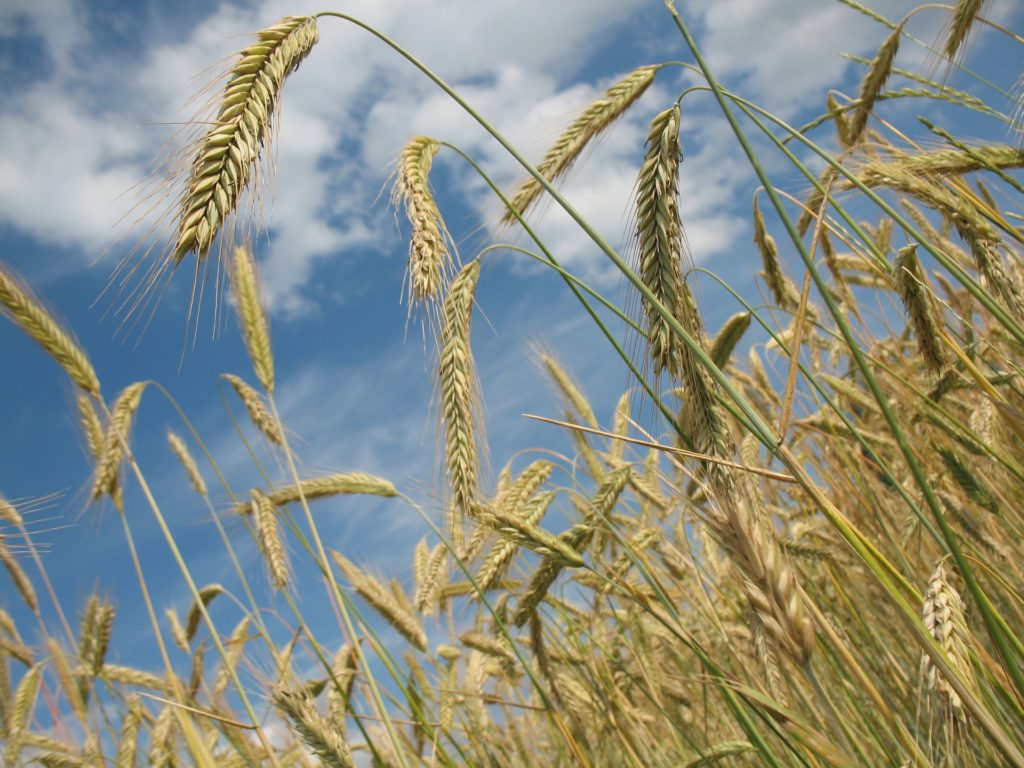
However, we also had the resources of the largest Empire the world had ever seen. It was made up of Crown Colonies, Dominions, a Raj and various Protectorates, and held sway over the political and economic life of a quarter of the world’s population, as well as nearly 30% of the entire landmass of the globe. The Empire gave the UK access to huge natural resources that fuelled the war effort. From oil in the largely pro-allied Gulf States (Bahrain, Kuwait, and Iraq had British bases from the 1930s and oil extraction was dominated by BP, itself founded in Iran as the Anglo-Persian Oil Company), to minerals and ores from Australia and Canada, alongside grain from the vast wheat fields of the Canadian prairies.
Germany, by contrast, was hemmed into Europe and the limited resources the continent could provide. As well as oil, one of the biggest problems, in a pre-plastic age, was accessing rubber. In 1939 the German army only had two months stockpile of rubber and oil, and despite IG Farben creating synthetic rubber in the 1930s, the manufacturing process was far too slow for the Wehrmacht’s vast requirements. It required a huge new factory built out of range of Allied planes; so they selected a small railhead in Poland called Auschwitz in which to build it.
Until the Japanese invasion of Malaya in 1941, Britain could exploit established colonial plantations built up over decades, using strings of bases, ports and coaling stations across the world, and the planet’s biggest merchant fleet to carry men and materiel to wherever needed.
There is no doubt that 1940 and 1941 were precarious times for the UK, but there were major advantages available to us that allowed us to stand up to the fascists, at least until the even-bigger resources of materiel from the US and manpower from the Soviets could pick up the slack.
There are myriad myths and zombie facts that proliferate in almost all walks of life. But it does not mean that they cannot be refuted and challenged in the right way. I remain hopeful that many of us are open to change our minds about things when our knowledge of the facts changes.