




When Pam Bondi was confronted before the House Judiciary Committee with questions about Donald Trump’s close personal relationship with convicted paedophile Jeffrey Epstein, the moment demanded moral seriousness. Instead of addressing the seriousness of the issue, she deflected, as reported by CNBC, saying, “The Dow is over 50,000 right now… that’s what we should be talking about”. In that instant, the suffering of children was weighed against the value of a stock market index.
This instant reflected the dark, empty abyss that is America’s current value system.
The United States was founded on the idea that certain truths are self-evident: that people are born with unalienable rights to life, liberty, and the pursuit of happiness. Though it is hard to argue that those truly existed in American society at large, it was believed that as a nation, we should continuously move toward instilling these liberties in society.
In our current era, we have deviated far from this path. American values are not human values – they are market values. The current American system optimises profit margins and algorithmic engagement rather than the physical, spiritual, and mental wellbeing of its people.
This is not completely new to history. It is a pattern as old as industrialisation and beyond. During the Gilded Age, the Industrial Revolution sacrificed common Americans in the system of mass production before there was reformation. Now, the AI and tech revolution is slashing through human welfare while lining the pockets of a few neo-robber barons, creating a new Gilded Age.
The United States must act to regulate the unchecked power of technology companies and reclaim the human values it professes in its constitution.
When Americans think of American values, they conjure up phrases like freedom, equality, and opportunity. The entire essence of American governance was designed around a simple premise: the state exists to serve people. Somewhere along the way, the great sin of greed soaked into the roots of government and culture, and America traded these values in for a different set. The new American values are market values: profit, shareholder value, etc. Human wellbeing is no longer the objective. It is, rarely, a byproduct.
The evidence of this shift is everywhere. Corporate profits are treated as indicators of national health, while many of these profits come from giving Americans harmful opiates, denying them proper healthcare, feeding them chemical-ridden food, spying on them and harvesting their data, and getting them addicted to their phone and the use of tools that are being trained to replace them.
Stock indices are cited as proof of presidential credibility, and human suffering should be overlooked so long as the markets are up.
The Bondi hearing was a perfect distillation of this degradation: survivors of sexual abuse stood in the room while the nation’s Attorney General redirected the conversation to the Nasdaq. The message, whether intended or not, was unmistakable. In the hierarchy of modern American priorities, the numbers come first, and the people come second.
This inversion of priorities is the product of decades of policy choices and lobbying that have elevated corporate interests above individual welfare. To understand how American values became market values, we must examine our history, from the last time a technological revolution largely collided with human rights, and to examine what it took to guide the country back toward its founding principles.
The Industrial Revolution was in many ways a great triumph of human ingenuity. It transformed economies, built cities, and created wealth on a scale previously unimaginable. But that wealth came at a staggering human cost, one that the beneficiaries of industrialisation had manufactured and did not see the need to address.
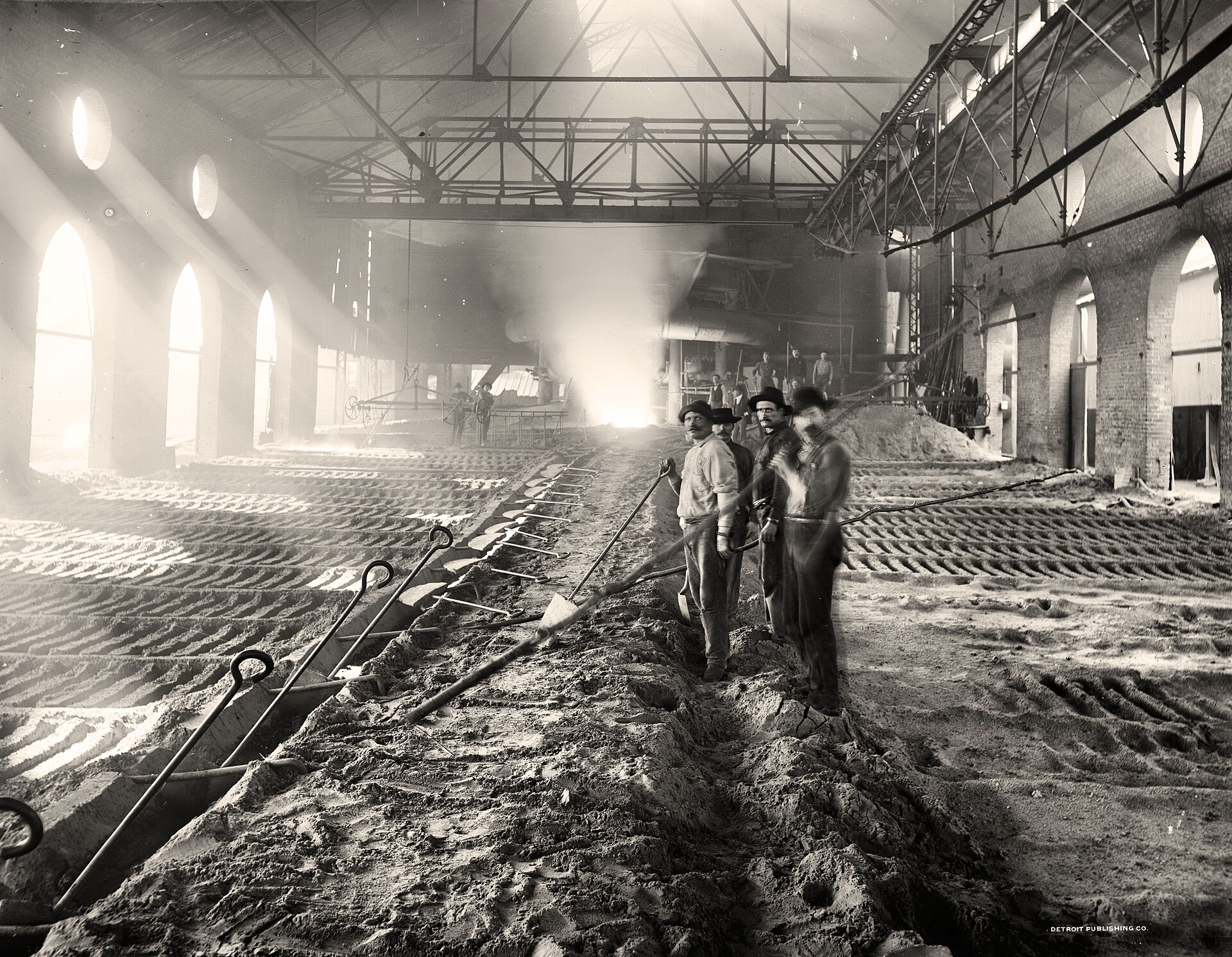
According to the National Geographic Society, factory workers in the 18th and 19th centuries endured extremely long hours under dismal and dangerous conditions, and it was not until the late 19th and early 20th centuries that industrialised nations began enacting reform laws to address the worst abuses of the factory system.
Workers during this period were expendable inputs in a production machine. They laboured 12 to 16 hours a day in factories with no safety protections, no minimum wage, and no recourse when they were injured or discarded. Children as young as five years old operated dangerous machinery. The contemporary political and economic theory of the time, classical liberalism, supported that the government should stay out of the economy entirely, leaving workers at the mercy of industrialists who had every financial incentive to exploit them and no legal reason not to.
People’s physical and mental healths deteriorated, families were destroyed, and entire communities were trapped in cycles of poverty while factory owners accumulated fortunes.
The pattern is critical to understand: innovation came first, exploitation followed, and regulation arrived only after the damage, both socially and economically, was severe enough that no one could turn a blind eye.
Shockingly, what ultimately changed this was not the good will of the industrialists. Labour unions formed, strikes erupted, and reformers pushed for legislation that would force industry to treat workers as human beings rather than raw materials. The Fair Labor Standards Act established minimum wages and maximum hours. The Sherman Antitrust Act of 1890 became the first federal law to outlaw monopolistic business practices, giving the government the power to break up concentrations of corporate power that interfered with trade and reduced economic competition. President Theodore Roosevelt used this law to sue 45 companies, and the Supreme Court ordered the breakup of Standard Oil in 1911.
These reforms did not kill innovation. They saved it from itself by ensuring that progress served people, not just profits. We can learn from the Industrial Revolution that, when new technology creates enormous wealth for very few but distributes its costs onto the common man, the government has both the authority and the obligation to intervene.
A new revolution?
While the Industrial Revolution exploited the human body, the AI and tech revolution is exploiting the human mind. The mechanisms are different, but the goal to maximise output, minimise cost, and let the people absorb the consequences, is the same. Today, the factories are algorithms. The machinery is now social media platforms, automated hiring systems, and AI-driven decision engines. And the workers being ground up are not just labourers in a mill. They are people, mostly young adults, scrolling through feeds engineered to addict them, graduates watching their career prospects disappear, and entire communities being shaped by systems they have no concept of.
The evidence is damning. In 2023, U.S. Surgeon General Dr Vivek Murthy issued a formal advisory on social media and youth mental health, warning that up to 95% of American teenagers use social media, and that those who spend more than three hours a day on these platforms face double the risk of depression and anxiety symptoms. Further, a 2025 Pew Research Center study found that 45% of teens now say they spend too much time on social media, up from just 27% two years earlier, and that 34% of teen girls report that these platforms make them feel worse about their own lives.
The platforms know this. Internal research from major technology companies has repeatedly shown that their products cause harm, particularly to young users. They continue to optimise for engagement anyway, because engagement drives advertising revenue, and advertising makes them rich.
The damage extends well beyond mental health. AI-driven automation is changing the labour market in ways that greatly punish the young and hopeful. Research from the Federal Reserve Bank of Dallas has found that AI simultaneously augments and replaces workers, complementing experienced professionals while automating the entry-level positions that young people depend on to build their careers.
The result is a job market that is becoming brutally difficult for new graduates. A 2026 Brookings Institution study confirmed that, while highly paid professionals in AI-exposed fields have the financial buffers and professional networks to navigate disruption, lower-income workers in those same fields face far greater adjustment costs if displacement leads to job loss. In many facets of our society, among our young and economically less fortunate, AI is widening inequality.
Profit over people
These are not mere side effects of an otherwise beneficial technology. They exist by design and are the direct outcomes of a system that optimises for corporate profit rather than human values. Social media algorithms maximise screen time, not truth or wellbeing. Automated hiring systems reduce cost, but they don’t increase opportunity or social progress. Every one of these systems reflects a decision by the companies that build and deploy them to prioritise profit over people. These choices can only be made in the absence of meaningful regulation.
The industrialists of the Gilded Age, men like John D. Rockefeller and Andrew Carnegie, wielded enormous economic power. But their influence had limits. They controlled oil and steel, not information itself. Today’s technology leaders have surpassed their predecessors in a way that should alarm anyone who cares about democratic governance. They do not just dominate markets; they control the infrastructure through which information flows, opinions form, and public discourse takes shape.
As Marietje Schaake argues in her 2024 book, “The tech coup: How to save democracy from Silicon Valley”, the gradual erosion of democracy is being accelerated by the growing and unaccountable power of technology companies, with new technologies like AI emerging in a regulatory vacuum that could prove fatal to democracies.
The concentration of power is unprecedented. A handful of companies – Apple, Microsoft, Alphabet, Amazon, and Meta – control vast portions of the global digital economy. They determine what billions consume online and, to a large extent, end up believing, every waking minute. They control how smaller businesses operate. They collect unprecedented volumes of personal data and use it to shape consumer behaviour in ways that were unimaginable a generation ago.
This is not just an economic problem. It is a democratic one. When private companies control the flow of information, they hold power over the most fundamental processes of self-governance. Algorithms determine what news people see, which political messages reach which audiences, and how public conversations are framed. Thus, the distinction between corporate power and political power dissolves, which is antithetical to our constitution.
The technocrats of Silicon Valley were not elected or appointed. They serve the interests of shareholders, not citizens. And yet they exercise more influence over daily American life than most elected officials ever will.
America has faced this problem before, and it has solved it before. The Sherman Antitrust Act did not destroy American industry; it preserved American industry and livelihood enough to be compatible with our conditional standards. The Fair Labor Standards Act did not bankrupt employers; it established a humane level of workers’ rights while industrialists enriched themselves marginally less.
Building guardrails and reaping benefits
The same logic applies today. The European Union has already demonstrated that comprehensive AI regulation is both possible and practical. The EU AI Act, which entered into force on 1 August 2024, established the world’s first comprehensive legal framework for artificial intelligence, classifying AI systems by risk level and requiring that high-risk systems meet strict standards for transparency, safety, and human oversight.
The United States has no equivalent legislation. While Europe builds guardrails, America lets its technology companies self-regulate, a strategy that is like letting a fox in the henhouse.
The United States doesn’t need a war on technology. It needs a commitment to ensuring that technology serves the people it affects. This means, at minimum, three things. First, the creation of a federal AI oversight body with the authority and expertise to evaluate the impact of AI systems on public welfare, employment, and civil rights before those systems are deployed at scale. Second, mandatory algorithmic transparency requirements that force companies to disclose how their systems make decisions, particularly in areas like hiring, lending, content recommendation, and law enforcement. And third, updated antitrust enforcement that recognises the unique dynamics of digital markets, where data monopolies and network effects create barriers to competition that existing law was not designed to address.

These are the modern equivalents of the reforms that saved American capitalism during its first Gilded Age around 100 years ago.
Proponents of the status quo argue that regulation stifles innovation, that government oversight will slow the development of AI, and cost the United States its competitive edge against China and other rivals. The industrialists of the 19th century made the same case against labour laws and antitrust regulation. They warned that reform would destroy the economy. Instead, it created the conditions for the most sustained period of relatively equally distributed economic progress in American history.
Regulation in fact channels innovation, and benefits people at large. It forces companies to innovate in ways that are compatible with human welfare rather than in ways that externalise their costs onto the public. The EU has not suffered an innovation crisis since enacting its AI regulations. It has gained a framework that its citizens trust. Trust and humanity, in the long run, is worth more than any short-term competitive advantage.
The United States is at a crossroads that it has seen before. A transformative technology is generating enormous wealth for too few while distributing its costs onto ordinary people. Corporate power is concentrating in ways that threaten democratic governance. And the government, captured by the same interests it should be regulating, has so far chosen to look the other way.
American values are market values, but they do not have to stay that way. Life, liberty, and the pursuit of happiness should not be overlooked in the pursuit of capital gain. They require a government willing to draw lines that corporations cannot cross, the implementation of institutions strong enough to hold the powerful accountable, and a public that refuses to accept market performance as a substitute for humanity.
The Industrial Revolution proved that America is capable of reclaiming its values from the machinery that devoured them. The question is whether it will wait until the damage becomes more catastrophic, or whether it will act now while the future is still being built.
The Dow may be at 50,000, but if the price of that number is the mental health of a generation, the livelihoods of millions of workers, and the integrity of a great nation, then it is not a figure that is worth celebrating.