



The goal is to look like I have nothing on.
The warmth of my fingers works primer into my skin, so it appears smoother. Concealer, to erase imperfections. A cream blush, for a light flush. A tinted lipgloss, so my lips appeared freshly-bitten. Leave no visible trace of any of them.
This routine has many names: “Invisible makeup“, “I Woke Up Like This“, “Your skin but better“. While some may dismiss them as mere makeup trends, in reality they are instructions for how a woman’s face should appear – and, more specifically, for how the effort behind it should disappear.
We are no longer buying products, but a specific story about ourselves: that our beauty must be innate, unconstructed and effortless. It has become something we actively aspire to. The compliment we prize is: “I can’t tell you’re wearing makeup today.” This ‘effortless’ ideal renders labour invisible, while making it mandatory. On Tiktok alone, videos tagged with the #NoMakeupMakeup hashtag have reached over 1.7 billion views, showing the pervasive nature of this ideal.
A survival strategy
Effortlessness has always been the highest beauty ideal for women – not because it actually is objectively the most beautiful look, but because that effortlessness symbolises power without the vulnerability of needing it. Consider what nonchalance signals; it says, “I am above caring, I am just naturally aligned with the current beauty standards”.
However, the status associated with nonchalance only makes sense in contrast to its opposite. Visibly trying gives away the fact that a woman cannot meet today’s beauty standards naturally. In a professional setting, this dynamic is brutally precise: wear too little makeup and you are unprofessional and unpolished; wear too much, and you are trying too hard, you’re vain, and therefore not to be taken seriously. The natural look is the narrow space between these two penalties – the only option that lets a woman demonstrate effort, while appearing to have made none.
This is exactly what Gillian Flynn illustrates in an infamous monologue in her 2012 novel, Gone Girl. Violently cutting her hair in a dingy gas station toilet, Amy Dunne establishes these stakes:
Cool Girls are above all hot… and if you weren’t, then there was something wrong with you.
The Cool Girl is a woman who has internalised the male gaze so completely that she performs effortlessness as a survival strategy. She is a woman who likes what men like, looks how men prefer, and does it without appearing to try, because trying breaks the illusion. She has absorbed the standard of an effortless, non-threatening femininity, and monitors herself against it constantly without registering that she is doing so.
The “No-Makeup Makeup” look is the Cool Girl’s face. It is the aesthetic expression of the same logic. I am perfect, but I am not “trying”, so I am not threatening. It is a tactic, packaged as a beauty trend.

The language of compliance
I have long been aware that the type of makeup I did had to fit the environments I was in. It was never just about the artistry or enjoyment of the craft. My face needed to be close enough to what culture dictated as ‘right’ and ‘beautiful’. Brown eyeliner, not black – so I would not look too fierce. Nude lips, never red – so I would not be seen as aggressive. I was not making choices. I was making edits.
I felt like I needed to communicate a very specific message to society.
This is the legibility of beauty. A woman’s face needs to be readable at a glance by everyone who has the social power to reward or punish what they see. Predictability means safety. It is about our femininity being decipherable by society, and it is a much larger and older story than a makeup trend.
In a world that historically punishes women for being too loud, too sexual, too ethnic, too decorated, or too visible, looking ‘clean’ and ‘natural’ is a way to preemptively make yourself acceptable. The baseline of neutrality is the natural look. It communicates: “I am controlled, I am disciplined, I am not excessive, I am unthreatening, I am not too much… I will be just enough for you.”
The moral leash
Of all the messages a woman’s face can send, why does culture repeatedly return to the ideal of naturalness? The answer lies in something older and much less rational – the idea of purity. A virtuous woman’s goodness was expected to reveal itself without effort, untouched by intention or performance. Innocence could not be constructed, it had to simply be. Visible effort suggested that a woman was aware of being seen, and being seen meant that she had already surrendered a particular kind of goodness.
The vision of a natural woman is seen to be undecorated, sexually passive, and her appearance communicated virtue precisely because she was not trying to communicate anything. Conversely, a woman who adjusted her behaviour to conform and perform for the gaze of society meant that she had a relationship with desire – either her own or others’.
In the oldest cultural framework, this means that her innocence has already been compromised and corrupted. Consider the painted women of the past who were not simply viewed as unfashionable, but morally suspect. Historically, these women were often associated with actresses or prostitutes, women whose faces were instruments of beauty, desire and transactionality. The moment a woman is seen to try to be attractive, she becomes threatening in a way that a ‘naturally’ beautiful woman is not. Trying implies agency; agency implies desire. And female desire, historically, is what the whole system is organised to contain.
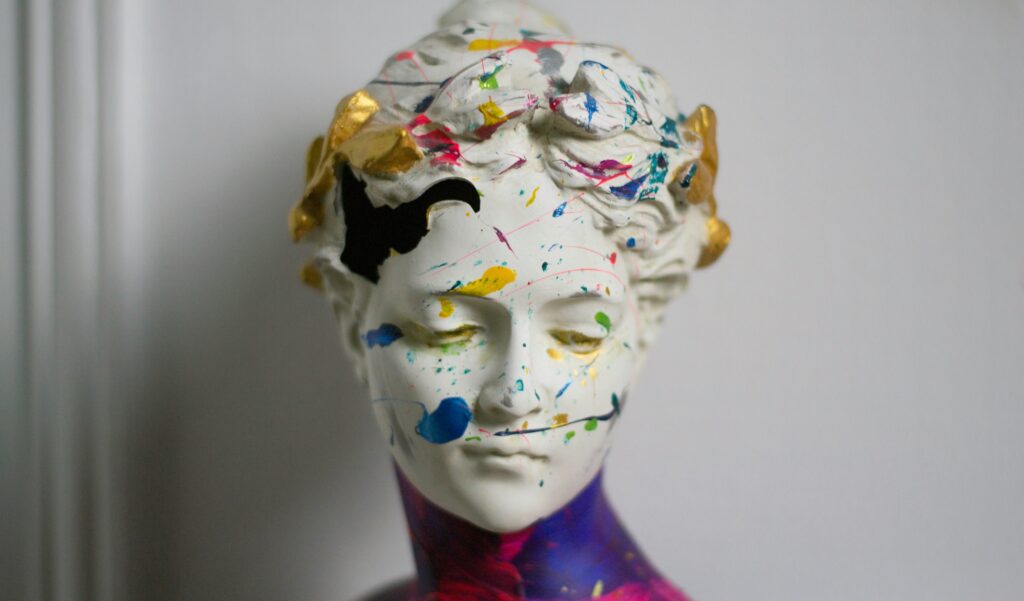
This is why the use of words “natural” or “clean” holds a moral weight that exceeds their literal meaning. It means uncontaminated – by excess, effort, or want. This standard of femininity has always been used to contain female sexuality by making its absence the prerequisite for respectability. You could be beautiful, but only if the beauty appeared accidental. You could be desirable, but only if you seemed not to know it. The clean girl, in the purest cultural sense, is a woman who appears not to know she is being looked at. This is how the culture has defined goodness: naturalness as evidence of character.
Selling the revelation
This mechanism predates us by several centuries. What feels like a contemporary beauty trend is in fact one of the oldest moral requirements that has been placed on women’s faces. In Victorian England, many believed in the pseudoscience of physiognomy, where the natural state of the body functioned as a legible text of a person’s physical features – conveying the person’s identity. John Caspar Lavater, the Swiss writer that popularised this belief, described the body as a “divine alphabet” inscribed upon us by God. This belief has long been a part of society, condemning women (who looked otherwise unacceptable) as making a visible moral error.
American writer Eliaza Bisbee Duffey, who wrote for The Ladies’ and Gentlemen’s Etiquette, similarly applied the physiognomic concept that the Greeks called kalokagatheia – the idea that inner, moral beauty manifests as outward beauty and that virtue makes itself visible in the body. The logic is not as archaic as it sounds. Psychologists call its modern reiteration the Halo Effect: the cognitive bias by which we associate attractiveness with positive qualities such as honesty, capability and trustworthiness. What the Victorian writers codified as moral philosophy, we now reproduce as unconscious bias.
Victorian beauty products were marketed around this same idea of revelation rather than alteration. Instead of claiming to transform the face, they promised to improve the complexion, restore freshness, or uncover a woman’s ‘true’ beauty through complexion washes, face powders and cold creams. They were not selling artifice. They were selling access to a woman’s most legible, virtuous self. The logic still survives today in products like skin tints, tinted sunscreens and blushes that mimic a natural flush.
The beauty industry did not create this mechanism. It simply inherited it and monetised it with extraordinary efficiency.
You are your own voyeur
What the Victorians enforced through social condemnation, the contemporary beauty industry enforces through something more efficient: self-surveillance. There does not need to be an external authority dictating how we look. The standard has completely taken over our psyche and is now indistinguishable from personal preference. You do not feel surveilled. You feel like yourself. This is now who you are.
This was what Jeremy Bentham understood when he designed the panopticon – a prison designed in a way that every cell was visible from a central tower, with its windows obscured so prisoners could never know whether they were being observed at any given moment. The genius of this design was not the surveillance, but the uncertainty. Once prisoners understood that they could be watched at any time, they began to watch themselves. There could have been a guard, or the tower could simply have been empty. It did not matter. The watching had already been internalised.
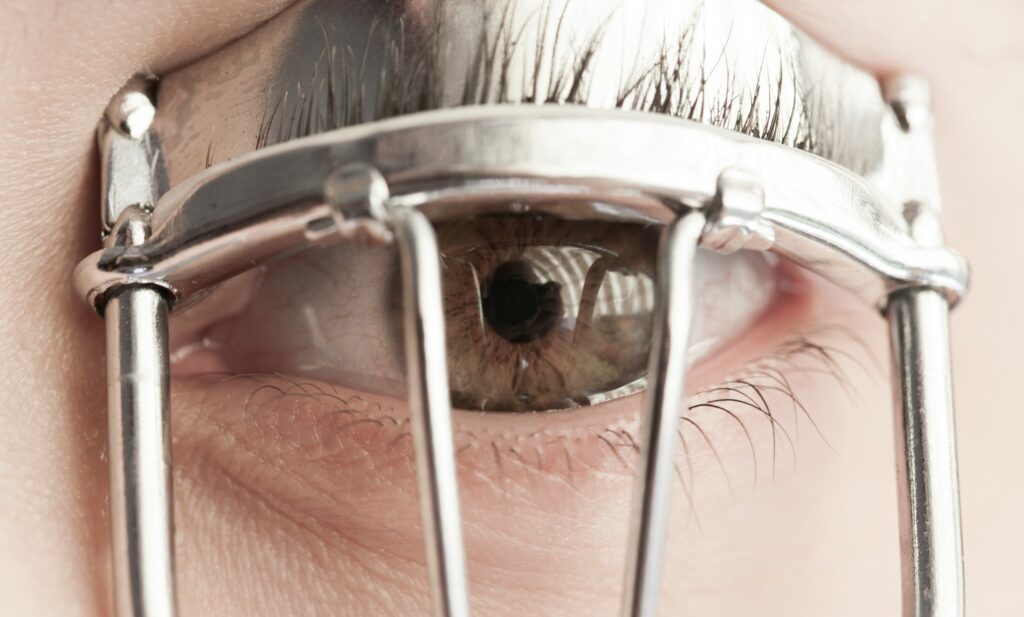
The beauty standard operates under the same logic. You do not need to be looked at to feel the standard’s pressure. Once you absorb the knowledge that you might be looked at, that possibility is enough. Every room you are about to enter. The meeting you are about to attend. A street you are about to walk down. The standard does not need enforcers because it has already been self-imposed by the people it rules. The tower is empty. The watching persists.
Margaret Atwood described this condition perfectly in her book The Robber Bride:
You are a woman with a man inside watching a woman. You are your own voyeur.
This is the true fallacy of the beauty standard. It causes women to police themselves so thoroughly that it feels like a choice. The receipts do not feel like a tax on your femininity, but are perceived as self-care or a reward. The time spent does not feel like labour performed for an invisible audience, but a ritual that you have chosen out of love and enjoyment. This is the system in its most complete form. The beauty standard is no longer an expectation, it has now transformed into total capture. The system never stays still.
Our Sisyphean task
Every generation, the bar rises to new levels of impossibility. In the 1990s, natural meant clear skin. In the 2010s, it meant glassy, poreless skin. Now, it increasingly means a face that has been medically pre-treated, so that effortlessness is guaranteed before you have even opened your eyes. Baby botox. Brow lamination. Lip tinting. Salmon sperm facials.
The escalation from surface products to semi-permanent medical alteration is not a sign that the standard has gone too far. It is a sign that the standard is working exactly as designed. The baseline keeps being raised precisely so that it can never be reached. Women are now expected to filter their faces in real life.
A friend I spoke to named this shift plainly:
Makeup used to be about play. Now, it is an obligation to look a certain way in whatever way possible.
What makes this structurally complete rather than simply extreme is who is setting the new baseline. Naturalness is now largely being determined by influencers whose medical maintenance is a professional expense underwritten by the very brands that profit from the gap between their faces and everyone else’s. This inaccessibility is now being sold to us as aspiration. The women who cannot afford these procedures are now being priced out of the baseline – starting further behind a finish line drawn for someone else’s face, in a race the industry has ensured can never be won.
The beauty industry has never been in the business of making women feel beautiful. It merely sells access to a form of beauty that, by definition, cannot be bought.
The system works because the most durable forms of control operate through consent masked by desire. If we stripped ourselves back of these expectations and standards, what would we be left with? The honest answer is: we will never know. The system has shaped us before our originality could be preserved. I have become indistinguishable from the performance.
However, the answer may be to recognise the system we are part of. We are each the architect who keeps rebuilding the prison walls every time we enforce the standard on someone else. Each split-second judgement of a stranger’s face adds a brick. The panopticon is not a fixed structure that was built and then handed to you. It is being continuously reconstructed by everyone inside it, including you. You alone can’t demolish the prison. But you can refuse to lay the next brick.