


This article originally appeared in The Skeptic, Volume 7, Issue 1, from 1993.
Yesterday I had lunch with a couple of executives from the marketing department of a publisher we’ll call Universally Books (I trust there isn’t actually a publisher with that name). Their business is the computer books the company publishes; nonetheless, they quite naturally take an interest in the rest of the company’s output.
Well, they told me, when they went to a marketing seminar run by the company to present its upcoming releases and a speaker announced a book on spontaneous human combustion, they thought it was a joke. Apparently, the whole place rolled on the floor with laughter. Except it wasn’t a joke, and they’re now responsible for making the sales force feel enthusiastic about selling it. I won’t go into details about this book, but judging from the name of the author, this is very unlikely to be a book saying there’s nothing supernatural about spontaneous human combustion.
You have to understand: I’ve reviewed this company’s computer books, and they’re generally sound, well put together, technically oriented books. But other sections of the company are responsible for some of the best selling examples of what a lot of us skeptics like to call ‘tripe’.
The conversation quite naturally drifted from there into the question of publishers’ responsibility generally. Lots of people will tell you that book publishing these days has nothing at all to do with disseminating information and everything to do with marketing and what will sell. Judging from my conversation with these folks, this is pretty much true. Oh, they have the odd pang of conscience about it and they were certainly interested in seeing copies of Joe Nickell’s discussion of spontaneous human combustion (if you want to read it, it’s in Nickell’s Secrets of the Supernatural, published by Prometheus). But on the whole it seemed to them perfectly reasonable that after all, the company has to make a profit.
This is, of course, something we’ve been hearing about for years. A number of the more visible skeptics think that one of the reasons New Age beliefs have become so respectable is the heavy promotion by major, often respected publishers. On the other hand, publishers put out those books because they sell. Which came first? Is it right just to tell people – through books – whatever they want to hear?
Talking about that raised the issue of censorship. I’m against that. At the same time, it’s frustrating to see the same myths perpetuated while hard evidence gets ignored. Universally is also publishing a creationist book which has already been torn to shreds by reputable scientists. My co-lunchers, who are by no means stupid people, admit that they’re not well enough educated in or knowledgeable about science to assess the claims made in such a book. Of course, they said, the publisher’s New York headquarters will have sent the book out to a scientific reader. But I’d say they’re guessing hopefully; they don’t really know.
The upshot of all this – as they told me quite plainly – is that skeptical books won’t get published, at least by them. Who’s going to buy a book that lays out the evidence in favour of evolution? Where’s the controversy in that?
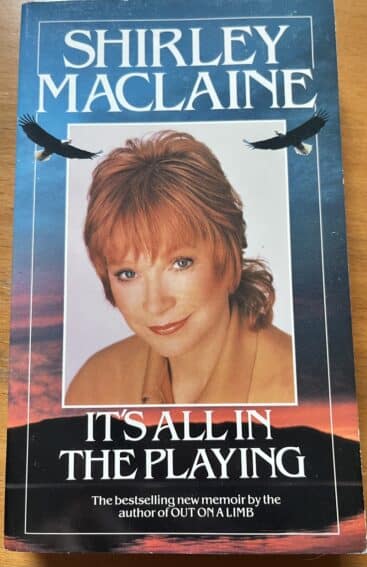
I quoted them a passage from one of Shirley MacLaine’s books, the one that Henry Gordon made fun of in Channelling Into the New Age (Prometheus), about crystals amplifying thought waves and emotions just as the crystal in your radio set amplifies the sound. This was a sort of test they failed. They sort of thought crystals were no longer in radio sets (they were right), but didn’t know that crystals don’t amplify anything.
They were even less clear on the creationist arguments and their rebuttals. They had seen Richard Dawkins’ demolition of Richard Milton’s book on creationism, but were in no position to assess Dawkins’ arguments.
Now, I’m not too clear on a lot of those details myself. When I have to write about these things I look it up. In a book. And I trust the publishers of the book to make the book accurate. Except, as is patently obvious, you can’t trust any such thing.
These were marketing people, not the people who make the editorial decisions, granted. But these days in most publishing companies, a lot of editorial decisions come from the marketing department. I mean, there we were, talking about skeptical books and computer books, and they’re thinking in terms of what will sell, and how. That’s their job, and you can’t fault them for doing it.
But that’s the central problem: they don’t know. Like most people, they’re not particularly well trained in science or in thinking skeptically. They quite clearly have doubts about this stuff – but since they don’t really know, they say, as most reasonable people would, ‘Well, it could be true.’ Faced with a case argued with lots of details, they can’t come up with the information to refute it.
That’s where we come in. We can’t – or at least I won’t – advocate censorship. But we can argue for education so that the people who control what information is made available to the public can make informed decisions.