




Earlier this year, speaking on the Joe Rogan Experience, the current US Head of Health and Human Services – antivaxxer Robert F. Kennedy Jr – explained that he is “a big fan of peptides”. Taken out of context this could seem innocuous, because of what the term peptide technically and scientifically means.
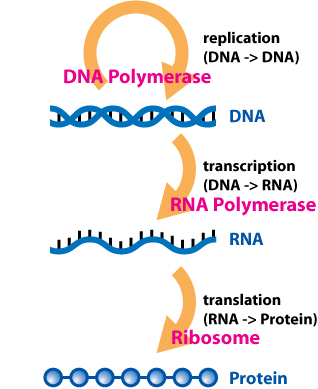
A peptide is just a chain of amino acids connected by peptide bonds. Amino acids are the building blocks of proteins, and enough amino acids are connected together, they will be folded up into a protein. Proteins are an important part of how cells function – when we talk about genes being the basic unit of heredity, we’re talking about the recipes for making proteins, which perform a lot of the basic functions in the cell. But even these relatively short peptide chains (usually between 2 and 50 amino acids), which aren’t big enough to be considered proteins, are often important signalling molecules that contribute to cell function, or even hormones that carry signals long distances across the body – like insulin, 51 amino acid-long peptide.
Often when we talk about peptides, we mean these short chains of amino acids produced by the human body to serve a particular function in the cell, but we might also think about using naturally derived peptides for therapeutic reasons. Again, insulin is a good example; it was extracted from animals and used to treat diabetes from the 1920s to the 60s, at which point the first synthetic insulin was developed.
Alternatively, we may mean synthetic peptides that are produced in a laboratory and used medically. Once we figured out how to make synthetic versions of human peptides like insulin or oxytocin, we started creating new peptides for therapeutic purposes. Therapeutic peptides are now used for all sorts of medical applications, including in HIV treatment, cancer therapy, or managing chronic pain and diabetes. Perhaps the most famous therapeutic peptide in 2026 is semaglutide – better known as Ozempic – which is a peptide similar to the hormone GLP-1 and is used for diabetes and weight management.
By Daniel Horspool, Wikimedia Commons, 2008
Therapeutic peptides have lots of benefits – their size means they can be quite specific; their breakdown products are amino acids that the body is used to clearing, so they don’t cause weird off-target effects; and they have relatively short half-lives, which means they don’t accumulate in the body. Their instability means they’re usually best injected. There is work to try and make oral versions of them but, for many, injection is required.
There are lots of ways we use peptides, including in lab research. We might use synthetic peptides to understand the function of a protein that the peptide can bind to, or we can use purified synthetic peptides to make sure tools like mass spectrometers are working properly to detect the peptides we’re looking for in our samples.
When doing fundamental lab research, we don’t need clinical-grade peptides, because we don’t expect those peptides to ever be in contact with humans. A human researcher might make use of the peptides, but they should be wearing protective equipment when handling them.
So, when someone on a podcast says, “I’m a big fan of peptides”, I naturally think, “Yeah, me too”, because our bodies are pretty reliant on the peptides they make naturally. Or I might think, “Yeah, me too” because therapeutic peptides like insulin have saved lives across the world for several decades. I might even say, “Yeah, me too” because they’re pretty useful in research, and I think research is cool.
The wrong type of peptide fan
However, there’s another version of peptides that’s popular in the ‘Make America Healthy Again’ influencer world, and it’s this version that RFK Jr is actually a “big fan” of. These are injectable peptides which are used by so-called biohackers who want to optimise their health. And it’s not just RFK Jr who’s “a big fan” of them – Joe Rogan is, too.
Joe has discussed his use of peptides on multiple episodes of The Joe Rogan Experience, including giving what sounds like a cross between a consultation and a sales pitch to comedian Rich Vos, who joined the show in part to ask Rogan for his advice on healing his torn rotator cuff. Joe also launched into a pro-peptide spiel when talking to Russell Crowe in 2024, saying:
peptides can help you tremendously. Tremendously. It helps you heal. It helps your body regenerate tissue. It helps you lose weight. It can help you in a lot of ways.
And earlier this year recommended peptides to Matt Damon and Ben Affleck, saying:
Well, that’s the thing about peptides, too, the Wolverine stack. BP157 and TB500. I don’t know if you ever get injured. If you ever get injured, get immediately on BP157 and TB500.
The Wolverine stack
So what is this peptide combination that Rogan is such a big fan of? BPC-157 is a synthetic pentadecapeptide – that’s a peptide made of 15 amino acids. It was originally isolated from gastric (stomach) juice, and has a number of purported benefits, including the promotion of healing of tendons, ligament, muscles, nerves, bones, teeth, corneas and the endothelium (tissue lining the insides of organs that have spaces inside them, such as the gut, oesophagus, blood vessels etc.) according to studies in animal models.
There are biologically plausible mechanisms for its usefulness. According to studies, BPC-157 promotes angiogenesis (the growth of new blood vessels from existing ones) by enhancing VEGFR2 activity and promoting the eNOS pathway, and we know both are involved in that process. This means we can see production of new blood vessels in experimental animals treated with BPC-157. It likely has some impact on the ways that muscles activate through regulation at the neuromuscular junction and it apparently promotes fibroblast proliferation and collagen synthesis, muscle fibre regeneration and new bone cell growth. It might also reduce inflammation.
These are all good things for regeneration but, given my training in cancer cell biologist, it also rings some alarm bells. These are all pathways that can be drivers for cancer growth in the body. When tumours develop enough to become metastatic (start spreading around the body), they often begin to promote angiogenesis – the growth of new blood vessels – and we see excessive proliferation of specific cell types. That’s not to say that BPC-157 causes cancer, in fact early studies in cell models and rats suggest that key parts of the angiogenesis pathway might also be downregulated by BPC-157. But studies also suggest that BPC-157, despite its short half-life, can have long-lasting effects in the body.

The biggest issue is that this compound has not been adequately studied in humans. So far, three studies have been conducted in humans with a combined total of just 26 patients treated with BPC-157. Two of the studies looked at the treatment of pain, one of which was a retrospective study where they looked at 16 patients, 12 of whom previously treated with BPC-157, asked by phone interview about their knee pain. The other was a pilot study where 12 patients with interstitial cystitis were given a single injection of BPC-157 and asked to report on their pain symptoms. The final study was a pilot study where two healthy people were given BPC-157 by infusion to test safety and tolerance.
In these studies, the safety profile is described as promising, with no reported side effects or specific adverse events that were considered by the researchers. But the data is so limited we can’t possibly be certain of the long-term health effects of injecting this compound.
As for the other part of the Wolverine stack, TB500 is another synthetic peptide derived from a longer peptide found in human cells. TB500 is seven amino acids long, compared to the full peptide – thymosin beta 4, which is 44 long. Thymosin beta 4 has been shown to promote migration of cells, formation of blood vessels and maturation of stem cells.
TB500 is banned for use in racehorses, where it’s used to promote tissue regeneration and is considered a performance-enhancing drug. It’s also banned for human use by the world anti-doping agency (as is BPC-157).
Peptide regulation
In the US, BPC-157 and TB500 are not approved as therapeutic peptides for clinical use. They’re also listed as category two compounds when it comes to pharmaceutical compounding. Compounding is a process where pharmacies can custom-produce products for patients tailored to their specific needs. It might involve mixing up a slight variation of an approved medication to prevent an allergic reaction if the patient is allergic to one of the inactive ingredients.
The FDA does not approve any compounded pharmaceuticals, but they do have a list of things that might be used in compounding, and comment on the safety of each. BPC-157 and TB500 are on the category two list – this means the FDA says there is a risk of an unsafe immune response or allergic reaction because there is insufficient safety data available from humans.
RFK Jr has now said that the FDA will move 14 of the 19 peptides initially considered category two off that list so they can be used for compounding. This, he says, will reduce the black-market production and sale of peptides.
It is true the black-market production and sale of these medications is risky. Currently, people are buying reagents designed for laboratory research to inject into their bodies, or they’re buying peptides without regulation on the manufacture and labelling. It’s for this reason that some researchers found that vials of TB500 they tested often do not contain what they say they’re meant to. They may also be contaminated with other compounds, which could cause harm – including severe allergic reactions. But moving BPC-157 and TB500 off the category two list, if that is indeed what happens, doesn’t make them approved and safe.
Natural peptides
Some biohackers will tell you that the reason these peptides are good to take is because they’re ‘natural’ – but there is no secret version of synthetic peptides which are ‘natural’. Even The Guardian got this wrong, when they reported:
While some injectable peptides are entirely foreign to the human body, others, like BPC-157 and TB-500, are synthetic versions of proteins that naturally occur in us, where they play a role in tissue and cellular repair.
BPC-157 is not found naturally in the body. While it was originally isolated from gastric juice, it does not exist as the 15-amino acid peptide which is used by biohackers. It’s a fragment of a larger peptide called BPC, and is thought to be the minimal product required for activity. In all cases, the BPC-157 fragments used in peptide injections is created entirely in the lab.
TB500 also doesn’t exist in the body. It’s a fragment of a larger peptide. Again, usually made in the lab and in this case usually modified slightly from the fragment that makes up the human peptide.
I don’t have a problem with synthetic compounds when their manufacture, labelling and use are properly regulated. We need to make synthetic versions of molecules for lots of reasons. But we need to be clear – this isn’t taking something that already exists in the body, these are chemical compounds being produced and taken without adequate evidence of safety or efficacy.
And frankly, you couldn’t pay me to risk injecting something into my body that is unregulated and lacks safety data.