


Throughout the 20th century, great scientists have had their work recognised by the Nobel committee, only to tarnish their own reputations in later life by descending into pseudoscience and quackery. Here are four Nobel Prize winners who did just that.
Linus Pauling
An extraordinarily gifted chemist, Linus Pauling was the first (and so far only) person to win two unshared Nobel Prizes. In 1954, he was awarded the Nobel Prize in chemistry for his work on the nature of chemical bonds, making the study of electron orbital hybridisation mandatory for chemistry students the world over. He was also a passionate pacifist, and in 1962 he won the Nobel Peace Prize for campaigning against nuclear weapons. He championed the results of Eric and Louise Reiss’s “baby tooth survey”, which showed that radioactive strontium-90 was detectable in the deciduous teeth of children who lived near nuclear weapons tests. A year later, the USA and the Soviet Union signed the Partial Test Ban Treaty, meaning that in future nuclear weapons would only be tested underground.
However, in 1970, Pauling published “Vitamin C and the Common Cold”, in which he claimed taking over 1,000% of the recommended daily allowance of vitamin C would ward off, and indeed cure, colds. Being a respected scientist, he was taken seriously, and his claims were tested with randomised controlled trials. Despite these trials showing little to no evidence of efficacy, Pauling continued to believe that vitamin C could not only cure colds, but also treat cancer. He pushed on with what he called “orthomolecular medicine”, claiming that suitably high doses of various supplements could be used to treat a host of issues.
Pauling passed away from pancreatic cancer in 1994 at the age of 93, his Nobel legacy tarnished by decades of unsubstantiated claims.
James Watson
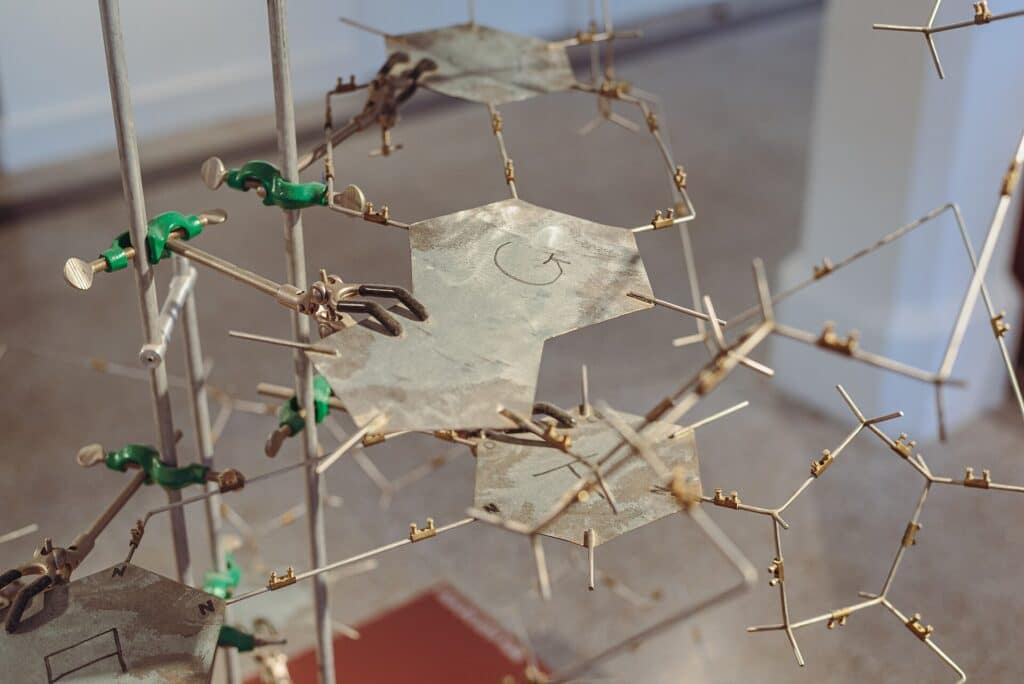
Together with Francis Crick and Maurice Wilkins, James Watson was awarded the 1962 Nobel Prize in Medicine for the discovery of the double helix structure of DNA. Like many Nobel Prizes, it came nearly a decade after the research was published. Rosalind Franklin’s famous Photograph 51, which Watson and Crick had access to before it was published, was instrumental. While Franklin did not get the credit she deserved because she had already passed away, Watson and Crick became household names. Francis Crick went on to have a distinguished career in biochemistry, contributing to humanity’s understanding of the genetic code. He died in 2004, and today the Francis Crick Institute, the UK’s flagship biomedical research centre, bears his name.
However, James Watson’s problematic views first came to light in 1968, when he published his autobiography “The Double Helix”. In it, he made disparaging comments about Rosalind Franklin, giving her the unwanted nickname “Rosy”, and claiming that, “if she had taken even a mild interest in clothes she might have been more attractive”. From the 1980s, he was embroiled in controversies around race, claiming in 2007:
“I am inherently gloomy about the prospect of Africa because all our social policies are based on the fact that their intelligence is the same as ours – whereas all the testing says not really.”
As a result of his remarks, he was suspended from his role at the Cold Spring Harbour Laboratory. He had, in his own words, become an “unperson”. He continued to make controversial claims, and in 2019 the CSHL revoked his honorary titles. He finally passed away in November 2025 at the age of 97.
Luc Montagnier
For any skeptics active in the 10:23 campaign against homeopathy, the name of Luc Montagnier should be very familiar. In the early 1980s, the AIDS epidemic was in full swing, with thousands dying from this new, terrifying disease. In 1983, Montagnier and his team at the Pasteur Institute isolated and identified HIV, greatly advancing humanity’s understanding of AIDS.
It took until 2008 for the Nobel committee to recognise Montagnier’s work and award him a Nobel Prize, but by then he was already researching controversial topics. Just a year after his Nobel award, he published a paper claiming that some bacterial DNA could induce electromagnetic waves at high dilutions. In 2010 he presented this idea at a meeting of Nobel laureates, claiming he could detect bacterial infections even when the DNA was no longer present. The other scientists recognised the similarities with the pseudoscience of homeopathy, and reportedly stood there shaking their heads. Homeopaths pounced on the talk, with the British Homeopathy Association stating that Montagnier’s work gave homeopathy “a true scientific ethos”.
Montagnier was also vocal during the COVID-19 pandemic, lending his support to the idea that the virus originated in a laboratory and might have resulted from an attempt to make a vaccine for HIV/AIDS. He also claimed that vaccines were contributing to the emergence of new COVID variants, and that the virus contained genetic material derived from HIV – neither claim having evidence to back it up.
Luc Montagnier died on 8 February 2022, at the American Hospital of Paris. No official cause of death was published.
Kary Mullis
If during the COVID-19 pandemic you ever took a PCR test, you have Kary Mullis to thank. In 1983 Mullis invented the polymerase chain reaction, a technique that allowed a single strand of DNA to be copied billions of times. To this day, you can visit biochemistry labs the world over and see rows of white boxes, hard at work amplifying genetic material.
In 1999 Mullis published his autobiography “Dancing Naked in the Mind Field”, giving his account of his invention of PCR and his other, less conventional ideas. He claimed that he’d never seen good evidence linking HIV to AIDS, claiming even Luc Montagnier couldn’t show him any. This was especially controversial, because by this time the mechanisms of HIV/AIDS were well understood, and the AIDS pandemic had claimed the lives of 16 million people.
Mullis also wrote of astrology, the paranormal, and an experience he had in the 1980s where he claimed to have encountered a glowing, talking raccoon. Perhaps uncoincidentally, there is also a discussion on LSD use.
While remaining an outspoken HIV/AIDS denialist, he was also critical of climate science, claiming, “The case of global warming is a good example of a politically driven scientific issue.” He remained something of a celebrity, appearing on numerous radio and TV shows. He died in August 2019 from complications with pneumonia, just before his invention of PCR became vital in the battle against COVID-19.
Summary
A phrase has been coined for Nobel laureates who descend into pseudoscience and quackery: the Nobel disease, otherwise known as Nobelitis. It’s important to remember that winning a Nobel Prize does not make you an expert in everything, no matter what prestige the prize carries.
Sir Paul Nurse, who was awarded a Nobel prize in 2001 for discoveries related to the cell cycle, wrote a warning to future laureates in 2013. He noted that since his award, everyone considered him a “general expert”, and stated that if the next generation of winners believed what everyone told them they “will be in danger of succumbing to Nobelitis”.
The message for the rest of us mere mortals should be clear: treat all claims with skepticism, regardless of who makes them.