




I vividly remember the first time I listened to Bill Hicks. It was on a road trip with my dad, and we were both so blown away that we stopped off at one of the strip malls that Bill hated so much to buy the rest of his albums. It was this bit from Rant in E Minor about taking mushrooms that set up shop in my psyche and never left.
This was back in 2002, long before I took my own “heroic dose” to squeegee my third eye nice and clean, but even then I recognised a fellow traveller, struggling with the same American culture that seemed so alien to me growing up in suburban Virginia. This was eight years after Bill had tragically died from pancreatic cancer. It was the peak of the War on Terror, and somehow this dead prophet was perfectly describing, as well as succumbing to, the problems that were unweaving our social fabric; problems that, 20 years later, are fully out of control across the political spectrum.
However, I come here not to praise Bill Hicks, but to bury him. Bill was a brilliant and passionate psychonaut who inspired in me a lifelong desire to see through the illusions and legitimising myths that shape our world. He was also a conspiracy theorist and a proto-incel, whose misogynistic bits often felt like more than just jokes. Some have sought to canonise him for the former while downplaying the latter and, in reaction, others have sought to dismiss him as only the latter and downplay the former. The reality I experience is that Bill was just a person, filled with anger and passion that gave him insight but also blinded him to the flaws in his own worldview. He was the canary in the coal mine of 90s American culture. Most of all, Bill was a true believer.
A true believer, specifically, in High Weirdness. If you want to understand what High Weirdness looks like when it takes root in a single human being, you don’t need to read Erik Davis’s book or wade through Robert Anton Wilson’s conspiracist fiction. You just need to watch Bill Hicks perform. He described himself as “Chomsky with dick jokes” and that’s not a bad summary, but it misses what made him special. Hicks didn’t just do political comedy. He embodied every tension, every promise, and every catastrophic failure mode of the High Weirdness movement more completely than perhaps any other figure in American culture. He was its poet laureate and, like any good laureate, he captured the spirit of the thing, warts and all.
High Weirdness is fundamentally about skepticism of normie, mainstream beliefs and narratives. The psychonauts who pioneered it saw the world around them as asleep, and believed it was their obligation to wake everyone up. Bill’s entire comedic persona was built on that conviction, the firm belief that mainstream American culture was a con job, a machine for manufacturing complacent consumers too dull to notice they were being constantly fucked by the devil himself, as Bill put it with ample visual aid.
His famous routine about newly elected presidents being ushered into a smoky back room to watch secret footage of the JFK assassination from an angle nobody has ever seen before is the perfect distillation of this worldview. The punchline – where the new president is simply asked “Any questions?” – captures the High Weirdness sensibility in miniature: the real power isn’t where you think it is, and if you could see what they see, you’d understand why nothing ever changes. It’s funny, it’s paranoid, and it contains just enough truth about the relationship between wealth and political power to feel uncomfortably resonant. That’s the High Weirdness sweet spot, and nobody hit it more consistently than Bill.
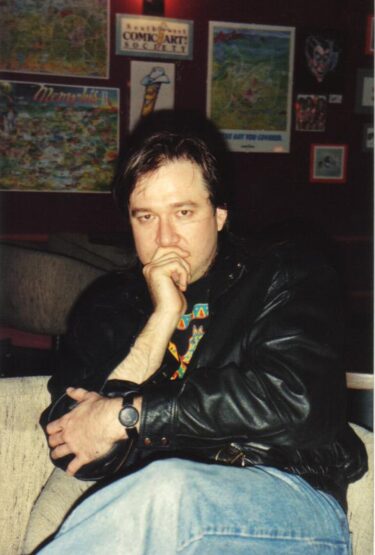
When he turned this lens on televangelists, on anti-drug hysteria, on the shallow performativity of American patriotism, the results were often genuinely brilliant. This is the Bill Hicks that lives in my mind, the one my dad and I couldn’t stop listening to on that road trip. The prophet who saw through the bullshit and had the guts to say so, night after night, to audiences that sometimes literally attacked him for it.
But Bill didn’t just want to tear down mainstream narratives. Like any good psychonaut, he wanted to replace them with something better – and that something, inevitably, involved drugs. He was an enthusiastic and vocal advocate for psychedelics, particularly LSD and psilocybin mushrooms. On Relentless, he joked that he quit drugs because “once you’ve been taken aboard a UFO, it’s kind of hard to top that”, but his advocacy was always earnest and persistent, always coupled with a keen awareness of the cost in human suffering that came from the war on drugs.
This is High Weirdness at its most appealing: the sincere belief that altered states of consciousness can reveal truths inaccessible to the sober, consumerist mind in ways that allow us to reshape society for the better, even if that just means no longer imprisoning non-violent drug users. As someone who eventually took that journey myself, I understand the pull. There’s something genuinely moving about Bill’s insistence that consciousness itself is worth exploring, that a society which permits alcohol and tobacco while criminalising mushrooms has its priorities catastrophically wrong, and that it is worth experiencing universal love and the recognition that we’re all one, even if doing so will fuck up the economy, which Bill reminds us is fake anyway.
Altering one’s consciousness is also, as Davis warns, a tightrope. The line between ‘consciousness expansion has value’ and ‘I have accessed truths that normies can’t comprehend’ is perilously thin. Bill didn’t always stay on the right side of it, and anyone who walks this path has to do so with concern about going similarly astray.
That’s the thing about true believers, the same fire that illuminates can also blind.
Which brings us to the conspiracy theories. Bill wasn’t just skeptical of mainstream narratives, he was conspiratorial about them. His JFK material wasn’t just comedy, he seems to have genuinely believed the assassination was a deep-state operation, and he presented this not as speculation but as obvious fact that only the wilfully blind could deny. His material on the Waco siege came from the same place: a conviction that the government was not merely incompetent but actively malevolent, engaged in deliberate violence against its own citizens. Which is not to say that the US government is above deliberate violence against its own citizens, only that Bill represented a “yes and” response to conspiracy theories that is now mainstreaming a wide spectrum of misinformation through popular media like Joe Rogan.
This is the failure mode for skepticism that I’ve written about extensively. When you take seriously the maxim “question everything”, it becomes dangerously easy to end up in a place where you’re confident you’ve found the hidden truth that the sheeple can’t see. Bill was brilliant at identifying genuine problems with official narratives, but he lacked the epistemic guardrails to distinguish between ‘the government sometimes lies’ and ‘the government is engaged in a vast, coordinated conspiracy to suppress the truth about everything’.
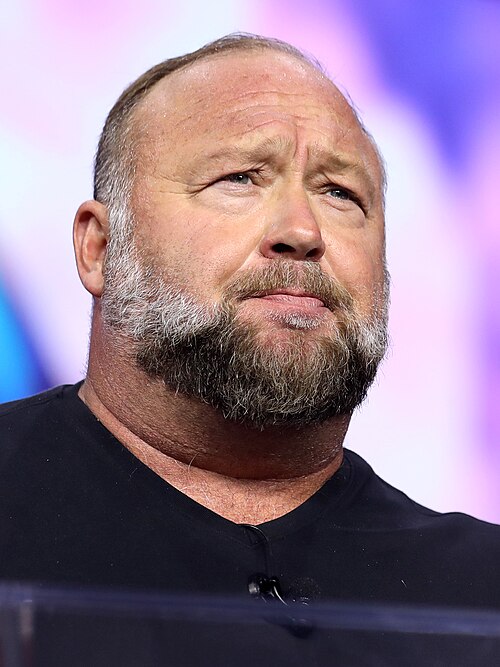
The bitter irony is that there is now a persistent internet theory that Hicks faked his own death and reinvented himself as Alex Jones, creating a sort of High Weirdness ouroboros in which the comedian who mainstreamed anti-government conspiracy comedy is himself the subject of a conspiracy theory connecting him to the man who took that same paranoia and weaponised it into a far-right media empire. The through-line isn’t biographical, but it is ideological, and it runs straight through High Weirdness. Bill helped build the road that leads from healthy anti-establishment skepticism to InfoWars. He didn’t mean to, but true believers don’t get to control where their belief systems end up once other people get hold of them.
The concerns get less grey when you turn to Bill’s routines about women. Bill often did bits about his troubles with women and difficulties maintaining relationships while traveling constantly as a comedian. He also frequently did a bit about the show Cops, where the police respond to a domestic violence situation in which the woman aggressively defends her abusers. This thread of his comedy peaked with his album Relentless, which includes a song called “Chicks Dig Jerks” performed with Marblehead Johnson, a band he’d formed with friends. The song’s thesis is right there in the title: women are inexplicably attracted to abusive men and ignore nice guys like the narrator.
The opening verse runs through Hitler, Manson, and Ted Bundy as evidence that terrible men have no trouble attracting women, before pivoting to vignettes about domestic violence victims who can’t leave their abusers. The song is deeply unfunny, and always stuck out to me as the first time I can remember hearing someone seriously argue that women prefer terrible men.
Looking back now, it’s clear to me this was proto-incel material, released just a few years before the term was first coined and decades before it became a significant influence on society. The self-pitying “nice guy” who can’t understand why women don’t want him, the framing of women’s romantic choices as a pathology rather than decisions made by autonomous human beings, the resentment dressed up as bewildered comedy – all of it would be right at home on a contemporary manosphere forum. And again, this wasn’t an isolated moment. Bill’s comedy regularly featured material about women that ranged from dismissive to hostile.
This, too, is High Weirdness. Along with questioning taboos around drugs, the psychonauts questioned taboos around sexuality, which often resulted in pressuring people into sexual acts they did not want. The transgressive impulse doesn’t come with a built-in moral compass. If you’re committed to violating normie conventions, you have no reliable mechanism for distinguishing between ‘this norm serves no real purpose’ and ‘this norm exists to protect people’. Bill’s drug advocacy challenged norms that arguably deserve challenging. His gender politics mostly just reproduced the misogyny of his era and gave it a veneer of countercultural cool.
I said I came to bury Bill Hicks, not to praise him, but of course that’s not quite right either. The whole point of the Shakespeare reference is that Marc Antony says he comes to bury Caesar, then proceeds to do the opposite. I’m trying to do something harder than either praising or burying: I’m trying to hold the whole picture at once.
Bill Hicks was the perfect embodiment of High Weirdness: brilliant and dangerous, insightful and paranoid, capable of genuine moral clarity in one breath and lazy misogyny in the next. A motion in the British House of Commons placed him alongside Lenny Bruce as an “unflinching and painfully honest political philosopher”. That’s not wrong, exactly, but it is incomplete.
Understanding the full Bill means understanding how his anger could fuel both his insight and his follies. The same forces that made him a cultural prophet also made him a conspiracy theorist and a man who wrote “Chicks Dig Jerks” without any apparent irony. That duality isn’t a contradiction. It’s the whole point. It’s what happens when you walk the tightrope every night – sometimes you make it across and sometimes you fall.
The fact that we still can’t agree on which moments were which tells you everything you need to know about the enduring, infectious, maddening legacy of High Weirdness itself, and about the true believers it produces.