




A regular reader of The Skeptic might well be wondering in what possible way plate tectonics can be compared to homeopathy.
Plate tectonics is the scientific theory that explains how the Earth’s outer shell is made up of extremely large moving plates, whose interactions are the reason for earthquakes, volcanoes, mountains, and maybe (or maybe not) our very existence.
Homeopathy, according to proponents, is: “a natural form of complementary medicine which encourages the body to heal itself… based on the principle of ‘like cures like’.” It is, of course, widely considered to be pseudoscience as it is not backed up by good evidence; what evidence there is claimed to be is often misrepresented, cherry-picked or misreported; and it is based on a “wildly implausible” principle: that “a non-existent substance can cause the body to heal itself” (we say non-existent, because beyond a 12C concentration, no molecules of the original solution remain in a homeopathic remedy.)
This last point is where homeopathy meets plate tectonics, at least according to an article by What Doctors Don’t Tell You on healthy.net:
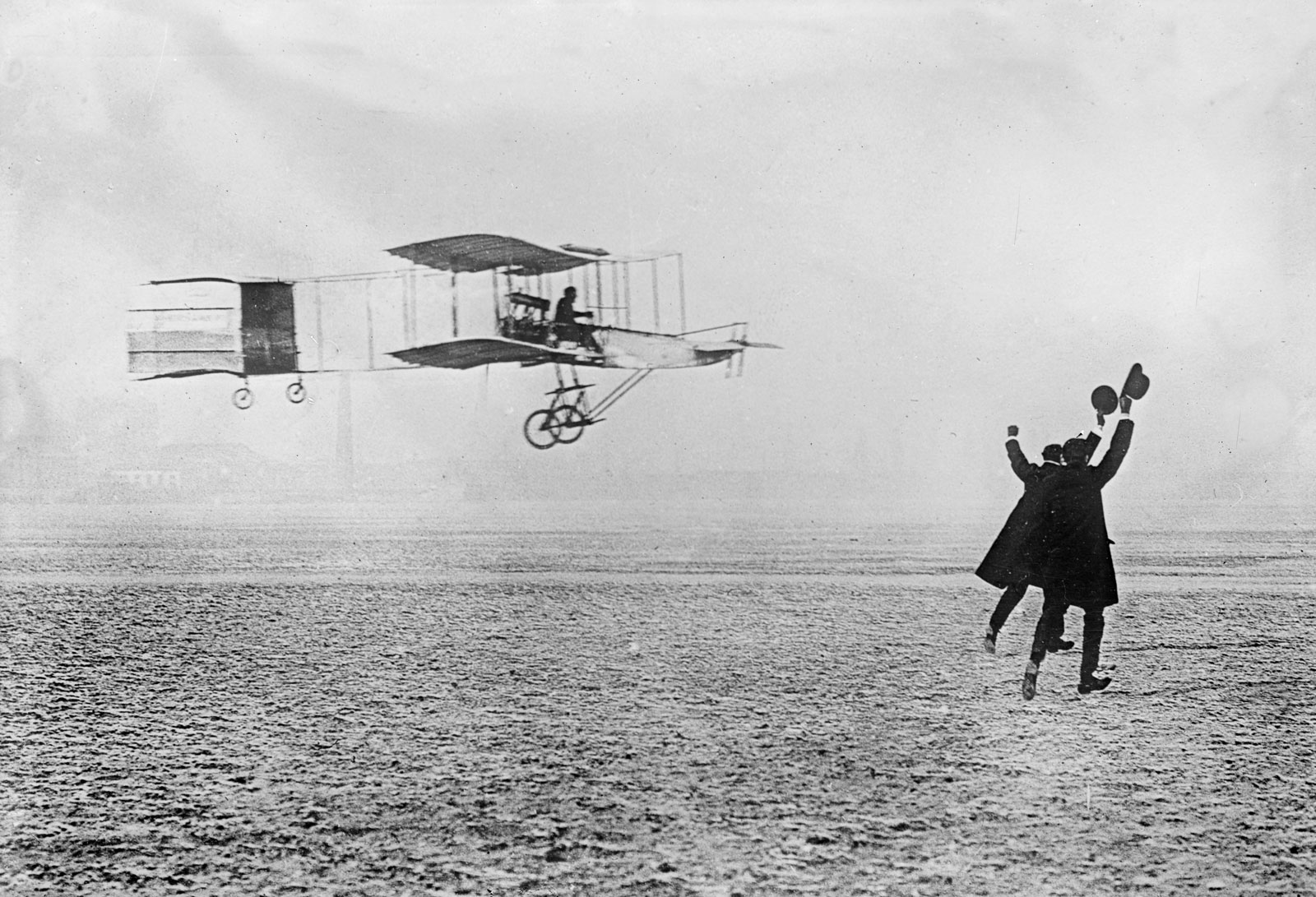
implausibility is not a criticism. History is littered with examples of once implausible ideas that are now accepted-aeroplanes, meteorites and continental drift, for example.
This claim is worth at least some consideration, as it is indeed the case that a number of phenomena – including plate tectonics – that are accepted facts today were indeed once regarded as wildly implausible.
Continental drift
German Meteorologist Alfred Wegener first proposed continental drift as a scientific theory in 1912 after he realised the coastline of Brazil looked like it would fit rather neatly into the opposite coastline of Africa. His theory of “continental displacement”, which built on related suggestions by others stretching back into the nineteenth century, developed after further investigations (and some ad-hoc paper-jigsaws) established similarities in flora and fauna across wide ocean expanses.
The translation of his work into English in 1922 brought a hail of derision down on his idea from around the world, with critics ridiculing it as “delirious ravings” and dismissing it as “Germanic pseudo-science”. Wegener did make six (ultimately incorrect or partial) suggestions for mechanisms by which it might occur, from gravitational and centrifugal differentials to tidal forces, but none of these were sufficient explanations and he was dismissed as having no “credible mechanism” for his theory. He died in 1930, but his theory of continental drift, though not the mechanism, turned out to be validated by measurements taken in the 1950s and 60s, forming the modern and well-validated scientific theory of plate tectonics.
So, the skeptics of the time were wrong, and the once-implausible theory of continental drift was not a pseudoscience after all. Time for us to heed the call to reevaluate homeopathy? Not quite. Three important facts separate plate tectonics from homeopathy:
1. Wegener had a lot of evidence for continental drift, even without a convincing explanation for the mechanism of action.
In his 1922 book The Origin of Continents and Oceans he presented wide-ranging evidence for his claim across various fields.
He noted that animal distribution supported the continents having previously been in different positions and configurations. One example he gave was marsupials, which live only in Australia and the Americas. This geographically far-flung similarity fitted very poorly into the previously-held ideas around land bridges or sunken continents, and very well with his theory of continental displacement. As he wrote: “Even the parasites of the Australian and South American marsupials are the same.”
Wegener also noted the same similarities about earthworm species either side of the Atlantic, and that the distribution of fossil plants and reptiles also points to continents – or a single continent – in the distant past that would match his theory:
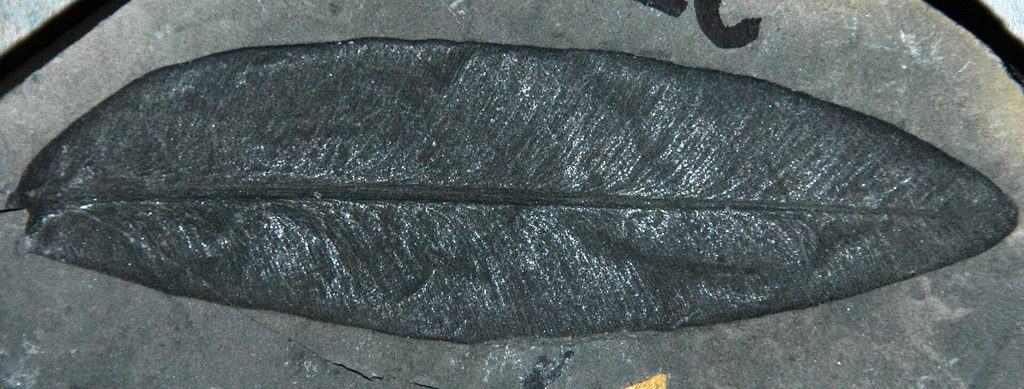
the distribution of the Glossopteris flora, the reptilian family of the Mesosauridæ and many other elements, forces us to the assumption of a former large continental area uniting the southern continents.
Wegener also assembled evidence from geology and similarities or indeed matches in rock formations and types. He mostly discussed parallels either side of the Atlantic Ocean, such as the “similarity between some groups of sedimentary rocks on both sides of the Atlantic”, but also gave more limited examples from around the globe, such as connections between India and South Africa, for example: that both “coasts consist of a strikingly straight fracture of a plateau of gneiss” – gneiss being a metamorphic rock with distinctive bands of dark and light coloured minerals.
While Wegener, like proponents of homeopathy today, did not have a convincing mechanism of action, he did have substantial and varied scientific evidence that he was correct. This is utterly unlike proponents of homoeopathy today, who have spent decades attempting to demonstrate efficacy without success, as “currently available Cochrane reviews of studies of homeopathy do not show that homeopathic medicines have effects beyond placebo.”
2. Wegener’s theory solved existing problems in understanding.
Wegener didn’t just have evidence that he was right. His theory offered solutions to problems that were already causing difficulties.
By the early 20th Century it was well-known that the climate in the past had been radically different from the climate at the time. There was evidence of forests in the icy islands of Svalbard in the Lower Tertiary (around 66 to 34 million years ago), and not just made up of pine and fir trees but also warmth-loving plants such as water-lilies, walnut and magnolia. One commonly-held explanation was that the poles had changed position, but this led to significant self-contradictions. For example, evidence of glaciation was noted in central Africa, while no such glaciation was present at the same latitude at the same time in the past in Indonesia, but rather evidence of hot, tropical climates at that same time in the past.
Wegener’s summary of such an explanation? “It need scarcely be said that this result is absurd.”
Wegener was also able to show that there were serious shortcomings with the current understanding of the Earth’s crust:
statistics of the contours of the earth’s crust lead to the remarkable result that there are two heights which occur most frequently, whilst the stages between them are quite rare. The higher stage corresponds to the continental platforms, the lower to the oceanic floor
Wegener argues that this was not what you’d expect from a single crust pushed upwards and downwards, which was the kind of process required by theories of the Earth’s past that involved rising and sinking land bridges between continents. He argued for two distinct types of crust. While he didn’t have the full modern understanding of how “the crust beneath oceans and continents is fundamentally different”, he was correctly highlighting real issues and alternative models to the science, as it stood in the early 20th century.
By contrast, homeopathy does not have a similar series of problems to solve that are currently baffling for conventional approaches and modern medicine. Homeopathy is not needed to provide an explanation for why some people get better after being given homeopathic “medicine”. We know that people’s health appears to improve, even when given inactive treatments, due to the natural course of illnesses, regression to the mean in chronic conditions, and (subjective) placebo effects.
Indeed, rather than solving baffling conundrums, homeopathy creates a significantly bigger contradiction: how can a homeopathic treatment have an effect if there’s none of the supposedly active ingredient in the treatment provided? And thus, they have to entertain fantastical suggestions, like the memory of water…
3. Wegener’s theory gave clear indications of how his theory could be proven – and when more evidence arrived, it was proven.
Wegener wasn’t able to explain how the continents moved, which was absolutely a weakness in this theory and a critical reason for its dismissal at the time. But he argued that his theory could be proved, and suggested how that could be done:
If continental displacements were active throughout such long periods of time, it must be assumed that they are continuing even at the present day. There thus remains only the question as to whether the movements are fast enough to be disclosed by astronomical measurements taken within a not too long period.
If scientists establish the precise longitude of two locations using astronomical observations, and repeat those measurements years later, if the distance between them has changed, the land has moved relative to each other. Sufficiently precise observations would demonstrate the rate and direction of continental movement.
His theory was not ultimately vindicated by these means, but through a combination of other factors, including paleomagnetism, observation of seafloor spreading, ocean mapping, and seismic imaging, but he did set out means by which his theory could have been tested and proven – or indeed disproven.
It is rather unusual for homeopaths to offer such predictions that give clear means to prove and falsify the principles of homeopathy. One rare example is homeopath George Dimitriadis, who in an article in Some Essays on Homœopathy (1989) titled “The Scientificity of Homoeopathy” says:
Thus, a good scientist always applies the theory (formulated or induced from the raw data) to predict the outcome of future observations, being ever so careful to objectively record the minutest detail; and if the results fit the initial theoretical predictions, then he has verified his theory; but if the results are contrary to the predictions, and there is no flaw in experimental design or procedure, then he has grounds for refutation.
So far, so good. Unfortunately, later in the article Dimitriadis says: “if a particular prescription fails in any one case, it is more probable that they [the homeopath] have failed, rather than Homœopathy having failed.” This is perhaps unsurprising in an article apparently intended as a means for fellow homeopaths to “defend Homœopathy as most scientific against even the strongest attacks.”
Wegener had a means to prove his theory right – or wrong. Homeopathy seems unwilling to take the same important step.
Plate tectonics is not the only example of skeptics getting it wrong, of course. Prion diseases were mocked as heretical and meteorites were once considered superstition, but evidence and rigour changed people’s minds.
When crystal healers, energy medicine peddlers and detox pushers tell us the science hasn’t yet caught up – but they’ll be vindicated in the end! – we should ask them: what evidence would they agree could prove them wrong?
Scientists and skeptics have been wrong before and will be wrong again. But we should look at the evidence, not hope that every far-out idea is waiting for its own moment of Wegener-esque vindication.