




This article originally appeared in The Skeptic, Volume 6, Issue 4, from 1992.
It’s amazing to me that some of the readers of The Skeptic are not just skeptical about ball lightning but actually positively disbelieve. I should like to call to these Philistines’ attention a very interesting document published by the United States Air Force. Its reference number is CRD-124, it is dated March 1964, and its title and credits are ‘Eyewitness Account of Kugelblitz‘ by Edmond M Dewan, then of the Microwave Physics Laboratory of the Air Force Cambridge Research Laboratories. I reproduce the abstract in full:
The report records a number of eye-witness accounts of ball-lightning which were submitted to the author spontaneously in response to a newspaper request. Points of potential theoretical interest in each account are discussed individually. The appendix includes material which although already published might otherwise be inaccessible.
Thirty-three persons out of an unknown number responded to the newspaper request with letters describing their personal experiences with ball lightning. In a separate survey of all the 15,923 individuals working for a particular contractor at Oak Ridge (the atomic energy facility of the United States), 3.2% responded with positive answers to a 15-question questionnaire. It is to be assumed that a large percentage of these employees had technical or scientific training and were eminently competent to describe their experiences.
OK, now, after reading the above and taking my word for it that it is a literally true report of the facts, make a note of how you feel about ball lightning: do you think that such a phenomenon exists or not? Has your opinion changed from what it was before you read about it here? Do this before you continue with the article.
New subject: Some of the readers of The Skeptic are not just skeptical about levitation but actually positively disbelieve. I should like to call to these Philistines’ attentions a very interesting book published in 1928 by Burns Oates & Washbourne Ltd., publishers to the Holy See. For those who are not into these niceties, that means that they publish for the Roman Catholic Church. The book has the ‘Imprimatur’ and the ‘Nihil Obstat’ of the Church, which means, I believe, that the Church has permitted/authorized it to be printed and that anyone in the hierarchy, even a parish priest is permitted to read it. Its title and credits are Levitation by Oliver Leroy, Professeur agrégé and, although it is long out of print, copies may be examined at the SPR library in London and who knows where else. I reproduce the first paragraph of the five-page introduction.
According to an ancient, uninterrupted and almost general tradition, the human body is able, with certain persons, at certain moments, to be raised from the ground, to remain suspended in mid-air without any visible prop, and sometimes move about in it, without the traceable action of any physical force. The phenomenon is now called levitation.
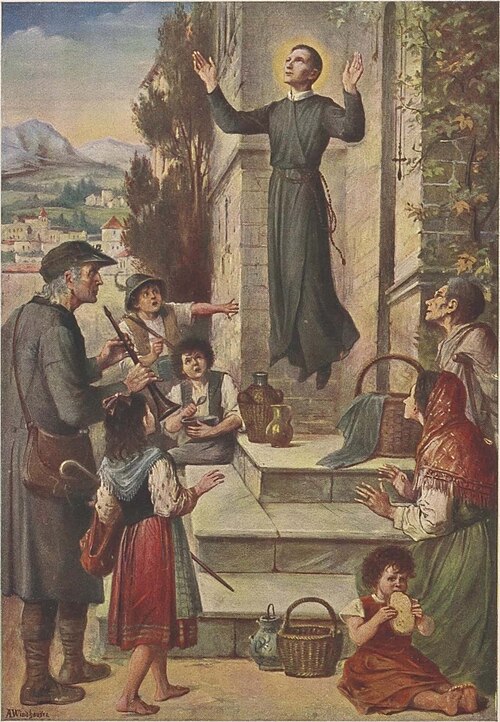
This 276-page book proceeds to examine both Christian and other reports of levitations, giving accounts of several hundred cases, (over 600 names are indexed) and has in addition an appendix listing some 60 other saints or holy persons who have been reported to have levitated themselves but on whom the author felt he had insufficient information. Amongst those treated in some detail are the perennial Daniel Dunglas Home, St Joseph of Copertino, St Teresa, St Alphonsus Liguori, Blessed Andrew Hubert Foumet, Blessed Bernardino Realino, and Blessed Joseph Benedict Cottolengo. There is a nine-page bibliography. The referenced books are mostly in French and seem to include everything except the Necronomicon (little joke for Lovecraft lovers). Leroy terminates his work with eight conclusions which I feel it instructive to include here:
1. According to very old traditions of certain origins, the human body is apt, in certain circumstances, to elude the law of gravity.
2. Catholic hagiography alone is in possession of an ancient written tradition, continuous and varied, based on verified and accurate documents, on levitation. Still, every fact recorded elsewhere, as those regarding demoniacs, mediums, and non-Catholic mystics, may not be imaginary.
3. Catholic hagiography, among doubtful or even seemingly interpolated facts, presents a number of cases where the evidence for levitation offers the security usually required from historical documents.
4. Those who reject these facts as impossible meet an historical assertion with a denial which it behoves them to make good on the grounds of historical criticism. The most efficient process seems to pick out one of the best-established cases – that of Joseph of Copertino, for instance, to start with – and to demonstrate its weaknesses by exposing fraud or error in it. Such a test has never been done.
5. Those who account for the belief in levitation by an illusion of the mystics or witnesses betray a superficial knowledge of the question. Their arguments can satisfy only a prepossessed mind. Practically these deniers do not form a category different from the preceding ones.
6. If the levitation of mediums is regarded as genuine, the analysis of its physical characteristics and the description of its psychological circumstances preclude any likening of it to that of Catholic mystics.
7. The problem of levitation presents itself in terms that do not fit in with the method of physics. The pseudoscientific solutions proposed to account for the phenomena are valueless, at least as a general explanation, and there is no sign that something better may be found out in the future. Indeed, levitation is always connected with moral circumstances: a certain way of thinking, of feeling and living. The conjunction of two distinct orders, ‘cet effect qui excede la force naturelle qu ‘on emploi’, as Pascal would say, does not suggest the agency of an unknown natural power, but of a cause that is heterogeneous to every natural force.
8. Traditional Catholic theology does not admit a natural cause for levitation – though this attitude has no necessary relationship with its dogma. It regards it as a divine marvel or a diabolic trickery. The levitation of demoniacs, or mediums is a parody, dismal or ludicrous, of the charisma of the saints. As to that of non-Catholic or even pagan mystics, it does not a priori deny its divine origins; the nature of the phenomenon in each case is to be judged after the moral context of the life in which it occurs.
I wish I’d said that, especially the part about it’s OK for saints but not for sinners.
Right then, students, after reading the above and taking my word for it that it is a literally true report of the facts, make a note of how you feel about levitation: do you think that such a phenomenon exists or not? Has your opinion changed from what it was before you read about it here? As a result of reading about levitation, has your opinion changed about ball lightning?