

This article originally appeared in The Skeptic, Volume 6, Issue 6, from 1992.
I first heard about Richard Dawkins’ notion of ‘memes’ from a collector of computer crime statistics in California who I interviewed for the magazine Personal Computer World. At the time, I found it hard to believe: my computer crime expert sounded as if he were suggesting that ideas had some kind of supernatural power to take over a ‘host’, and I found it hard to believe that such a respected scientific thinker as Dawkins would come up with such a theory.
The reality is a bit different, but it’s easy to see how the misunderstanding comes about: Dawkins talks in metaphors, but never admits it. We do the same thing when we talk about computer viruses: we use the epidemiological model to explain how these bits of software work. We are not saying they are real viruses – although some anti-virus software suppliers say they do occasionally get people asking them if they can catch the viruses from their computers. So with Dawkins: he uses epidemiology and the workings of computer viruses to explain the transmission of religious ideas.
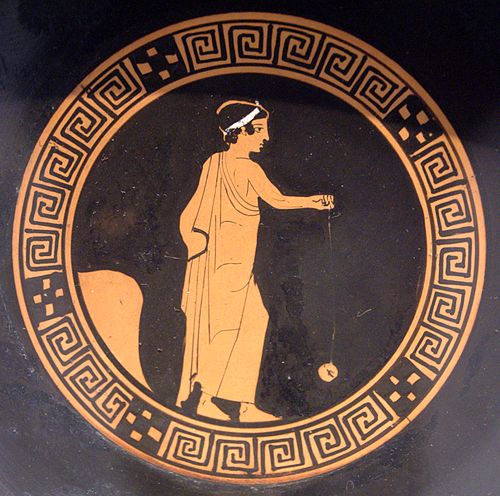
On the 6th of November 1992, Richard Dawkins appeared at London’s Conway Hall to deliver the British Humanist Association’s 1992 Voltaire Lecture, entitled ‘Viruses of the Mind‘. During his talk, he spent some time developing this theme. All sorts of things are viruses: look, for example, at childhood crazes, which he described as ‘a form of behaviour that owes more to epidemiology than to rational choice’. Yo-yos, Hula hoops, pogo sticks (and, he might have added, the Rubik’s Cube) sweep through schools and leap from school to school. And so with religion – Dawkins argued that it’s clear that most people do not examine all the world’s religions and then make an informed choice; instead, most follow their parents’ religion.
As skeptics, we generally don’t argue matters of faith; we stick to things that can be tested. What makes Dawkins’ argument suitable for discussion here is his ideas about the mechanism of belief (or ‘symptoms’, as he calls them). Faith that flies in the absence of evidence is more seen (to the infected) as more virtuous. Mystery, similarly, is thought of as a good thing – and the more mysterious the better. To quote Dawkins, ‘Any wimp in religion could believe that bread symbolically represents the body of Christ, but it takes a real, red-blooded Catholic to believe something as daft as the transubstantiation.’
As skeptics, we run into these arguments all the time. Why, we are often asked, should we seek to destroy someone else’s harmless belief in astrology? I usually say something about truth being important for its own sake. The people who ask this question then generally extrapolate from this that skeptics are so cold and devoid of imagination and any sense of fun that we wouldn’t allow a child to enjoy the fantasy of Santa Claus.
I have several problems with Dawkins. The first is that he personifies exactly the skeptic the questioners in the last paragraph dislike so much. His viral description of irrational beliefs strikes me as mechanistic and cold; he makes no allowance for the human need for a community to belong to and the approval of that community. Most children follow their parents’ religion? I was raised an agnostic; does that make agnosticism (which is the absence of belief more than anything else) a virus, too? After all, I didn’t examine all the world’s religions and make an informed choice either.

Second of all, besides the social aspects of religion, which Dawkins ignores entirely, he focuses his argument on essentially harmless beliefs. It hurts no one if Rabbis spend their time checking whether Chinese menthol is kosher. I don’t care if Catholics believe in the transubstantiation: it’s harmless. What’s harmful is the Pope going to Mexico, which suffers desperately from overpopulation, and preaching against the government-sponsored contraception program. The difference is a precise line that’s drawn at the point where the source of the belief – be it religious, political, social, or paranormal – starts interfering with your right to decide your own life. But Dawkins makes no differentiation of this kind.
Dawkins frequently talked about ‘gullible’ children. This goes against most skeptics’ experience: not all religious beliefs are formed in childhood, and most paranormal beliefs are not. In any case, children aren’t gullible; you just can’t make that kind of blanket statement about people. Children are inexperienced, and have no context against which to judge what they are told; adults, when faced with unfamiliar phenomena, are similarly inexperienced. That does not make them fools.
Dawkins has no suggestions for change; he doesn’t see that as his role. But as skeptics, it’s generally clear to us that the most important thing we can do is to spread information to help people make up their own minds. Describing any sort of belief as a virus – and remember, we have no medical cures yet for viruses – disempowers us all, skeptics and belief ‘sufferers’ alike.