




A “Zombie Fact” is not a fact about zombies, rather it is those idioms or “Did you knows…” that are shared by too many people, too often, with too little cursory thought. They are titbits that far too many people parrot as true, despite them having dubious provenance.
“We only use 10% of or brains”
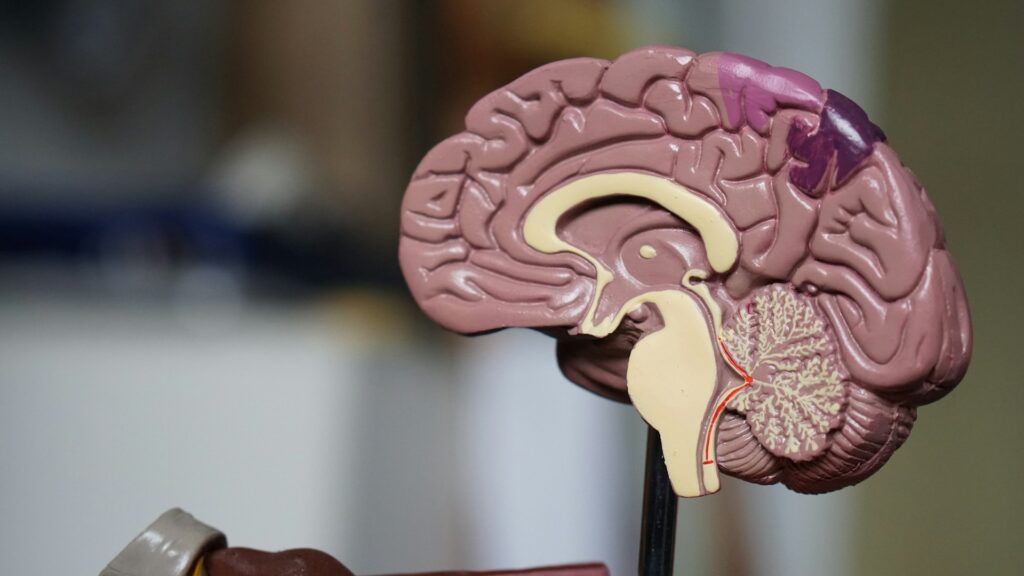
The most infuriating and obviously ridiculous “fact” that I’ve heard aped, especially by public figures not necessarily known for their science smarts, is that we use just 10% of our brain. We know it is not true, after all just think about it – with all your brain hopefully. If it was true, then scans of the brain would reveal huge areas of inactive, soft squidgy stuff. If it was true, then people who suffer horrific physical damage to their brain and are severely affected behaviourally – see Phineas Gage – must have been very unlucky to damage the 10% they actually need.
If it was true, then most of the brain would have degenerated over time. Although it only makes up 2% of body weight, the brain uses around 20% of our energy consumption, giving a huge evolutionary advantage to those individuals who managed to constrict their thinking organ to the bits that actually do something.
But where on Earth did the idea come from?
In 1890’s Harvard psychologists William James and Boris Sidis were testing the accelerated education of a child prodigy, namely William Sidis, Boris’s son, who would go on to attend Harvard at eleven – his father tried to get him into the college aged nine!
James concluded that most people only use a fraction of their potential brain-power – but did not specify how much – and that this spare capacity could be accessed via education, especially if accelerated.
The actual 10% statistic seemed to come from the 1929 World Almanac, which stated that “there is no limit to what the human brain can accomplish, scientists and psychologists tell us we only use 10% of our brain power”.
Unfortunately, the statistic is still propagated even today; the 2014 action movie Lucy was largely based on this premise, with the ineffable Morgan Freeman stating: “It is estimated most human beings only use 10 percent of the brain’s capacity, imagine if we could access 100 percent.” Sorry, Mr Freeman, even God can get things wrong.
Sugar makes children hyperactive
We’ve likely seen the hyperbolic internet headlines or dubius health articles – these are a few I found with a cursory search:
- 14 Terrifying Signs Your Kids are Eating Too Much Sugar & How to Fix It
- Beat Sugar Addiction Now – For Kids
- The Negative Effects of Sugar on Children
- Sugar Addiction, the Perpetual Cycle

I’m not going to refer to healthy eating or balanced diets, something I am singularly unqualified to talk about, but the claim here is about consumption of sugar causing immediate hyperactivity, especially in children.
How many times have you been at an event with kids, sweet snacks, and sugar infused drinks, and the mum of little Tarquin excuses his running around destroying things with “Oh, he’s just had too much sugar”? The trouble is, the cause of Tarquin’s destructive tendencies is likely to be something else entirely – such as his parenting.
We have studies to back this up: The Effect of Sugar on Behavior or Cognition in Children A Meta-analysis by Wolraich et al, is a good place to start. The conclusion of the study was that:
sugar does not affect the behaviour or cognitive performance of children. The strong belief of parents may be due to expectancy and common association. However, a small effect of sugar or effects on subsets of children cannot be ruled out.
But even more interestingly, parents who merely think their kids have consumed more sugar report those kids as having hyperactivity caused by the sugar they are – wrongly – assumed to have consumed. A paper by Hoover & Milich in 1995 concluded that the:
…negative effects of sugar on children’s behavior may be due to parental expectancies. A challenge study design was employed, in which thirty-five 5- to 7-year-old boys reported by their mothers to be behaviorally “sugar sensitive,” and their mothers, were randomly assigned to experimental and control groups. In the experimental group, mothers were told their children had received a large dose of sugar, whereas in the control condition mothers were told their sons received a placebo; all children actually received the placebo (aspartame). Mothers and sons were videotaped while interacting together and each mother was then questioned about the interaction. Mothers in the sugar expectancy condition rated their children as significantly more hyperactive. Behavioral observations revealed these mothers exercised more control by maintaining physical closeness, as well as showing trends to criticize, look at, and talk to their sons more than did control mothers. For several variables, the expectancy effect was stronger for cognitively rigid mothers.
There is little doubt that sugar can have real harmful effects on the body, but over-consumption does not necessarily cause immediate hyperactivity.
The menstrual cycles of co-habiting women synchronise over time
I completely understand that I am about to mansplain menstruation, but I hope you will forgive me if I stick to the salient points. Also, I have used “woman” and “people” interchangeably as the term appears in the literature.
The idea that the cycles of menstruating women harmonise over a short period – 6 to 8 months – when cohabiting came from a 1971 Nature paper by psychologist Martha McClintock, in which she claimed:
synchronization happens when the menstrual cycle onsets of two or more women become closer together in time than they were several months earlier.
McClintock studied women in a college dorm, and hypothesised that pheromones could trigger early or late onset, so that their cycles lined up. This idea became so prevalent, that it became known as the McClintock Effect.
It was backed up by a 1979 Graham & McGrew study from the University of Stirling, which studied Menstrual synchrony in undergraduates living on a coeducational campus, and found
A significant decrease in the difference between pairs’ onset dates (i.e. a trend toward synchrony) was found for closest friends, but no significant effect occurred for neighbours or randomized pairs.
A third paper released in 1981 added to the debate: Quadagno et al. Influence of male social contacts, exercise and all-female living conditions on the menstrual cycle. Its conclusion was
The Mean difference in onset dates of menstrual flow for room-mates and close friends became significantly shorter for the time period of Oct to March.
Slam dunk! Three papers, all confirming the hypothesis.
However, along came H. Clyde Wilson Jr in 1992. He critiqued the McClintock study, and found significant errors in the researchers’ mathematical calculations and data collection, as well as an error in how the researchers defined synchrony. Furthermore, several additional studies in the 2000’s showed no statistical synchrony, leading a 2013 systematic review of menstrual synchrony to conclude:
In light of the lack of empirical evidence for MS [menstrual synchrony] sensu stricto, it seems there should be more widespread doubt than acceptance of this hypothesis
Analyses of menstrual cycle apps now used by millions of people around the world also show no synchrony.
But why did McClintock and the others all think there was a synchronisation of cycles? Simply put, they didn’t study long enough. Cycles are rarely exactly 28 days, either between individuals, or over time. Even McClintock reported an average of 29.5 days. When you have two or more events occurring over different regular periods, they will naturally have a tendency to move either closer together, or further apart. And if – like Quadagno et al – you only study the six months period where they happen to be drawing closer together, you might conclude this would remain consistent.
Next time you are at a junction with two cars’ indicators flashing, you will notice that they harmonise and then move apart, then harmonise and move apart again. This is essentially what is happening with menstrual cycles, but over a much longer time period. The effect is simply illusionary.
Similarly, imagine one partner being paid monthly on the 28th, and the other being paid four-weekly starting on the 14th: their paydays will slowly harmonise over a six month period, before moving apart again for the rest of the year.
There is an Amazonian fish that swims up the urine stream and lodges inside a human penis
Gentlemen, may I present the Toothpick Fish, otherwise known as the Vampire fish, the Candiru or the Cañero; a.k.a Vandellia cirrhosa. The tiny creature, often not much bigger than a thumbnail, has two barbs protruding back from its gills, allowing it to hang on to soft tissue, where its needle teeth can bite into blood vessels close to the surface, allowing it to consume its victim’s blood. Like a mosquito, it can expand its body quite considerably when full of ingested fluid, and it survives by working its way into the gills of larger fish, where it can access the soft, blood soaked flesh inside.
The fish was first recorded in the literature in 1829, when German biologist C. F. P. von Martius reported that native Amazonian men tied ligatures around their penis to prevent ingress, and he speculated that the fish were attracted to the odour of urine. Similarly, there was a documented case in 1835 where a native physician claimed to have removed the fish from a woman’s vagina; and French naturalist Francis de Castelnau in 1855 wrote that the fish “springs out of the water and penetrates into the urethra by ascending the length of the liquid column.”
Other more lurid accounts decorated the travelogues of intrepid Amazon explorers throughout the late 19th and early 20th century.
There is one more recent account. In 1987, urologist Dr. Anoar Samad operated on a Brazilian man – Silvio Barbossa – to remove a fish from Silvio’s scrotum; Dr Samad went on to write an account of the operation that popularised the phenomenon. Barbossa claimed he had been peeing into the river at thigh height, when the fish “jumped” into his urethra up the urine stream and worked its way into his scrotum.
US marine biologist Stephen Spotte later investigated and visited Dr Samad, who provided photos, video of the cystoscopy and the actual fish’s preserved body. However, Samad claimed the fish was attracted to the urine – a myth debunked in Spotte et al. (2001). Experiments on the Feeding Behavior of the Hematophagous Candiru, Vandellia cf. Plazaii, in the Environmental Biology of Fishes. Samad had claimed fish had “chewed” its way through the ventral wall into the scrotum, however the species does not have the teeth capable of doing so, and the exhibited fish produced by Samad was far too big to enter the urethra. In addition, simple fluid dynamics would preclude the ability of such a tiny creature swimming up a comparatively enormously powerful stream to enter a urethra. How would they know there is a place to draw blood from at the end of it?
It is entirely possible that the fish could penetrate the soft genital tissue if both were underwater and it somehow thought it was the gills of a huge fish, but the idea that it can swim up the urine stream out of the water to do so is simply not true, nor is there any evidence of it actually doing so.
‘Lunatics’ react when the moon is full
“It is the very error of the moon. She comes more near the earth than she was wont. And makes men mad.” — William Shakespeare, Othello.
The idea that people with severe mental health issues were affected by either phases of the Moon, or by the distance of the satellite from Earth, is very prevalent in today’s society – for some reason quite often among health professionals – but it has a very long history. The ancient Greeks and Romans both believed this to be a fact, even the outdated word “Lunatic” gives away the connection; Luna, of course, being the Roman god of the Moon. Greeks and Romans believed the Moon affected human behaviour – according to Pliny the Elder, brains were the ‘moistest’ organ, and the Moon affects tides, therefore the link is obvious. Medieval accounts of Werewolves continued the theme, as did the idea of being Moonstruck – a common name for the phenomenon.
Just because an idea is old, that doesn’t stop it from being parroted by people who should be better informed. In 2007, Brighton (UK) police announced they would put on extra officers during a full Moon period. Inspector Andy Parr warned: “I’m aware that this is just one of many things that can influence public disorder, but if you speak to ambulance staff, they will tell you exactly the same”.
In the modern pseudoscience world, author Arnold L. Lieber published The Lunar Effect (1978). In it he proposed the hypothesis:
The Moon causes tides
The tides are made up of water
Humans are 80% water
Thus the Moon acts on humans
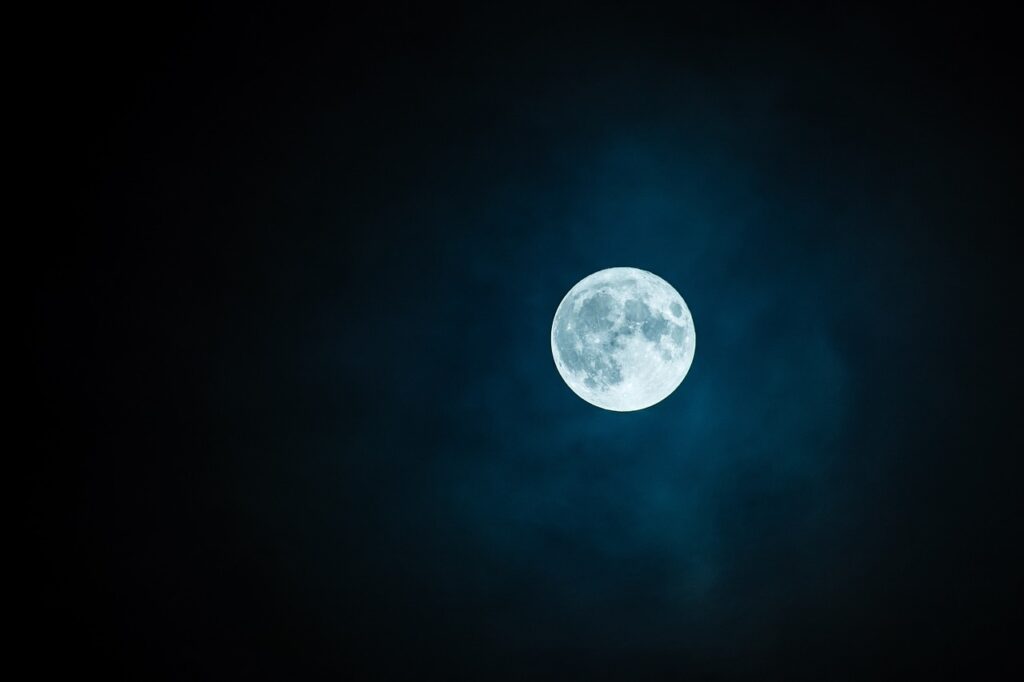
Of course, there has been some scientific investigation into the merits of the idea. A study of 13,029 motorcyclists killed in nighttime crashes found that there were 5.3% more fatalities on nights with a full Moon compared to other nights – but when the day is done, and the sun goes down, and the moonlight’s shining through, then maybe that’s a correlation but not necessarily a causation. While some will bet their policing resources on the gravitational pull on the human body of an object 384,000 km away, there is a more prosaic explanation: in the period under consideration in the study, full Moons happened to fall more commonly on weekends, when more people were out driving in the evenings. When the authors re-analysed their data to eliminate this confounding factor, the lunar effect vanished.
Additionally, there was a 1985 study in the Psychological Bulletin: Much ado about the full moon: A meta-analysis of lunar lunacy research by Ivan Kelly et al, which reviewed 37 studies and concluded:
full moons are entirely unrelated to a host of events, including crimes, suicides, psychiatric problems and crisis centre calls.
There is one grain of potential truth that may underline the historical idea of lunar lunacy: in the pre-illuminated world, when societies relied on meagre flames in order to light their way, the full Moon presented an opportunity for people to socialise, perhaps to excess. In addition, bright Moons could cause sleep disturbance, which we know can trigger erratic behaviours in people with certain psychological conditions.
Why are these important?
For skeptics, it is worth asking how we should react when we hear these zombie facts given life by others. The natural thing for some would be to jump in with “Actually, I think you’ll find…”, and receive the inevitable eyeroll.
Equally, refraining from pushing back risks reinforcing incorrect ideas. And while these ideas, by themselves, might not have any real effect on the teller or the listener, we cannot know the consequences of misinformation spreading, and there is always a risk it causes unforeseen harm further down the line.
Being compassionate skeptics does mean that we should evaluate how we respond; and the circumstances, as well as the relationship to the speaker should always be part of the decision-making process. Sometimes we just have to let it go, but there’s often the opportunity for the speaker, and any listeners in the conversation, to learn more about the subject if raised in the right way.