


A 14-year-old girl’s wish for Christmas is a refrigerator. Not because she rebelliously moved out and needs one for her new living space. I know this girl, she wanted it because girls on TikTok told her that skincare products must be stored cold.
TikTok is flooded with skincare routines. Girls are promoting snail mucus, skincare acids, and red-light therapy masks. Inspirational content promises empowerment and feminism; it is hard to detect the harm through the fluffy bathrobes and serene voiceovers. But the skincare trend is posing a threat to women’s health and sense of self-worth. Their message is clear: perfection is achievable if only you follow the right steps.
Researchers in Australia showed that brief exposure to beauty-related TikToks increases face-related shame, anxiety, and upward social comparisons. In other words, after just a few minutes on the platform, women feel worse about their appearance. A Dutch study found a similar pattern: frequent exposure to sexualising media (content that emphasised body attributes rather than personal attributes) makes women adopt appearance ideals as their own personal standards. This internalisation then leads them to monitor attractive peers online. These are behaviours that, over time, increase self-objectification and constant body surveillance.
One person who has felt pressured by skincare routines on TikTok is Ingrid Nyman, a 22-year-old student at Singapore Management University. She downloaded the app when she was 15 years old, around the time it was launched. For six years, she has been fed daily videos preaching how to achieve the desirable aesthetic lifestyle. “When I saw girls with perfect skin promote a serum and say it helped them get rid of acne, I thought I needed that product”, she told me. “I thought my pimples were something I needed to get rid of.”
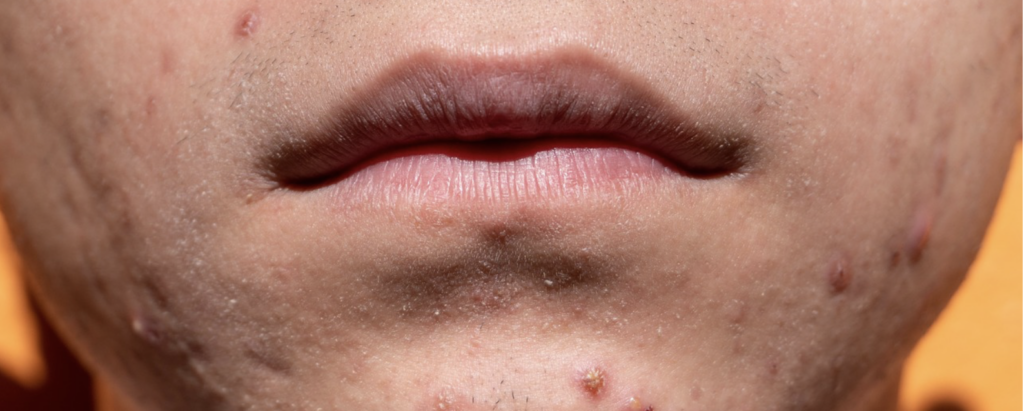
This kind of content is inflicting harm beyond surveillance. Girls as young as eight have been influenced to start using products formulated for adults, containing acids, retinols, and exfoliants far too harsh for developing skin. Dermatologists have warned that these ingredients can cause long-term damage. The BBC recently reported cases of young girls developing eczema and chemical burns because they were following routines intended for 30-year-olds. Now children are endangering their health, skincare obsession has become an urgent issue.
This is also an extremely lucrative industry, with the skincare market estimated to be worth $192.8 billion in 2025, and forecast to more than double in size to $432.1 billion by 2035. Social media has acted as a driver in this market growth. According to Future Market Insight:
Digital engagement and social media-fuelled education have played an influential role in shortening product adoption cycles and expanding access to younger demographics.
The use of influencer marketing has increased rapidly, as it is more powerful than traditional advertising, driving sales with a message that seems personal and genuine.
When in need for inspiration to buy new products, Ingrid turned to TikTok. “I found it useful to watch product reviews, it’s the easiest way to gather information about a product on TikTok because of how the algorithm is designed” Ingrid said.
There is a rising demand for a wide range of skincare products. Retinoid products made up 22% of revenues in 2025, despite their risks of causing skin irritation, flaking, and increased photosensitivity. Consumers want ‘safe ingredients’, while dermatologists say the safest skincare routine is doing less.
One of my friends began using 13 different serums after she saw them recommended on TikTok. Within weeks, her face erupted in painful rashes. When she saw a doctor, the first question he asked was: “Do you use serum?” She said: “Yes, I do.” He replied: “Stop immediately. I meet people daily who seek medical attention due to rashes from serums.” She stopped, and her rashes disappeared.
Strong acids, like retinol, in skincare have been normalised. Influencer Victoria Nelson recently went public with her story of a facial treatment she got in Beverly Hills four years ago – a chemical peel, which inflicted severe burns. This treatment left her with permanent skin damage, such as scars and large pigment spots.
In 2021, researchers from Texas studied dermatological discussion threads on social media platforms. They found that 71% of posts were offering advice on improving wellbeing. However, many posts lacked scientific support or evidence, and pseudoscientific recommendations were accepted as factual. In the online communities where dermatological advice is shared daily, this advice circulates as a normative practice, creating a false rule book of the right way to wash your face.
Dermatologist Petra Verga Kan blames the beauty industry for pushing unnecessary products to drive consumption, saying: “We don’t need all these products”. This industry has created a demand out of thin air. Big brands are earning fortunes from selling a solution to a problem customers never had.
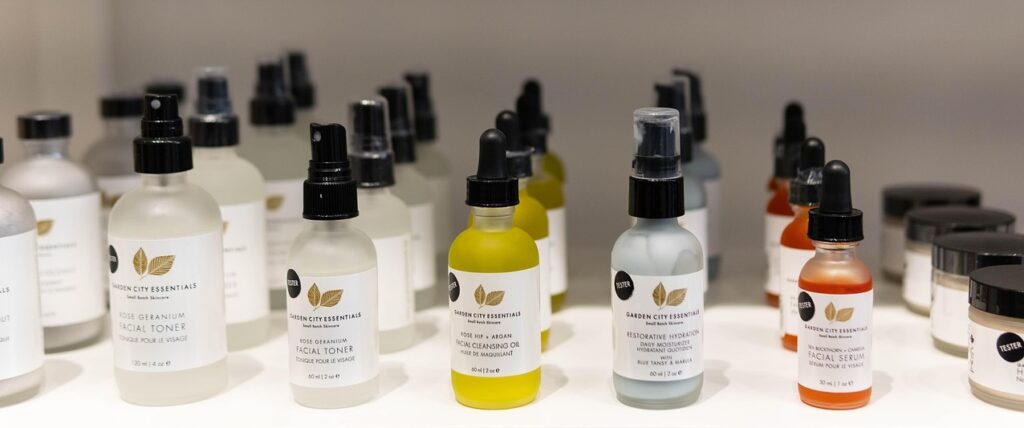
Instead of recognising the danger in children’s growing interest in skincare, big brands have merely exploited their demand and targeted customer segments of teenagers. Explaining the launch of a product range targeting 13-year-olds, Superdrug’s Head of Own Brand, Emma Monaghan, proudly proclaimed: “We identified a real gap in the market for skincare that meets the needs of younger consumers who are increasingly sophisticated in their routines.”
Actress Shay Mitchell targeted even smaller children when she released a facial mask for toddlers, while children’s cosmetics company Rini describe their brand as “where skincare meets play”, giving the impression that skincare products are now being sold as toys. Rini’s co-founders claim their facial mask has a mission to nurture “healthy habits, spark confidence, and make thoughtfully crafted daily care essentials and play products accessible to every family”.
Dermatologist Emma Wedgeworth is unconvinced, explaining that small children are naturally unselfconscious, and “we don’t want to encourage them to focus on appearance or create anxiety about how their skin looks”. Why should a toddler’s first memory include applying a facial mask, as if their baby skin was not perfect already?
After six years spent on TikTok, Ingrid had reached her limit and deleted the app. She explains how she eventually felt herself sinking into a rabbit hole where she was constantly being pressured. “All I could feel was that I was not pretty enough.” she recalled.
The TikTok algorithm is strong… and faulty. Research from Amnesty highlighted how quickly expressing interest in one topic, through likes and shares, can lead you into a deep rabbit hole of content, in under four hours – including tips on how to take your own life. The platform ignores its systemic design risks, and takes little responsibility for the harm its algorithm may cause. It shows how browsing lifestyle videos can end up feeding you the message that you’re not enough to live.
Social media acts as a tool for self-surveillance. Professors Ana Sofia Elias and Rosalind Gill argue women are positioned as subjects who should continuously monitor their appearance and bodies. This is making self-optimisation the norm, and self-monitoring a personal habit. Similarly, Professor Talia Welsh criticises the modern self-care and wellness culture for creating ‘feminist subject ideals,’ where women are expected to take responsibility for their health, make the ’right’ choices, and optimise their lives within capitalistic frameworks. Wellness culture has redefined empowerment as perfection, and self-care as self-surveillance. There is no feminism in the message ‘a woman’s value lies in her looks’.
For four years now, the ‘that girl’ trend has thrived on TikTok. She rises at 5:00am, meditates, drinks a matcha latte, does yoga and her skincare routine all before the alarms belonging to the rest of the world have gone off. Despite how exhausting this sounds, this is an aesthetic many wish to achieve. The ‘ThatGirl’ hashtag on TikTok holds nearly two million posts, endless videos of young women performing discipline and self-mastery.
In Cosmopolitan Magazine, Maya Sargent says of the ‘that girl’ trend:
On the surface, she’s an untouchable female power force that attacks her day with vigour and confidence, powered by flipclock alarms and a skincare fridge.
The trend positioning an aesthetic of an empowered woman, when in fact it promotes a template you must follow in order to qualify as an empowered woman. One of the reasons Ingrid left TikTok was because she got sick of the rule book and template:
When you see skincare routines, it’s hard not to reevaluate your own routines. ‘That girl’ routines are ‘put together’. Of course, you feel like you want to have the same routines, to feel ‘put together’.
Many of my friends have started to repost skincare routines as inspirational content. I recognise that these videos might seem inspiring to some people, and may bring them joy. For some, these videos are harmless inspiration. But for others – those who feel they are always falling behind, always inadequate, always wrong – this content could be an everyday battle. And the latter group may be larger than we realise. They suffer quietly, scrolling through micro-doses of self-doubt every day.
Today, people can make a living by posting how they perform everyday chores aesthetically. Researchers at Stockholm University are currently investigating how influencers, particularly women, romanticise a housewife role on social media – Josefine Wall Scherer, a doctoral student involved in the study, explained:
It is linked to ideas of ‘post-feminism,’ where some women choose traditional roles but do so through modern digital platforms, creating a new form of ‘work’ and identity.
Social media makes it easier to ‘export’ a retro ideal, but this export may affect how women’s work and value are perceived. Society has given room to an occupation that profits from women showing how they perfect their appearance, reinventing the stay-at-home wife. The feminist development and technological revolution might be working against each other.
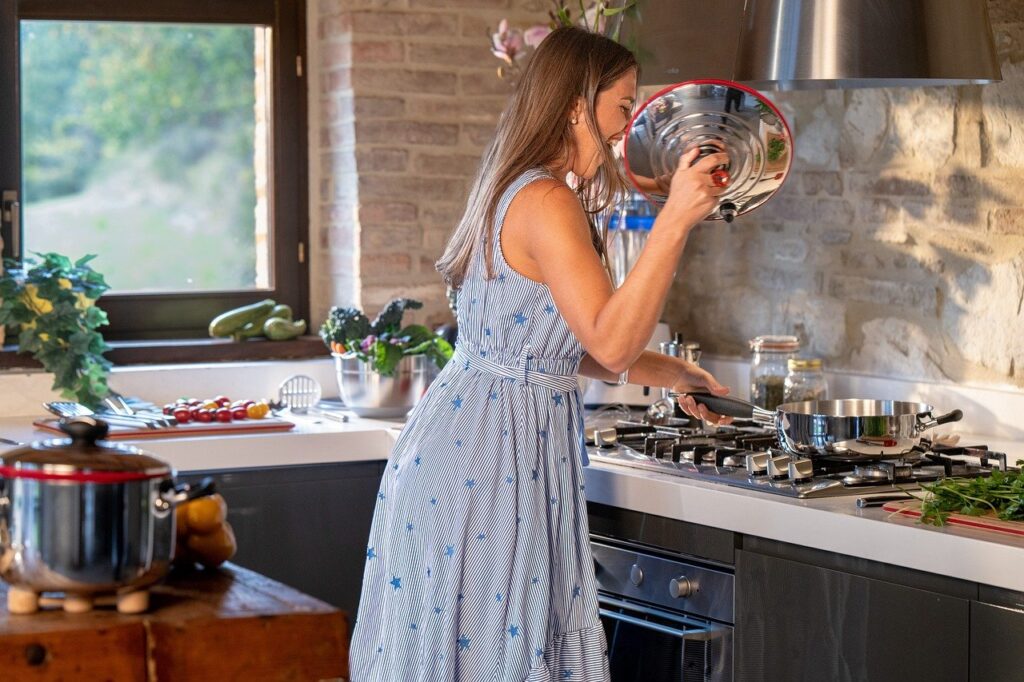
In counter to this movement in society, a phrase was coined: ‘choice feminism’. Essy Klingberg, a Swedish culture editor, explains the phenomenon as “the belief that women’s individual choices are inherently feminist, regardless of the choice itself.” Thus, you could excuse any action as feminism, even inflicting pressure upon other women.
We will always be influenced; by advertising, by friends, by parents, and by politicians, to name a few. That is something we will have to navigate throughout our entire lives. Social media is simply a new channel, and perhaps the most seductive.
Trends have immense power because belonging feels safe, and resisting feels lonely. But trends are not truths. They are not moral guidelines. And they should not dictate how we wash our faces, structure our mornings, or measure our worth.
My Christmas wish is that a 14-year-old’s wish list reflects what a 14-year-old truly wants. Hopefully, it won’t be a gift bearing permanent skin burns. Hopefully, not something that implies that her only value is in her looks. Hopefully, not a household appliance disguised as empowerment.