



The Humanist Enabling Life Project (HELP) is a child of circumstance. It was founded in 2024 to secure artificial hands for Adamu Yahaya from Gombe state. Adamu’s uncle falsely accused him of stealing a phone. He tied Adamu’s hands for a long time, and they became inoperative. Adamu had to undergo a double amputation of his arms.
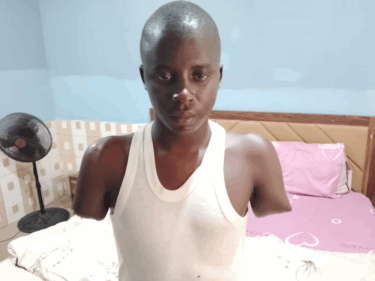
Through HELP, Adamu was brought to Nasarawa to get artificial hands. After careful examination, experts at the foundation advised that Adamu needed bioelectric hands – costing around £3,000, or six million naira. Efforts to raise this sum have not yielded positive results. But HELP will not give up. Helpers will continue to appeal and knock on doors till Adamu can hold a phone and use his hands again.
Founding HELP was sudden and unplanned. While we continue to hope for some breakthrough for Adamu, helpers have tried reaching other victims of faith-based violence in the region. We have tried to connect with victims of sharia amputation, sufferers of blasphemy accusations, attacks, and killings. In Zamfara, the first Nigerian state to declare and enforce Sharia following a return to democratic rule in 1999, HELP has tried contacting Baba Bello Jangedi, the first person to be amputated under sharia law in Zamfara, without success. Local sources said he might have died. Hopefully, he has not.
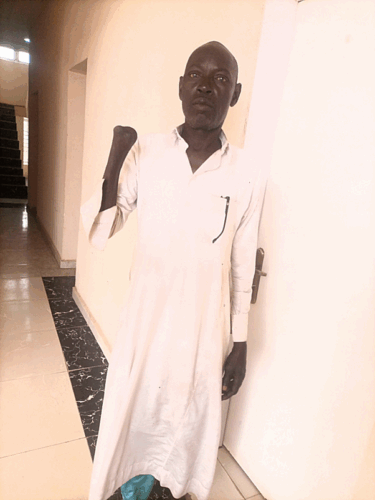
HELPers have also reached out to another sharia amputee, Isa Lawani. Lawani explained that he was accused of theft, then charged under sharia law and sentenced by the sharia court. On March 15, 2022, state officers took him to the state general hospital, where his hand was amputated at the wrist level as a form of punishment.
HELP has also reached out to victims and relatives of victims of blasphemy accusations, attacks, and murder. People accused of blasphemy, especially in Muslim-dominated and sharia-enforcing parts of Nigeria, are treated without compassion. Many are murdered extrajudicially, and no one is ever brought to justice. Victims and their relatives are abandoned without care. They are left to their fate. Where religion is used to justify abuse or murder, humanist values should be deployed to undo and repair the harm; the humanist idea of life should be rallied to help, support, and comfort.
Through its local contacts in Niger, HELP has reached out to Abdullah Saidu, the only child of Amaye, a local food vendor who was accused and lynched for blaspheming against the Prophet of Islam on Saturday 30 August 2025. HELP will work with the office of the National Human Rights Commission and the village head in Kasuwa Garba in Mariga Local Government Area to support Mr Abdullah. HELP will explore other creative and innovative ways of supporting victims of religious abuse and cruelty.
HELP is grounded on humanist principles and values to help humanity and do good for goodness’ sake, not God’s sake. HELP is an initiative forged in righteous anger and indignation over religious violation of humanity. Steeled in rational and compassionate response to an outrage, HELP remedies the viciousness and brutality of humans against humans, often driven by irrationalisms and absurdities coded and covered with religion, culture, and tradition.
We are motivated by the understanding that this is the only life we have, this is the only ‘world’ we have, and we have to make the best of this life in this world. HELP codifies a secular defiance and determination to live this life to the fullest, ensuring happiness in the here and now for all. HELP is a refusal to be cowed or numbed, a resolve not to resign or wallow in despair and helplessness. After all, as stated in the Second Humanist Manifesto, no deity will save us; we must save ourselves.
HELP is a commitment to acting and doing something where, over the years, nothing has been done, and where doing nothing is a religious duty informed by the religious idea of life, of this life and an afterlife. HELPers not only believe that something can be done, but they also do something. Driven by the quest and thirst to redeem, repair, and relieve, they help.
HELPers draw inspiration from humanist theories and praxis, especially the saying by the late American writer, Isaac Asimov: “Never can we sit back and wait for miracles to save us. Miracles don’t happen. Sweat happens. Effort happens. Thought happens. And it is up to us humanists to help – to expend our sweat, our effort, and our thought. Then, there will be hope for the world.”
Thanks to the sweat, effort, thought, and actions of HELPers, there is hope and there will be hope for victims of blasphemy accusations, attacks, and other faith-based violations. There is and there will be hope for the world.