


At the start of the year, Nicolás Maduro was captured in a dramatic US military operation in Caracas, Venezuela, after strikes that toppled his government and led to his forcible transfer to the United States. He is now being held in a New York detention facility, awaiting trial in the Southern District of New York on charges of narco‑terrorism, cocaine importation conspiracy, and related weapons offences, charges to which he has pleaded not guilty.
One can question the legality and legitimacy of the way Maduro was taken, as critics and his defence team describe the raid as a “military abduction” and raise concerns about sovereignty, due process, and the extraterritorial reach of US criminal law. Likewise, even the detailed indictments and public accusations leave room for debate over the extent of his personal involvement in, and command responsibility for, the alleged drug‑trafficking apparatus he is accused of leading. Yet there is no serious doubt in the international human rights record that Maduro ruled Venezuela as a dictator, presiding over systematic repression, electoral fraud, and widespread abuses – including killings, torture, arbitrary detention, and the crushing of political opposition – documented by the United Nations, Human Rights Watch, and other monitoring bodies.
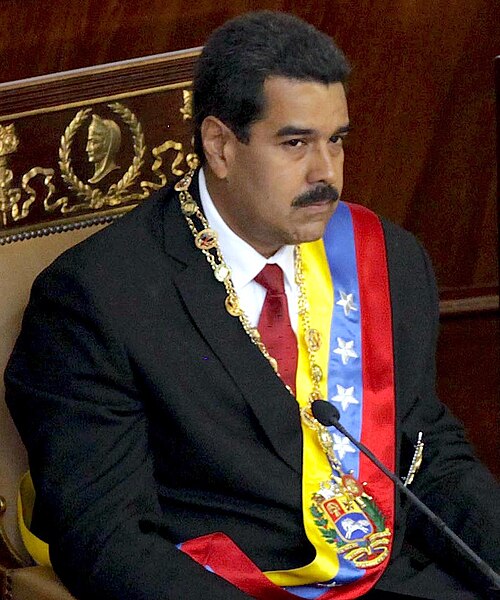
If there is so much to criticise about Maduro’s record in power, it is pointless to revive one of the oldest and least substantiated accusations against him: that he was never a legitimate Venezuelan president, because he was allegedly not even born in Venezuela, but in Cúcuta, Colombia. According to this rumour – which circulated for years in exile and opposition circles – Maduro’s true birthplace lies across the border, and it is resurfacing now because some claim that, in the context of the legal proceedings in New York, he must formally state his place of birth and the authorities supposedly cannot be entirely sure he was born in Venezuela. Yet all of this remains at the level of rumour and political folklore, and it has not played any real role in the case against him. The New York court has focused on the concrete criminal charges and has shown no genuine concern with litigating where, exactly, Maduro first entered the world.
In a sense, this renewed focus on Maduro’s birthplace functions as a subtle form of American cultural imperialism in the Western hemisphere, because it imports into the Venezuelan context a style of delegitimising politics that Americans themselves popularised through “birtherism.” In the United States, the Obama birth conspiracy theory claimed – falsely – that Barack Obama had not been born in Hawaii, and was therefore constitutionally ineligible to be president, despite overwhelming documentary evidence and official confirmations to the contrary. The story emerged on the fringes during the 2008 campaign, and then gained national prominence as Donald Trump promoted it aggressively in the years that followed. Trump has repeatedly and inaccurately insisted that the whole thing was originally invented by Hillary Clinton, even though there is no evidence that she personally launched the conspiracy, and the most that can be said is that a few low‑level staff or supporters in her 2008 primary orbit appear to have recycled or flirted with rumours that were already circulating in the darker corners of partisan media.
Birtherism is not, in fact, an exclusively American invention; Latin America has its own long history of similar conspiratorial attempts to delegitimise political leaders by questioning their origins. In Peru, for example, opponents of Alberto Fujimori repeatedly claimed that he had actually been born in Japan rather than on Peruvian soil, and in Venezuela, long before Maduro, there were rumours that President Carlos Andrés Pérez had really been born in Colombia rather than in the Andean State of Táchira he always claimed as his birthplace. In each case, the point was not simply to dispute a biographical detail, but to suggest that the leader was constitutionally or symbolically unfit to represent the nation, because he was supposedly not truly “one of us.”
These Latin American birther conspiracy theories, much like the US version targeting Obama, can be traced back to the pernicious influence of nationalism as a political religion. If one is obsessed with the greatness and purity of one’s own nation, and with sharply distinguishing it from its neighbours, it becomes tempting to turn politics into a kind of witch hunt aimed at purging those whom one suspects of not being authentically part of the national body. In such a nationalist context, if one dislikes a political figure, the easiest and most intuitive move is to accuse them of being a foreigner – of literally not belonging – so that disagreement over policies or corruption or abuse of power is recast as an existential threat posed by an alien intruder who must be expelled.
Ironically, it was the Maduro government itself that helped cultivate precisely the kind of paranoid, exclusionary mindset that now fuels birther-style conspiracies against him, so that the doubts about his own birthplace are in some sense the chickens coming home to roost. Chavismo, the movement inspired by Hugo Chávez that combines left‑populism, militarism, and intense nationalism around the figure of the “pueblo,” has for years thrived on a mixture of aggressive national pride and baroque conspiracy theories, in which enemies of the “homeland” are forever plotting to infiltrate, corrupt, or dismember Venezuela. Ever since the separation from Gran Colombia in 1830, Venezuelan governments have played to the tune of nationalism, but from 1998 onward Hugo Chávez radically intensified its symbolism and emotional charge, saturating public life with flag-waving, ritualised singing of the national anthem, and a quasi-sacralisation of the founding fathers that left little room for critical historical reflection.
Colombia, meanwhile, has always been an uneasy neighbour, and a convenient foil for this nationalist dramaturgy. On the surface there are even light-hearted culture-war skirmishes – such as the playful but telling dispute over who can truly claim authorship of the arepa – but beneath that lie long-standing territorial disputes, cross-border militancy, and episodes of diplomatic and military tension. Against this background, a general Venezuelan suspicion or animosity toward Colombia has long existed, and Hugo Chávez, Maduro’s political mentor, elevated it into a central axis of his narrative about the Bolivarian revolution and its enemies.
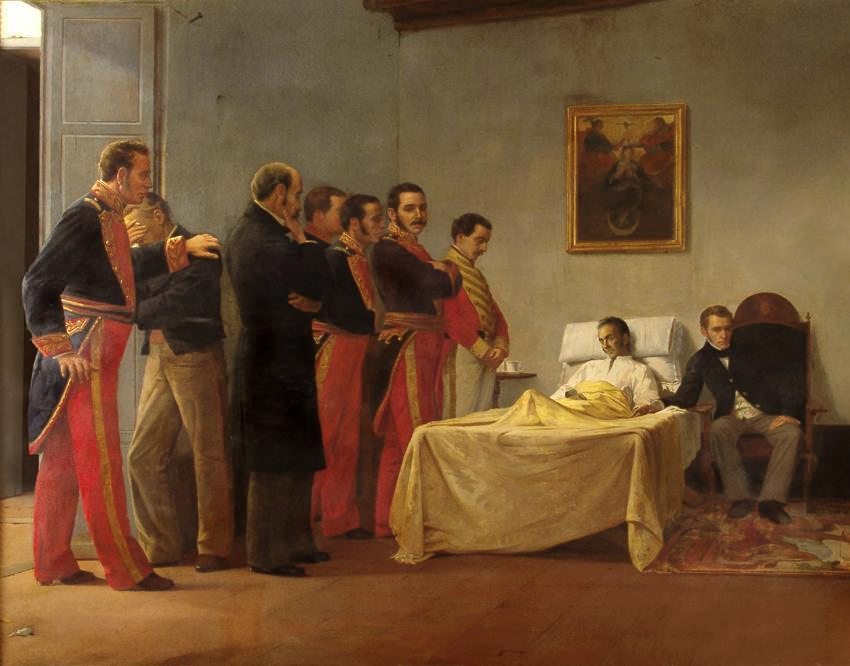
Chávez repeatedly portrayed Colombia as a country ruled by oligarchies in league with North American imperialism, and he even rewrote the death of Simón Bolívar into a grand conspiracy according to which Colombian aristocrats, hand in hand with US interests, murdered the Liberator. This narrative persisted despite the firm historical consensus that Bolívar died of tuberculosis, not poisoning, and Chávez went so far as to have Bolívar’s remains exhumed in a macabre, made-for-TV gesture to “investigate” whether he had in fact been assassinated. No credible evidence has ever emerged to support those claims, but the episode shows how Chavismo normalised the idea that foreign or “foreignised” elites are secretly responsible for every national trauma – which makes it grimly fitting that some of Maduro’s own detractors now turn that same conspiratorial logic against him by casting doubt on his Venezuelan birth.
All of this should worry skeptics, because it shows how easily conspiratorial ideation and senseless nationalism cut across both the left and the right. Einstein famously described nationalism as a kind of childhood illness of humanity, and there is something to that diagnosis: once one becomes infatuated with one’s own country and its grand narratives, critical thinking atrophies and even the most absurd conspiratorial claims start to feel intuitively plausible. When political identity fuses with national identity in this way, questioning the story becomes tantamount to betrayal, and people who pride themselves on being hard-headed realists end up embracing fantasies about birth certificates, secret plots, and foreign infiltrators.
If skepticism is to mean anything in such a climate, it has to include pushing back against the emotional seductions of nationalism itself.