


Few people take the pseudoscientific statements made by Putin and his entourage seriously. In Russia itself, they are often the subject of satire. In the West, they are perceived as deliberate disinformation that should be exposed and dismissed. However, there is reason to believe that Putin’s statements are not just disinformation or yet another delusion but part of his worldview, which allows us to better understand why Putin makes certain decisions.
I was born in Belarus, a small, authoritarian country near Russia. This offers a unique vantage point for examining Putin’s views. On the one hand, I grew up in a Russian-speaking media environment. On the other, I am not part of the Russian political arena, which allows me to analyse his views without the inherent bias – whether affection or animosity – that a Russian author might have.
Ukrainian biological laboratories
Many perceive Russian statements about Ukrainian biological laboratories solely as an attempt to justify Russian aggression in Ukraine. This theory is supported by the timing: the narrative was aggressively promoted starting in March 2022 – as if retroactively, when the atrocities committed by the Russian military became known. But the fact that this narrative only appeared then does not mean that it is completely artificial.
The very idea of a biological threat from the West was expressed in Russia even before the war – for example, the Russian media accused Covid-19 of having Western origins. It is important to note that propaganda in authoritarian regimes is structured in such a way that broad narratives cannot exist for long without at least the tacit consent of the head of state.
Moreover, such theories fit into the broad political tradition of the Russia in which Putin was formed: the USSR accused the US of using biological weapons during the Korean War and also saw the hand of the West behind many major epidemics, such as HIV-AIDS.
But, most importantly, the idea that there is some kind of biological threat is confirmed by other statements Putin has made.
Genetic bomb against russians
In 2017, Putin first expressed concern that foreign countries were collecting genetic material from Russian citizens, for some unstated reason. The topic was immediately picked up by pro-Kremlin media and commentators on the internet, and turned into the idea of a weapon capable of attacking people based on their genetic code and selectively destroying Russians.
It is impossible to say for sure which came first, the chicken or the egg. Perhaps Putin initially adhered to the idea of a “genetic bomb”. Perhaps he finally formulated his position under the influence of his own propaganda. Either way, a year later, he claimed that certain drugs existed that could change a person’s appearance after two or three generations. This was clearly not mere idle speculation; it led to serious changes. In 2019, a Federal Genetic Technology Programme was adopted, ordering the creation of a “sovereign” genetic sequencing structure and including its own funding programme.
The focus on genetics can be explained not only by external threats, but also by internal needs to monitor citizens. But the benefit here is only indirect. Genetics is too complex a tool for authoritarian control. Digital surveillance, social media analysis, facial recognition – all of these are cheaper to implement and have a faster and more tangible effect.
Thus, Putin takes the idea of the threat of genetic weapons quite seriously – so much so that he is willing to finance his ideas from the budget.
Climate change denial
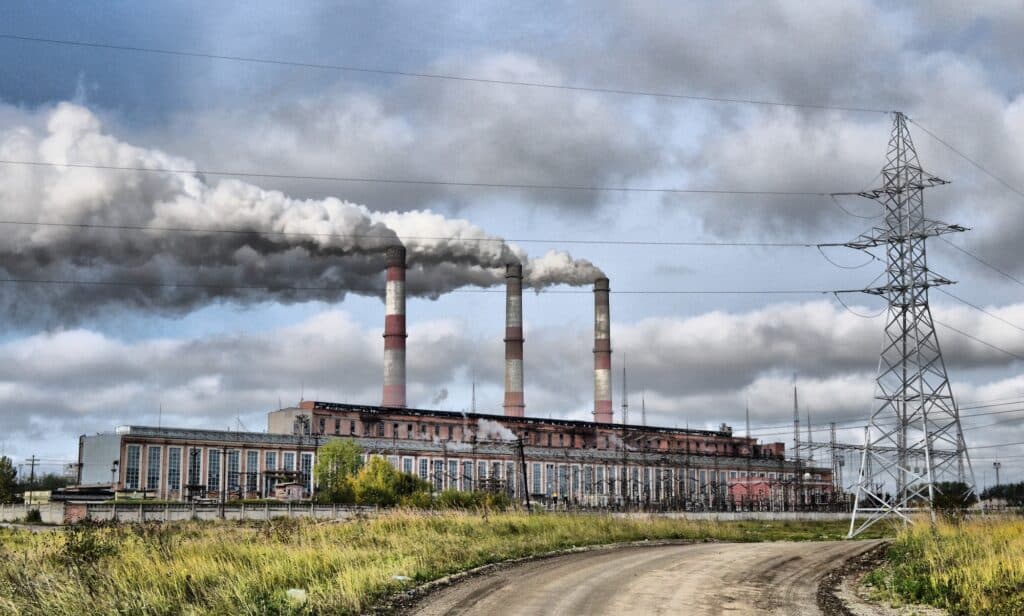
Like Donald Trump and Jair Bolsonaro, Putin is also a climate-change denier. However, Putin’s position on this issue is much more complex, and it is precisely the nuances of his beliefs on this issue that shed light on why Putin needs pseudoscience.
Unlike Trump or Bolsonaro, who initially claimed that “the climate is not changing” and only later came to the position that “okay, it is changing, but humans are not to blame”, Putin has never denied the fact of change itself – but has always emphasised that “natural climate cycles” (Putin is not original in this regard) are used by the West as a pretext to put pressure on Russia. In Putin’s logic, the transition to green energy is a new form of neocolonialism, a new way of subjugating other countries – including Russia.
Thus, Putin’s pseudoscientific thinking does not exist in a vacuum, but serves deeper internal convictions about the confrontation between Russia and the West.
Why does putin believe this?
Why does Putin back up his idea of confrontation with the West not only with ideology, but also with pseudoscience?
The theory that pseudoscientific beliefs arise in any politician who does not receive feedback from society does not stand up to scrutiny. On the one hand, Donald Trump often promotes scientific misinformation, and he is not hindered by feedback in the form of exposés in the media. On the other hand, Kim Jong-un may not fear criticism in the media, but when it comes to superweapons, he relies on a completely scientific atomic bomb, not a genetic one.
Putin’s pseudoscience is not an aberration, but a way of understanding the world in which science becomes yet another field of geopolitical confrontation. And there are specific reasons that may have influenced this. Putin’s childhood and youth coincided with the Cold War, whose influence was much stronger in the USSR than in the West. For the capitalist bloc, the Cold War was one of the factors in foreign policy. In the Soviet Union, it effectively justified the regime’s existence. Shortages of goods, repression, lack of freedom – all this was explained by the external threat from global capital, from which the working class had to be protected.
The United States went through the repressive era of McCarthyism, but at all other times, alternative points of view existed. In the United States, Sartre’s work was widely published and discussed, despite the fact that he was a staunch socialist. In the USSR, Sartre was viewed with suspicion, because he was not socialist enough.
Soviet cinemas showed films about Western spies, and schools held civil defence lessons. Soviet citizens lived in a state of constant threat, and pseudoscience is good at framing suspicion with solid scientific terminology.
Working for the KGB
Putin comes not only from Soviet society, but also from the Soviet KGB. Secret services around the world teach their agents to perceive the world as a source of threats. An intelligence officer must always assume the worst-case scenario – it is better to respond to ten false alarms than to miss one real one.
An intelligence officer’s adversary always acts covertly. Any technology is perceived as dual-use technology – if even a sheet of paper can be turned into a murder weapon, why couldn’t a genetic bomb exist?
Any information can turn out to be disinformation – and for discovering this disinformation, you are given a new rank. If a scientist tries to discover “hidden patterns” in random data, he can be accused of apophenia. If a secret service agent fails to discover a conspiracy in random data, he will be accused of working for the enemy.
All this shapes conspiratorial thinking simply because the sphere of state security is one in which conspiracies really do happen all the time. And this type of thinking is the perfect breeding ground for pseudoscientific ideas.
Soviet education
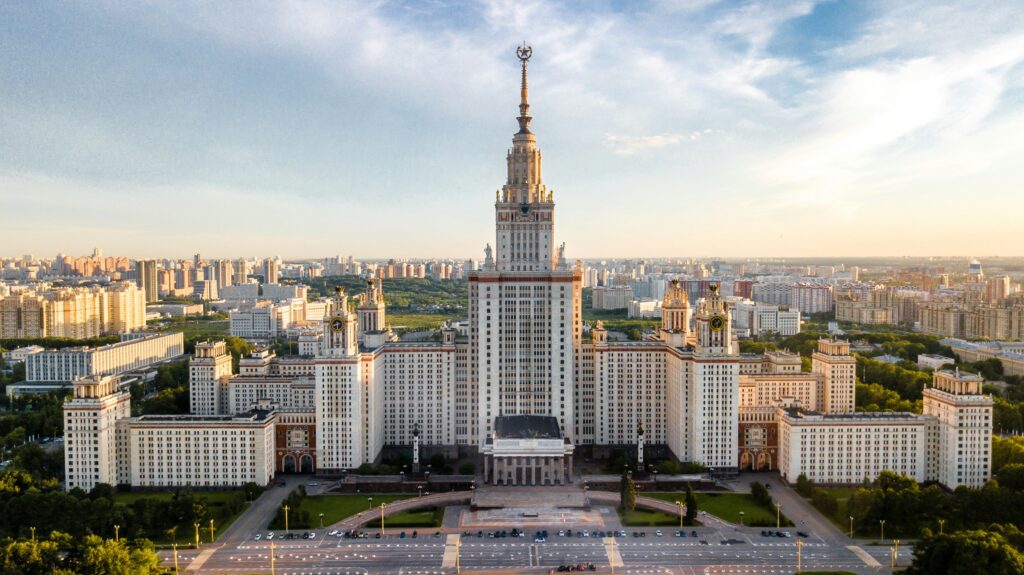
Soviet education, especially technical education, was some of the best in the world. Soviet education made it possible to send humans into space. The best teachers worked in the Soviet education system. There was one drawback to Soviet education: you couldn’t question what the teacher said.
Critical thinking was actively discouraged in school and, to be honest, was not very useful in everyday life. Total state control had a peculiar positive side: if a Soviet citizen read a popular science article in a magazine, they could be completely sure that the article was written by a professional scientist and checked by a scientific editor.
As a result, after the collapse of the USSR, the post-Soviet media was filled with psychics. One of them, Anatoly Kashpirovsky, for example, hosted television programmes where he promised viewers that he would transmit healing energy through the screen. To receive this energy, one simply had to sit in front of the television and improve one’s health in this way. Or place a jar of water in front of the television, in which case the water in it would become healing.
The Russian adaptation of the show “Britain’s Psychic Challenge” has been broadcast on Russian television in various forms for almost 20 years. In it, charlatans “demonstrate” their supernatural abilities. Despite the huge number of exposés, which were even shown on Russian federal television, the psychics from the programme have gained immense popularity and deceive viewers for a higher price. If British readers have never heard of this show, it’s no surprise – it only lasted one season on ITV.
Now, thanks to the efforts of science popularisers, the situation is beginning to change, especially among young people. But Putin’s views are close to those of many Russians who grew up in the same era.
It is impossible to get inside another person’s head. But on closer inspection, Putin’s pseudoscientific statements cease to be mere disinformation and become part of a coherent worldview – one that, unfortunately, Putin has the resources and power to impose on a large number of people.
Header image – caricature by DonkeyHotey