




Here’s an exercise in empathy and understanding: place yourselves in the unfortunate shoes of a right-leaning newspaper. They will of course castigate you for coming over here and occupying their shoes. Put that aside for now, though, because a news story is doing the rounds and it appears not to support your narrative. How do you report on it in a manner that at least tips its hat to journalism, but doesn’t alienate your readership? It’s a literary tightrope (type-rope?).
To illustrate, let’s look at a specific example. See if you can spot the odd one out from the headlines below:
- BBC: London nitrogen dioxide levels fall to legal limit
- LBC: Sadiq Khan hails Ulez success as London under limit for toxic pollutant for first time
- The Independent: Khan hails Ulez success as London under limit for toxic pollutant for first time
- Birmingham News: Sadiq Khan handed major ULEZ victory ‘for the first time’
- Daily Mail: Sadiq Khan’s hated ULEZ expansion had NO impact on air pollution while raking in millions from drivers
What we have here is what appears to be a universally positive story that covers both environmental policy, and the Mayor of London Sadiq Khan – two subjects which historically have caused reactions at the Daily Mail similar to what you’d expect from a vampire encountering crucifixes and garlic. A quick Google search for a combination of Khan’s name plus the Daily Mail’s website URL reveals a veritable catalogue of hit pieces and, in terms of climate change reporting, a 2021 study showed the Daily Mail to be amongst the least accurate. So, with this unfettered feelgood factor orbiting the news sphere, it’s time to employ a simple five-point plan to poison the unwell:
1: Find an angle
The perfect may well be the enemy of the good, but the imperfect can be besties with those who would prefer to maintain the status quo. Laudable progress has been made in reducing air pollution in London due to the implementation and controversial expansions of the Ultra-low emission zone (ULEZ). Realistically though, there’s much more to be done, so it’s easy to downplay the positive progress.
More interestingly though, the Mail have focused on an interpretation that, although dishonest on further investigation (see point five), could just about be considered true: the ‘no impact’ of the most recent expansion of the zone mentioned in their protracted headline. This easily defused bombshell is accompanied with an ever-reliable assertion that these measures are hitting honest hard-working British citizens where it hurts the most – their pockets. With both these barrels loaded, it’s time to let them have it!
2: Set the narrative
The length of Daily Mail headlines has been a running joke for some time now, but there’s no doubting their effectiveness. They’re designed to be enticing clickbait and favourable for SEO. They’re also perfect encapsulations for those unwilling to read further, particularly those who already agree with their sentiments (again, see point five).
In this case, across seventeen words (more than all the other headlines of course), they get both their main talking points in with an added bonus of the word ‘hated’ right after Sadiq Khan’s name. Coincidence? Probably not.
Those who get past the headline are bombarded with a barrage of negativity: they expand on the ‘no significant impact’ claim, and mention a new study from scientists at the University of Birmingham – but crucially don’t go into any detail on it quite yet (yet another call-forward for point five). They remind us of the cost of the implementation and how much has been gathered from compliance fines without looking at the bigger picture (see point five, it’s all there, I promise!). They’re also kind enough to remind us of the controversy that surrounded the expansion (much of which they fomented, of course).
3: Cherry-pick your spokespersons
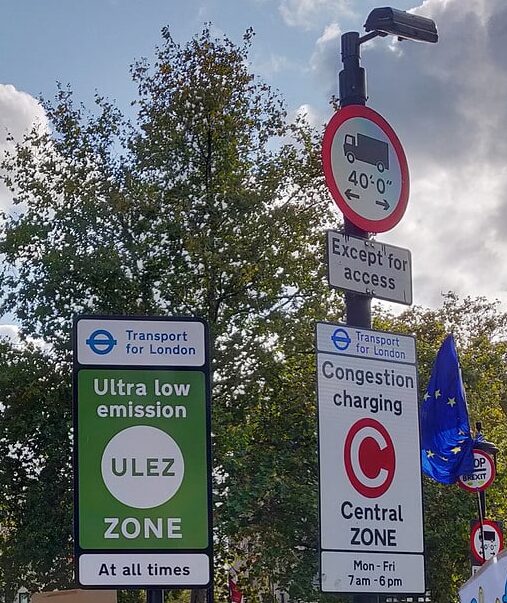
So, who do we hear from about this shocking study? Is it anyone involved in the study? Well, we do get to them eventually somewhere past the 600 work mark (you guessed it, see point five!), but the first quote we get is from Thomas Turrell, Transport & Environment spokesperson for City Hall Conservatives.
Mr Turrell goes straight on the offensive, accusing Sadiq Khan of ignoring evidence that doesn’t suit him, and repeating the mantra about Ulez being a cash-grabbing scheme. He pops up again much later in the article (after we’ve finally heard from an actual scientist) to accuse Khan of wanting to concrete over green spaces and failing to tackle the problem of car theft.
We also hear from Councillor Colin Smith, another Conservative, who hammers home the cash-grab claim, along with a sideswipe at the air quality in the tube system. We’re well past the 900 word mark before we hear from another co-author of the study (more on that in, you guessed it, point five!).
4: Overload with information
The article weighs in at over 1,100 words, or over 1,700 if you include the two additional sections describing what ULEZ is and detailing six common air pollutants. That’s well over double the wordcount in other news sources. Unfortunately, it’s now behind a paywall if you want to read it, and I certainly wouldn’t encourage you to use ethically questionable sites like https://archive.ph/ to get around that.
As well as the bloated word count, we get a map of the expansion zone, a picture of a Ulez sign in London, a poll asking you to vote on whether or not you support keeping Ulez, a map of air quality monitoring sites, nine diagrams showing various pollutant stats, a video of Sadiq Khan discussing the extension, and a link to a similar hit piece about Birmingham’s clean air zone.
The sheer length of the article allows for a brain-numbing sixty-six mostly salacious articles to pick from on the sidebar of shame, so if the minutiae of particulate matter reduction and the health implications thereof become tiresome then there’s always [celebrity name] looking [great/terrible] in [garment]! Don’t forget the pop-up ads as well of course!
5: Rely on your readership’s laziness
We have finally made it to point five. I certainly hope you read this far (without skipping), because it’s a reasonable assumption for the Daily Mail to make that most of their readers won’t make it as far as the second half of their articles. Many might not even make it past the gargantuan headline, considering the unsurprising findings of a study that showed many news stories are shared on social media without being read.
Those bold few Mail readers who dare to venture south into the lower half may find the exposition less than pleasurable. As was discussed during Emma Monk’s excellent debunking workshop at QED, the further you get down the pixel equivalent of column inches, the more likely you are to get accurate information, and that’s exactly what happens here: we hear from two of the study authors, along with details about the methodology of the study, we get their call for further action to improve air quality, we get interesting information about the types of pollutants and the harm they can do, and we get a glowing statement from a spokesperson for ‘the Mayor of London’ (presumably they can’t use Sadiq Khan’s actual name in the same sentence as something positive?).
All of that is fine and dandy, but the icing on the cake is the big reveal – that the reason there hasn’t been much impact since the last expansion is because:
“A lot of drivers upgraded to cleaner vehicles before ULEZ expansion was implemented. This shows the scheme working exactly as intended.”
It’s known as the ‘anticipation effect’, where the benefits of a policy are already seen before its formal implementation. The entire thrust of the Daily Mail article (or at least, the top half of it) was that the expansion had no effect, whereas the truth, which they themselves reveal, was that the success was realised much quicker due to a positive response from the public, who presumably bit the bullet and changed to more environmentally friendly vehicles to avoid problems when the expansion happened.
The finished article
What can we learn from this? Well, hopefully that reading articles in full is a good idea, even from the Daily Mail. It also shows the importance of checking different sources to see what’s being said about any given news item to help work towards a balanced opinion on what’s really going on. The Mail certainly isn’t the only place you’ll find biased reporting.
If it’s particularly important, and you have the time and inclination, perhaps you can take a look behind some specific claims and see whether they’re true, false, or somewhere in between.
As a parting shot, let’s think about the multiple accusations of ULEZ being a ‘cash-grab’. Clearly we’re not the only ones interested in the finances of the scheme, as can be seen by a FOI request report published by Transport for London. The TL;DR version: it cost a massive amount to implement, but the income it generates will surpass that for a few years, after which the expectation is that increased compliance will cause a rapid decline to the point that there will be no surplus. Clearly some money has been made, but you could argue that the reduction in air pollution was well worth it.
Let’s just hope they spend that money wisely – and we can be sure the Daily Mail will take them to task whether or not they do.