




As a young boy I was desperate to be a journalist, so I would handwrite magazines for my parents, sticky taping the pages together and dreaming of creating my own ‘zine. When we created a primary school one-off newspaper, I learned that my friend’s Apple Macintosh could create a publication with columns, pictures, even different font sizes – far in advance of anything we could dream of crafting on the school’s BBC Micro.
Had I been less of a teenage layabout by the time The X Files arrived on television, I might at least have imagined creating a UFO magazine, if not actually created one. Thus, hormones and indolence deprived me of the chance to become a part of the Archives for the Unexplained (AFU).
The AFU website is the online tip of a very large physical archive held by a Swedish charitable foundation, which has a collection of materials relating to UFOs and other unexplained phenomena, including the Hilary Evans Library, plus 88,000 issues of 8,000 magazines focused on UFOs from the UK, USA and around the world.

Many of these are available to download, and they range from the typewritten Flying Saucer News, (1953-1956), to the far glossier UFO Data (2006-2008). There’s also a wide range of viewpoints within the archive, and the AFU carries publications ranging from the ‘Arizona Skeptic’ and ‘British and Irish Skeptic’ (this very publication’s name when it was founded), to ‘Exopolitics Magazine’, which features the following, suggestive of an editorial line that is towards the other end of the spectrum:
That “others” exist is evidenced by the meticulous work of researchers, stretching over the last seven decades; work that leads people to consider various points of origin for what is inarguably intelligently caused phenomena; this includes the extraterrestrial hypothesis but also other explanations such as interdimensional, time travel and also spiritual explanations.
I was also left in little doubt about where the American publication Alien Digest sits, with an article called “Do we have a treaty with aliens from outer space?” from their first issue:
Sources and documents recently made public indicate aliens from other planets have had treaties and contacts with this world for a very long time throughout history…
In the past it was not hard for the aliens to get everything they wanted because they already had most of what they needed. What they did need was food, drugs, sex and slaves.
Unfortunately the aliens who concern us now, those 7 foot tall Reptoids from Draco eat humans for food and can frequently extract glandular substances and drugs from humans that will get them high, at the cost of the human’s life.
The most interesting magazines I found, often circulated by mail-order or even to limited circulation lists, are those with a genuine enthusiasm for Ufology and finding out what people are seeing when they see UFOs. Often as wary of true believers as hard skeptics, these publications posit a range of hypotheses, and are very happy to debunk as necessary, while maintaining a dedicated belief that something is going on that is worth exploring.
Particular favourites include the Merseyside UFO Research Group newsletter (MUFORG) and Merseyside UFO Bulletin (MUFOB), ultimately becoming magazine Magonia, which ran from 1979 to 2009.
The early issues of MUFORG are intriguing, with the June 1965 edition noting that it is intended for members of the group, but that this issue in particular may be of wider interest to others, who are invited to contribute their opinions relating to craters – whether naturally caused or with artificial (or even extraterrestrial) origins. The measured tone is a far cry from an article on a lunar civilisation in the very different magazine, ‘UFO Data’ (issue 16), which says of (lunar) craters:
Many debunkers will say that this is just a crater. There is nothing in existence that will leave raised soil in the center after colliding with the moon. The centers of impact craters are dug out by whatever smashed into them. The two columns near the top climb better than three-fourths of a mile. What comet or meteor would leave an indentation that looks like that? The way that these structures rise required some being to build them.
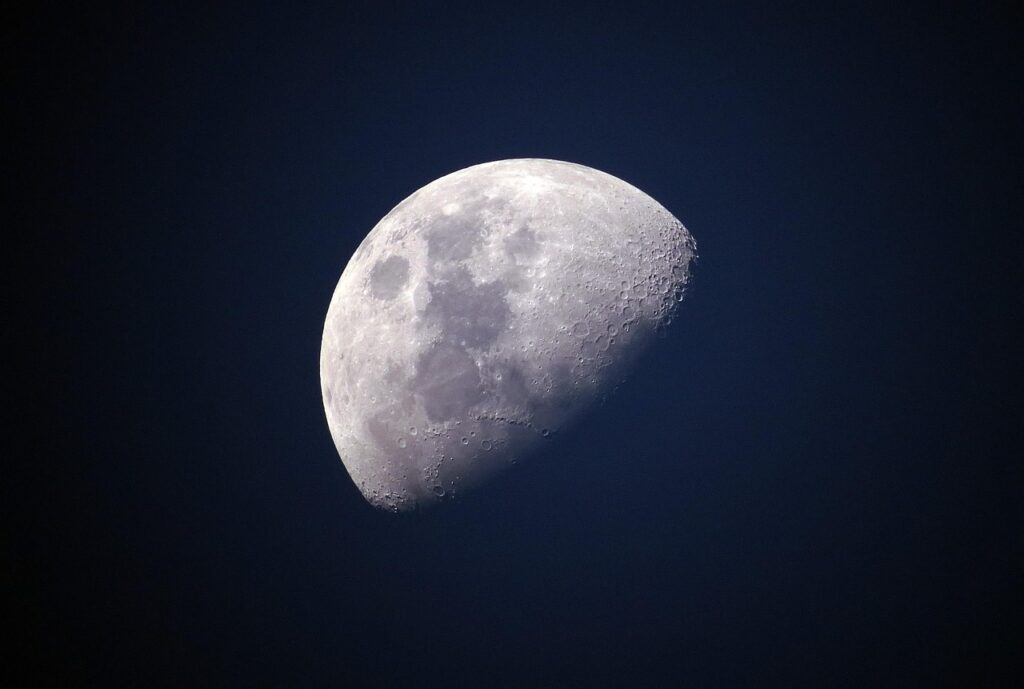
The natural explanation for this, that does not require “some being” to build them, is, of course, well understood.
By October 1967, and alongside several fact-focused reports detailing UFO sightings from Liverpool and Birkenhead to Preston and Nottinghamshire, John Harney has a long editorial that prefigures the Psychosocial Hypothesis nearly two decades before it rose to prominence in British UFO circles:
Some enthusiasts confine their attentions to the contactees and seek to interpret the messages which these people say they have received. At the other extreme, physical scientists make statistical studies of UFO reports in the hope of finding a physical explanation. In other words, most people approach the subject with preconceived theories and tend to consider only those aspects which appear to fit in with them, whilst dismissing other aspects of the subject as being untrue or irrelevant.
…it is evident that virtually all of the alleged reports of meetings with extraterrestrials are, by all normal standards of evaluation, ridiculous…
…Ever since 1947 believers and sceptics have taken the proposition that UFOs are spaceships from other planets and have attempted to prove or to disprove it. This has led to much unnecessary misunderstanding and ridicule. We are no nearer to a solution than we were in 1947. It is time to look at the problem in another way. We know that UFOs exist, but are they physical, or psychological? Do they come from outer space, or from “inner space”?
As noted by Nigel Watson in The Skeptic last year, successor publication Magonia tended towards the psychosocial hypothesis (PSH):
The PSH looks at the subject as being the product of human perceptions, or should we say misperceptions, that lead to the belief in alien invaders from outer space, ultraterrestrials, time travellers and other exotic sources ‘out there.’ The PSH is not out to prove that UFOs are real, but that they are real in terms of the impact on humanity.
As Magonia’s John Rimmer says: “The British UFO ‘community’ does operate with a considerable degree of scepticism and common-sense”. This is an unsurprising sentiment from the editor of a magazine which ran an article in its first issue called “The Ethical Ufologist”, which discusses the need to avoid harm to witnesses from an investigation and how to deal with deception when it arises.
For me, the most enjoyable aspect of reading the MUFOB and MUFORG archive issues was the glimpse into bygone community. They’re packed full of notes of wedding congratulations for members, incisive obituaries, angry arguments in the letters pages, and factional jokes, including a Dr Who reference about alien-encounter enthusiasts at a conference behaving like an army of Daleks. There is also this note regarding a certain Uri Geller:
…it is reported that Uri Geller is “working on the problem of teleporting back to Earth the camera left on the Moon by astronaut Dr. Edgar Mitchell.”
Geller is quoted as saying: “Now I don’t know when it (the camera on the Moon) will come back, but when the time is right, it will”.
The editors of this Bulletin are eagerly waiting to hear of the accomplishment of this great feat of mind over matter and of its authentication by NASA. When and if this happens, we shall start taking Uri Geller rather more seriously.
I would heartily recommend a stroll through this enormously engrossing archive for skeptics, believers and anyone with an interest in UFO history. My only warning is that you may find yourself mysteriously losing time… It can’t be that late already, I’ve only been browsing a few minutes, surely?