


I recently came across this quote by GM Gilbert, a psychologist for the Nuremberg war criminal trial of 1946:
I was searching for the nature of evil and I now think that it is rather a lack of empathy. It’s an inability to feel for another human being. A lack of empathy, a person can’t put himself in another person’s shoes. And when that happens, all of us are capable of being monsters.
Gilbert, G. M. (1947). Nuremberg Diary. New York: Farrar, Straus and Company
It made me think and consider the phenomenon of “evil”, not least in view of current politics.
The concept of “evil” is a subject where clinical science, jurisprudence, and theology seem to overlap. To understand the nature of “evil”, we must synthesise the biological “broken brake” of the brain, the psychological “dark traits” of the personality, the situational pressures of sociology, the legal definitions of intent, as well as the ancient theological struggle with the “privation of good.”
Yet such a synthesis is not free of normative assumptions. It presupposes that “evil” constitutes a coherent, cross-cultural category, rather than a term whose meaning shifts across historical, political, and religious contexts. As skeptics, we ought to question whether there is, in fact, any single nature of “evil” to be discovered at all.
Psychological Foundations
In contemporary psychology, the metaphysical concept of “evil” is usually considered as the study of antisocial personality traits. The current standard for understanding malevolent behaviour is the “Dark Tetrad”, a constellation of four distinct but overlapping personality types: Machiavellianism (manipulation), narcissism (superiority), psychopathy (lack of remorse), and sadism (pleasure in cruelty).
According to Simon Baron-Cohen, what we call “evil” is a state of “empathy erosion”. Empathy, he argues, exists on a spectrum, and when an individual’s “empathy circuit” is effectively neutralised, that person begins to treat other human beings as inanimate objects. Baron-Cohen suggests that this erosion can be “transient” (for example, driven by anger or stress) or “permanent” (such as driven by personality disorders):
Our empathy is like a dimmer switch… When the switch is turned all the way down, the person is in a state of ’empathy erosion,’ in which others are no longer seen as fellow human beings with feelings, but as objects.
From a skeptical perspective, the notion of “empathy erosion” risks becoming a circular argument. Acts are labelled “evil” because they are cruel; their cruelty is then taken as evidence of diminished empathy; and this inferred lack of empathy is subsequently invoked to explain the very “evil” it was derived from. A more robust account would require quantifications of empathy and objective distinctions between transient affective states and enduring dispositional traits.
Biological Reality
The field of neuro-criminology has revealed that many individuals who commit “evil” acts possess distinct biological markers. The prefrontal cortex (PFC) serves as the brain’s executive centre. It can be viewed as the “moral brake” that inhibits impulsive and violent urges. When the PFC malfunctions, the individual loses the ability to regulate the primitive impulses.
Adrian Raine, often cited as the father of neuro-criminology, demonstrated using PET scans that murderers – particularly “affective” or impulsive ones – show significantly lower glucose metabolism in the PFC than control subjects. This suggests that for some, “evil” may not be a choice but rather a failure of parts of the brain. As Raine writes:
Evolution has carved out two different ways of surviving and reproducing… One is the prosocial, cooperative way. The other is the ‘cheater’ strategy – the antisocial, predatory way. For some, evil is a biological niche.

At the same time, Raine admits that such findings should be understood as predisposing rather than deterministic. Reduced prefrontal activity is neither a necessary nor a sufficient condition for violence, and many individuals with PFC malfunctions never commit “evil” acts. These considerations should caution us against the impulse to medicalise moral responsibility or to construe “evil” as merely the product of a defective brain.
The Sociological Perspective
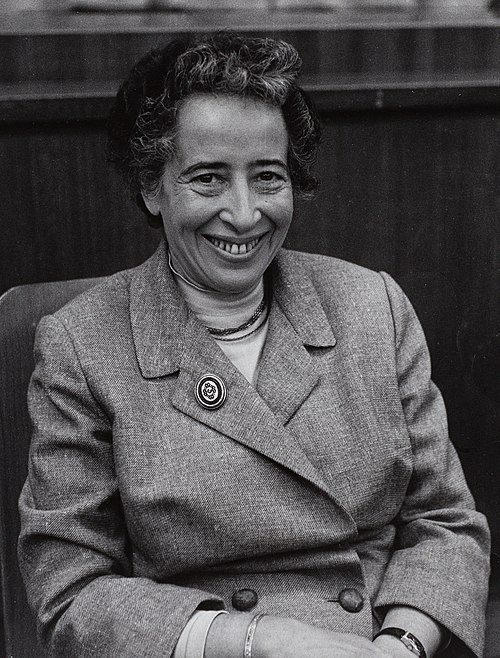
One of the most chilling perspectives on “evil” is that it does not necessarily require a “monster.” Insights from social psychology suggest that “evil” can simply be a byproduct of the system or circumstance. Philip Zimbardo’s research into the “Lucifer Effect” demonstrates how ordinary people can commit “evil” acts when placed in specific environments characterised by deindividuation and dehumanisation of the “other”.
This would concur with the observations of Hannah Arendt during the 1963 trial of Nazi bureaucrat Adolf Eichmann. Arendt coined the phrase “The Banality of Evil” to describe how systemic obedience and thoughtlessness can lead to mass atrocities. In Arendt’s view, “evil” is not always “radical” or deep-seated; it can be a shallow, bureaucratic phenomenon where individuals simply “stop thinking.” Others like Zimbardo agree:
The line between good and evil is permeable and almost anyone can be induced to cross it when pressured by situational forces.
Yet both Zimbardo’s “Stanford Prison Experiment” and some interpretations of Arendt’s work have been criticised for over-generalising from highly specific and often contested cases. Emphasising situational pressures too strongly might risk minimising the roles of ideological commitment, long-term character formation, and the persistence of individual agency even under powerful structural constraints.
The Theological Dimension
Religion provides probably the oldest explanations for “evil”, often viewing it as a distortion of the “Good.” St. Augustine of Hippo famously argued for the Privatio Boni, the idea that evil has no independent existence but is a corruption of goodness, much like blindness is a privation of sight.
In the Christian tradition, this is expressed through the doctrine of Original Sin, suggesting an inherent “bent” in human nature toward self-interest over divine love. Conversely, Eastern traditions often view evil as Avidya (ignorance) or a failure to recognise the interconnectedness of all beings. Regardless of the specific faith, theology emphasises the Will, i.e. the idea that evil is a conscious turning away from the light:
Evil has no positive nature; but the loss of good has received the name ‘evil’
Augustine of Hippo. (426 AD). De Civitate Dei (The City of God)
From a skeptical standpoint, one might question whether such considerations offer true explanations or whether they just redescribe the problem in metaphysical terms. Moreover, the history of religions demonstrates that appeals to “evil” have frequently been used to justify violence.
The Legal View
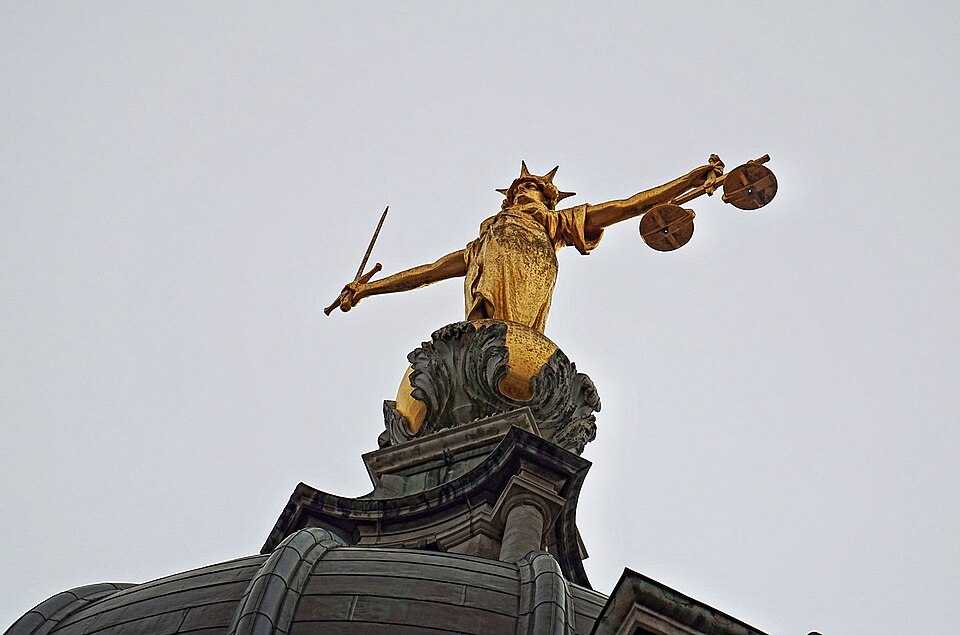
The law can serve as the practical arbiter of “evil”. It does not concern itself with the state of one’s soul, but with Mens Rea, the guilty mind. Legally, an act is “evil”, if it involves malice aforethought, a term used to describe a “depraved heart” that acts with a reckless and wanton disregard for human life.
The “M’Naghten Rules” remain the standard for determining if an individual’s biology or psychology absolves them of “evil” intent. If a defendant cannot understand the nature of his or her act, or distinguish right from wrong, the law shifts the label from “evil” to “insane.” However, for most offenders, the law assumes a capacity for choice, holding that “evil” is the deliberate decision to cause harm.
Yet legal categories are unavoidably entangled with relations of power and politics. Numerous examples exist of acts now regarded as “evil” were once legal or even mandated by the state, while those who resisted them were criminalised. Such cases suggest that juridical definitions often follow prevailing social norms and interests at least as closely as they reflect any putatively objective moral reality.
Ultimately, “evil” is best understood not as a monolithic entity or a supernatural intrusion, but as a catastrophic convergence of disparate phenomena. It is a “perfect storm” wherein biological vulnerability – perhaps a neurological deficit in empathy – meets a profound psychological detachment from the lived experiences of others. When this internal architecture is fuelled by situational pressure and codified by a recurring failure of the moral will, the result is a destructive force that transcends mere “bad behaviour.” Seen from this perspective, “evil” is the choice to subordinate the common good to the insatiable demands of the ego.
Does Donald Trump meet the criteria for ‘evil’?
In contemporary discourse, this theoretical framework finds a striking case study in the persona of Donald Trump. Consider how Trump maps onto traditional or philosophical depictions of “evil”:
- The Dark Triad: Psychologists point to a combination of narcissism (extreme self-focus), Machiavellianism (manipulation for power), and psychopathy (lack of empathy or remorse).
- Malignant Narcissism: Social scientists describe a state where the individual views any criticism as a mortal threat, leading to a “siege mentality” and a constant need to create “us vs. them” conflicts.
- Philosophical “Hollowness”: Some see “evil” not as a presence of malice, but as an absence of substance, where a leader lacks a moral core and views the world purely through a solipsistic lens (only their own needs are real).
- Moral Inversion: Ethical critics argue that Trump redefines “good” as strength or winning and “evil” as weakness or losing, effectively discarding traditional virtues like humility or honesty.
- Institutional Destruction: From a sociopolitical view, the “evil” label is applied to the intentional eroding of shared truth and democratic norms, which critics see as a desire to dismantle the structures that bind society together.
- The “Trickster” Archetype: Some view Trump’s persona as a disruptive force that mirrors mythological figures who thrive on chaos, intentionally breaking rules to destabilise the status quo.
When mapped against traditional or philosophical depictions of “evil,” Trump appears less as a political anomaly and more as a mirror to the archetypal antagonist. This alignment is perhaps clearest when viewed through behavioural and ethical frameworks that define “evil” as a specific constellation of destructive traits: the erosion of objective truth, the instrumentalisation of others, and the unapologetic pursuit of power at the cost of institutional and social cohesion.
If we consider the “evil” of antiquity as the negation of the shared reason and truth that binds a society, then Trump’s disruptions represent a modern manifestation of that ancient void. He may serve as an example of how moral failure can be institutionalised, transforming personal pathology into a broader cultural crisis.
“Evil” is a multifaceted phenomenon, a “perfect storm” where biological vulnerability, psychological detachment, and situational pressures meet a failure of moral will. Trump’s destructive traits align uncannily with these clinical and philosophical definitions. What we traditionally call “evil” is a set of behaviours characterised by the erosion of empathy and the ethical and social structures that bind humanity together.