


In recent years, as public concern over environmental issues has grown, our daily lives have become saturated with an unending stream of “eco-friendly” messages. From the coffee cups we carry each morning to clothing labels, cosmetic packaging, furniture, and countless household products, nearly every brand actively places words like “green,” “sustainable,” and “carbon-neutral” at the forefront of their marketing.
These terms appear so frequently – and with such carefully crafted placement – that they have become a kind of ambient backdrop to modern consumption. And subtly yet powerfully, they instill a sense of reassurance. Even if we had no intention of making an environmentally conscious choice, simply picking up a product labeled with such language makes us feel as though we have helped the planet, if only a little. Ordinary consumption morphs into an act of moral significance, and this engineered feeling of “doing good” leaves consumers with very little reason to question a brand’s claims.
This is precisely the point at which caution becomes necessary. Environmental friendliness has already become a valuable commercial asset in the marketplace, and brands use it strategically to gain an edge in fierce competition. Like many consumers, I too had uncritically accepted the narrative that “eco-friendly equals a good choice.” As a result, we often continue consuming without ever seeing the complex reality hidden behind these seemingly benign messages.
The deeper issue is that we act without truly understanding what the “eco-friendly” labels we trust actually mean. My own turning point came when I first encountered the concept of greenwashing – the practice in which companies deliberately present themselves as far more committed to environmental protection than they actually are. Once I became familiar with the term, it became difficult not to question whether the environmental claims woven throughout our consumer environment reflected genuine progress, or were simply the products of sophisticated branding. How many of these messages are real? And how many are carefully crafted images designed to shape consumer perception?
These questions naturally led to others: Why do companies repeatedly declare their commitment to sustainability? Why do we, as consumers, believe these declarations so readily? And perhaps most importantly, what stance should consumers take within this broader trend?
Understanding how environmental narratives appeal to our emotions, shape our purchasing behavior, and sometimes obscure reality is essential if we hope to interpret our increasingly “green-tinted” world with any degree of critical awareness.
Greenwashing
Greenwashing is the collective term for strategies that make companies appear far more environmentally responsible than they truly are. Outwardly, firms emphasise “sustainability” to help consumers feel that their choices are responsible or ethical. Yet behind this facade often lie vague or exaggerated claims, selectively disclosed information, and superficial measures that have little real impact. The positive elements highlighted by companies typically represent only a small portion of their operations, while the more significant environmental burdens remain hidden. This gap – between what is shown and what is concealed – is the central mechanism of greenwashing.
The goes well beyond misleading consumers. When companies repeatedly deploy environmental language in advertising, packaging, and brand messaging, society gradually forms an inaccurate sense of what environmental progress looks like. As these narratives accumulate, they create a comforting illusion of improvement even when meaningful change is absent. This risks diluting the urgency of environmental issues, and obscuring the work of organisations that are striving for structural, long-term solutions. Eventually, symbolic gestures begin to replace substantive action, and the “story” of sustainability overtakes its actual reality.
Once consumers believe their choices are positive, they become less motivated to verify those beliefs. This is where confirmation bias plays a powerful role. Individuals readily accept information that reinforces what they already believe to be true, while discounting information that challenges it. Over time, this bias strengthens brand loyalty: once consumers view a brand favourably, they tend to trust new eco-friendly claims, regardless of their factual basis. In other words, it is not that trust reduces skepticism – it is that confirmation bias reduces skepticism and then deepens trust, eventually solidifying into loyalty. This process widens the space in which greenwashing can operate. The moment consumers feel reassured about their choices, companies face less pressure to pursue genuine environmental improvements. In this sense, consumer comfort can function as a kind of corporate absolution rather than a driver of change.
A marketing professor who studies consumer behavior described this dynamic succinctly:
Green marketing has become a powerful brand asset. Because consumers respond positively to the language of sustainability, companies often present small adjustments as major environmental achievements. As these messages are repeated, people become increasingly satisfied with superficial changes.
Environmental storytelling has become a central strategy for building trust. The problem is that these narratives are often only loosely connected to actual environmental outcomes, yet consumers accept them at face value, reacting more strongly to comforting stories than to factual scrutiny.
The Starbucks ‘Sippy Lid’
This gap between visible sustainability and actual environmental impact is starkly illustrated in Starbucks’ 2018 “Sippy Lid” initiative. At the time, global concern over single-use plastics was sharply rising, and plastic straws had become a symbolic representation of environmental degradation. In this climate, Starbucks announced that it would eliminate plastic straws across all of its stores, and introduce a new strawless lid for cold drinks. The media quickly praised the move as a responsible decision, and many consumers embraced it as a meaningful step toward reducing plastic waste. The simple, intuitive narrative – remove straws, reduce plastic – aligned perfectly with the social mood of the moment.

Yet as time passed, this narrative began to show cracks. Subsequent analyses revealed that the newly introduced Sippy Lid actually used more plastic than the previous straw-and-lid combination. Despite being marketed as an environmentally motivated improvement, the initiative resulted in an overall increase in plastic consumption. Starbucks emphasised that the lid was made from polypropylene (PP), a material described as more easily recyclable, but this claim diverged sharply from how recycling operates in reality. Globally, plastic recycling rates remain extremely low, and infrastructure varies drastically by country and region. In other words, saying a material is “recyclable” does not guarantee that it will be recycled, nor does it justify increased plastic usage.
Even so, the initiative was widely perceived as a positive environmental change, especially because of the visibility of that change. The disappearance of straws is immediately noticeable, whereas the increased weight and plastic content of the lid is not. At the time, plastic straws had already become a potent symbol of ocean pollution – a role vastly disproportionate to their actual contribution. In this context, Starbucks’ removal of straws aligned neatly with existing public sentiment, reinforcing the impression of meaningful environmental progress. The simple act of eliminating the straw carried symbolic weight that far exceeded its material effect.
Consumer reactions at the time reflected this dynamic. One consumer told me, “When Starbucks announced it was removing plastic straws, it felt like a better choice for the environment, even if it was a bit inconvenient at first.” Another said, “The new lid just looked more eco-friendly, so I didn’t see any reason to question it.” These responses suggest that many consumers assessed the move not through scrutiny of its material consequences, but through the symbolic significance of the disappeared straw.
Ultimately, the Sippy Lid introduction reveals how the “visible change” presented by a brand can diverge dramatically from the environmental reality behind it. A combination of social atmosphere, the symbolic power of the straw, and the intuitive clarity of the narrative made the initiative appear more impactful than it was. Starbucks’ decision may have been motivated by good intentions, but the gap between its message and the actual outcome is undeniable. That gap illustrates a recurring problem in contemporary green marketing: symbolic gestures often precede, and sometimes overshadow, substantive environmental results.
Humans are prone to assuming that highly visible changes correspond to greater positive impact – an example of visual cue bias. Because the plastic straw had already become a cultural symbol of pollution, its removal was readily interpreted as an environmental good, regardless of the actual outcome.
Consumer reactions further illustrate this dynamic. Many reported that Starbuck’s Sippy Lid simply “looked more eco-friendly”, and that they assumed a large corporation would “do the right thing”. These responses were driven less by data and more by a blend of brand trust, a preference for simple solutions, and preexisting beliefs about what counts as environmentally responsible.
Ultimately, the reason the Sippy Lid was widely accepted as a “positive change” had little to do with any real reduction in plastic. It resonated because it fit seamlessly into a narrative consumers were already primed to believe. The company’s messaging and consumers’ psychological tendencies reinforced each other, allowing a purely symbolic gesture to be perceived as substantive progress. This illustrates how easily the language of sustainability can obscure the very environmental problems it claims to address.
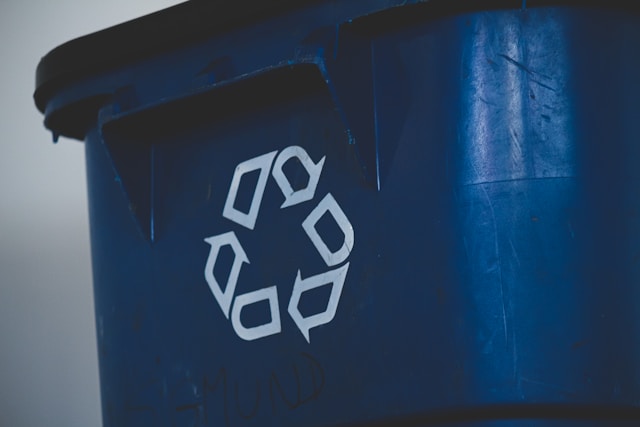
Image vs impact
The Starbucks case is by no means an isolated exception. Among today’s corporate “eco-friendly” claims, image often precedes – and sometimes even replaces – any genuine environmental impact. The controversy surrounding the Sippy Lid offers a vivid illustration of this reality. It shows just how easily a well-packaged narrative can be accepted as truth, and how symbolic gestures can be mistaken for substantive progress. If a mere change in lid design can create such a powerful illusion, how often are the “green transitions” that consumers believe in actually occurring in meaningful ways?
This issue exposes a central contradiction within contemporary sustainability discourse. The more severe environmental problems become, the more both companies and consumers gravitate toward simple, reassuring explanations. Corporations can earn a positive reputation without implementing deep or difficult changes, while consumers can feel they are contributing to environmental protection through ordinary consumption alone. When these expectations reinforce one another, a system emerges in which belief takes precedence over verification and image becomes more important than measurable outcomes.
But genuine sustainability cannot be achieved through comforting stories alone. What truly matters are numbers, data, and transparent information. We must examine whether “recyclable” materials are actually being recycled, and determine whether visually noticeable changes translate into real environmental benefits. Because it is so easy for companies to make eco-friendly claims, consumers must resist the temptation to accept such claims at face value and instead adopt a more questioning, evidence-driven mindset.
Ultimately, the challenge before us is not simply to identify and criticise instances of greenwashing. It is to cultivate a culture that refuses to settle for superficial messages. We need attitudes that prioritise accurate information over convenient narratives, and tangible impact over cosmetic change. Only then can the term “sustainability” regain its genuine meaning.
What we need now is not yet another polished environmental slogan, but a more honest truth.
References
- Why is polypropylene (PP) so difficult to recycle? CleanTech.
- Starbucks’ new straw-less lids are not a win for the environment. The Crimson White.
- Starbucks and its relationship with greenwashing. The Marketing Magazine.
- Starbucks to ditch plastic straws in push for straw-free lids. CNN Business.