




Italians hold many curious superstitions. The rulebook goes like this: never leave an umbrella open indoors, spilling salt brings incredible misfortune upon you, and you should eat lentils on New Year’s Eve if you want to attract good luck. However, none of these beliefs pose an actual threat to the country’s political well-being.
The really dangerous superstition is the conviction that their vote has no impact on the political outcome. And it isn’t just a fringe idea: two-thirds of Italian citizens are certain that important decisions are taken elsewhere, behind closed doors.
The rhetoric of “powerful forces” plotting in the shadows to impose their will over democratic institutions through bribery, sabotage and opaque processes has circulated around the country since the 1980s. This climate of profound disillusionment was arguably sustained by real crises, such as the uncovering of the P2 Masonic lodge. The clandestine organisation, which implicated some of the leading figures of the era, was found guilty of a series of crimes and subversions aimed at overthrowing the nation. Some of the bloodiest events in Italian history have been traced directly back to their machinations.
The suspicion, however, endured. While the terminology of “powerful forces” was once associated with specific individuals, its boundaries have become increasingly fuzzy over the years. It now encompasses major institutions like the European Central Bank and the Church, as well as lobbies and “hidden elites” interested in sabotaging the country. Today, with no evidence of a resurgence of the ploys of the past, this lingering political mistrust delegitimises the very existence of a functioning democracy, leading down a treacherous path from pure concern towards social pseudoscience.
As Andrea Alemanno, head of public affairs and corporate reputation at Ipsos, puts it:
Conspiracy theories stem from the fact that in Italy many of the mysteries and scandals that shook the country have never been solved… The mysteries of this country fuel populism and conspiracy theories, but above all, they fuel a distancing not so much from politics as from active participation. And with growing abstentionism, not only do people not feel represented, but they also feel entitled to criticise because they didn’t vote for the current leaders. This is why no government in Italy has ever won re-election.
The deep-seated distrust that many Italians harbour towards the democratic system keeps voters away from the ballot box. A recent survey found that 50% of eligible Italian voters choose to abstain, with 10% citing the “lack of clarity and credibility of the electoral system” as the main motivation behind their decision. But this structural abstentionism guarantees election results that are not representative of the population’s will, thus reinforcing their initial belief that the system is rigged. It ensures the realisation of a self-fulfilling prophecy, ultimately leading to a lethal erosion of civic life.
Abstentionism has been relentlessly on the rise in Italy since 2006. After 2013, it has become the largest “party”, representing the most common choice among the electorate. At the 2024 European Parliament elections, the lowest voter turnout in the whole Republican history of the country was registered.
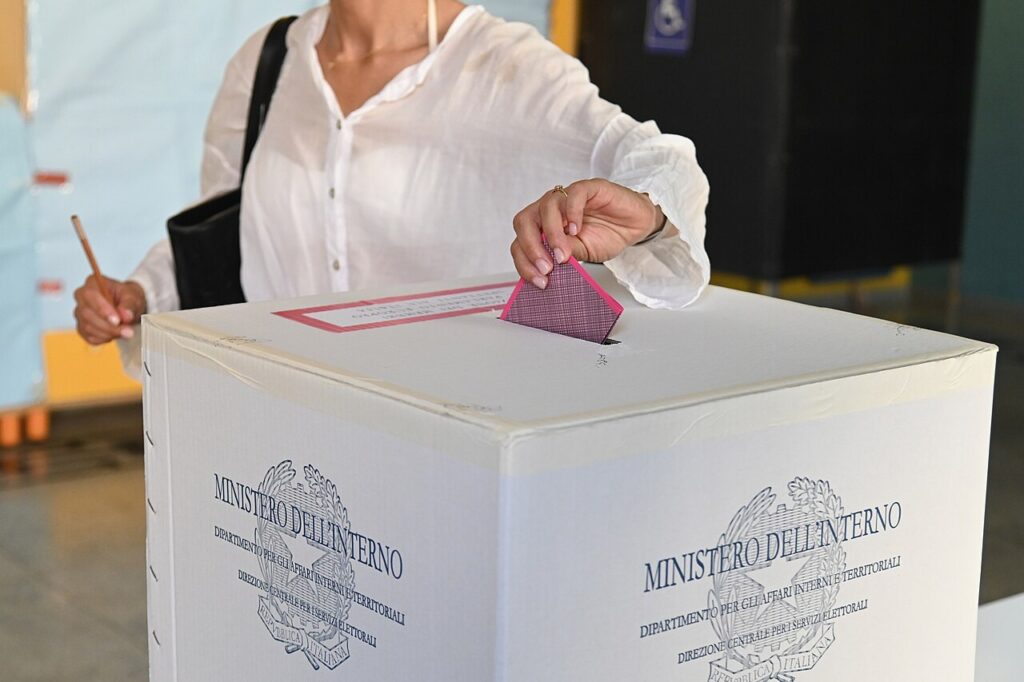
Although it would be easier to think of the non-voting segment of the country as a single, cohesive party – as it is often referred to by news outlets – this image is far from reality. Abstentionists are not a static bloc; their composition changes from one election to the next. Some have never participated since becoming eligible, while others may pick and choose which elections to vote in. The choice to not participate in the polls can also be ascribed to different reasons: some abstain to manifest their disappointment with the candidates; others to express their disdain for the political scene, viewed as plagued by corruption and scandal; and others report feeling exhausted by the continuous political turmoil and failures.
While non-voters are an ever-changing group and are not bound by a common political interest, they often belong to the same socio-economic categories. Their lack of participation, consequently, has the harmful effect of eroding the quality of democracy itself. This results in the systemic exclusion of younger people, the less educated, the economically disadvantaged, and other marginal groups from the process of democratic representation.
Moreover, Andrea Alemanno explains, it means that whoever wins will be governing with a minority mandate:
Although Giorgia Meloni is the current Prime Minister, only 30% of Italians voted for her, while 70% did not. In a system such as the Italian one, initially designed to have broad consensus, the current situation clearly highlights the challenges that the democracy is facing. The eventual winners are faced with a country that is neutral but potentially hostile to them. As soon as they make a mistake, everyone will promptly turn against them, even those who didn’t vote for anyone.
The relationship between conspiracy thinking and political paralysis is more complex than it might initially appear. At first glance it is evident that Italian citizens are engaging in a self-destructive political act. Their belief in conspiracy theories provides a convenient mental shortcut that justifies inaction; yet, this lack of participation only corroborates their suspicion that crucial decisions are taken elsewhere by vague entities working in the shadows.
“The phenomenon of abstentionism in Italy is a recent one, while conspiracy theories are nothing new,” Alemanno told me. “Twenty years ago we reached one of the highest levels of voter turnout in history with the clash between Prodi and Berlusconi: almost 80% of people voted, and the election was decided by a difference of 23,000 votes between the two coalitions. Is it because twenty years ago there were no conspiracy theories circulating? No, there were countless conspiracy theories.”
According to Alemanno, what changed between then and now is the weakening of intermediary bodies and political parties throughout the West, particularly in Italy:
There are no longer any entities that mediate, that carry out interest aggregation; or there are fewer and fewer of them, and as a result, there is no one who can guarantee voters to be on their side. When bombs exploded in the 1970s, Catholics knew who was on their side, workers knew who was on their side. It may or may not have been true, but they had a sense of belonging, they had someone they trusted who would try to understand the situation better and avoid negative consequences for them, their families, their social group, and their sphere of interest as much as possible. All of this has, as of now, disappeared.
Therefore, conspiracy theories have gained more traction than ever before, precisely because they fill a void. “They are all that remains,” argues Alemanno. “They are not countered by a more rational narrative, one focused on defending its electorate’s interests, which previously managed to absorb them. In the past, I could think that there was a ‘Great Old Man’ behind the terrorist events of the 70s and 80s, but I would vote for the Communist Party because I was a blue-collar worker, and it promised to defend me from American interference, from the CIA, and from the P2 Masonic lodge. Today, who is going to take my side against these threats?”
In 2024, the political engagement rate among Italian citizens has reached an all-time low. A recent study found that one third of the population never even broaches the subject of politics.
This decline in civic action is particularly puzzling in today’s world, where information and resources are so easily accessible. Social media platforms bear significant responsibility: even though they offer a handy source for keeping up with the political scene, they also facilitate the escalation of “filter bubbles”. This environment fosters the rapid expansion of dangerous ideas. Algorithms trap users into vicious cycles, luring them in through content that satisfies their confirmation bias and validates their convictions.
One other problem in contemporary politics and elections is the excessively confrontational manner in which they are discussed. The oversimplification and extreme polarisation of messages cause many people who do not hold extreme beliefs to feel distant from both sides, and therefore abstain, Alemanno explained. “And this mainly has to do with the fact that they do not have a mediator who interprets their point of view. If everything is polarised but I am not, how can I take a stand? I need someone to show me the way, but everything is reduced to a fight against the opposing parties”.
Against this backdrop, it’s no wonder that conspiracy theories serve as a get-out clause for citizens and politicians alike. In the midst of economic instability and political volatility, coupled with the erosion of traditional mediating bodies and increasingly extreme political messages, conspiracy narratives serve as the perfect psychological fillers.
When citizens are overwhelmed with political communications or commentary, resorting to a fatalistic outlook on the situation is the most convenient way out. Instead of expending cognitive energy in trying to understand the complexities of modern society, it’s easier to blame a single, vaguely identified evil force. Conspiracy thinking allows us to synthetise the harsh reality (where systemic institutional failure might be caused by varied issues, such as bureaucratic inefficiency or persistent regional disparity) into a more digestible narrative. Inaction thus appears as the only reasonable choice, since any effort seems futile against such powerful enemies.
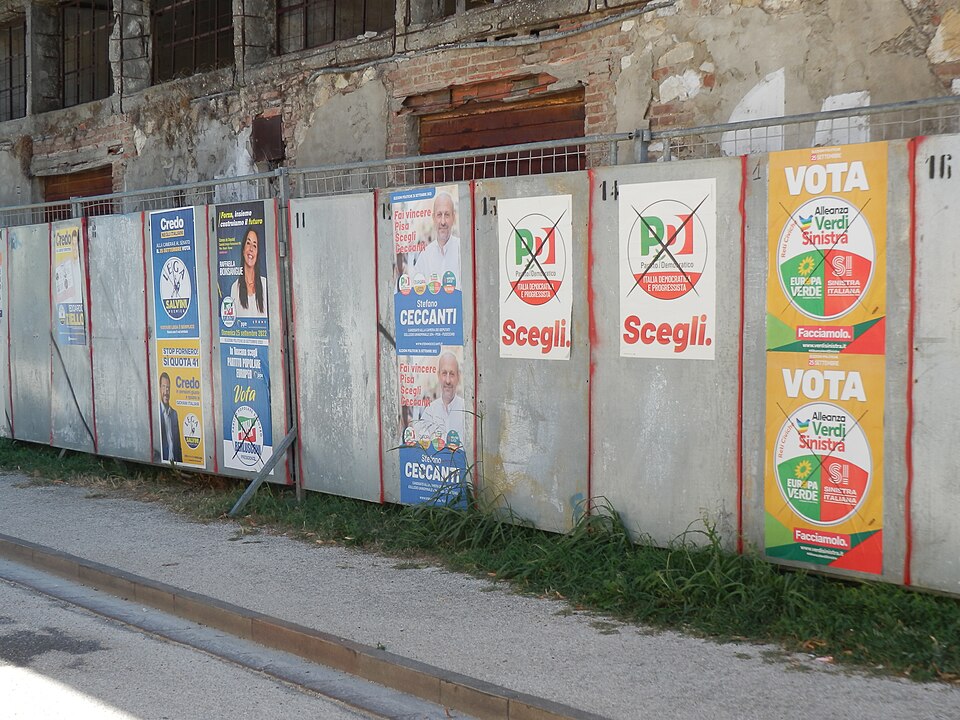
Different age groups process this feeling of powerlessness in their own unique ways. Younger people exhibit increasing disinterest in politics due to their lack of familiarity with democracy (considering that civic commitment is no longer being taught in schools). Through the lens of the “powerful forces” rhetoric, they feel justified in not seeking out information on their own. Middle-aged people feel overall disappointed by the current political situation and voice their opinion through abstention. Older people, instead, use non-voting as a specific protest against their former party, which they believe has lost its ability to represent them.
Unfortunately, this only strengthens civic apathy, which is profoundly detrimental to the welfare of the nation’s political infrastructure. Democracy is fundamentally rooted in trust; if its own citizens consistently doubt and degrade the system because they perceive it as failing, then it is unlikely it will ever function properly.
This is not to suggest organisations and elites intent on imposing their will on the Italy’s institutions no longer exist, or will stop existing in the short-term. However, the nation has taken significant steps to mitigate secrecy. The formal structure of the Italian state is legally obliged to repudiate total secrecy: as of 2013, transparency is a legal requirement which mandates specific public disclosure for the prevention of corruption.
As the state moves towards increased transparency and requires honesty from the entirety of its public administration, if citizens fail to take the matter into their own hands by voting to express their will, the final results will never be representative of the entire population. This guarantees that the interests of the active minority overrule those of the abstainers. By abstaining, non-voters are creating fertile ground for what they believe to be organised groups and lobbies to impose their will more easily.
Believing in conspiracy theories means not merely recognising that bribery and corruption might still exist, but bypassing legitimate criticism to identify a single, faceless enemy without a precise goal. It is not a valid critique of the country’s political situation but, rather, promotes a harmful, self-reinforcing mechanism of social pseudoscience. It relies on terminology dating back to the 80s to evoke the cognitive comfort of having a conviction to hide behind.
Before embracing political fatalism, we must ask ourselves whether the system is truly faulty. If it is convenient to believe so because grappling with the complex realities of the everyday world has become increasingly wearisome, there’s still hope for change. After all, no situation is without remedy.
References:
- I tanti perché dell’astensionismo: dal non sentirsi rappresentati al considerarlo una protesta politica – Vita.it
- Cosa sono esattamente i “poteri forti”? | Wired Italia
- ArchivioAntimafia – P2
- Politica: il 50% degli elettori è astensionista. Dal 2015 è fuga dalle urne – La Stampa
- In Italia l’affluenza più bassa nella storia repubblicana. Calo nell’Ue
- Com’è cambiata l’affluenza alle elezioni in Italia | Pagella Politica
- La rivista il Mulino: Gli astensionisti
- L’astensionismo e il partito del non voto – Openpolis
- Astensionismo, tre italiani su dieci sono poco o per niente interessati alla politica. Bocciati parlamentari e partiti, meglio i sindaci – Il Sole 24 ORE
- Elezioni Europee 2024: i risultati elettorali e le analisi post-voto di Ipsos.
- Il grande vecchio | Podcast on Spotify
- Sempre meno italiani si interessano di politica: cosa dicono i dati ISTAT
- Complottismo: origini, manifestazioni e psicologia