




An important milestone on astrology’s way to becoming a pop-culture phenomenon in the 20th century (as opposed to a niche interest like theosophy or other forms of occultism) was the 1930 publication of an analysis of the birth chart of the newborn Princess Margaret (1930–2002), the only sibling of the future Queen Elizabeth II, by the British newspaper Sunday Express.
Reminiscing a few years later, the author of the analysis, the astrologer R. H. Naylor (1889–1952), didn’t find himself encumbered by undue modesty. He is quoted thus in Kim Farnell’s “The True History of Sun Sign Astrology”:
In 1930 I commenced a series of Astrological articles which have entirely altered the orientation of the public mind towards Astrology. I am aware all this sounds egotistical and perhaps boastful, but it so happens it is true.
Naylor, in his reading of the newborn princess’ stars, offered some general remarks about how the royal baby would “share certain basic characteristics common to all people born in the present month”, an indirect nod to the sun-sign astrology prescribed by another seminal British astrologer, Alan Leo (1860–1917). Leo was the creator of the assembly-line horoscope, in which the astrologer keeps prewritten paragraphs with stock interpretations for the positions of planets etc. and produces ‘personalised’ readings by joining them according to data furnished by the client. He also went on to champion another work- and time-saving strategy: the absolute predominance of the sun sign, which allowed astrologers to mass produce readings by reducing the public to 12 self-contained categories.
When Naylor brought astrology into the British press, the system was still in its early stages. His “Baby Margaret” column offered predictions and astrological advice for people who had birthdays in the week following the publication. For instance:
It’s not particularly lucky to have your birth anniversary fall on Tuesday, August 26, this year. Progress will be rather slow, probably through a failure to grasp opportunities offered. Young folk will suffer from irritating restraint on the part of their seniors. People of mature age, on the other hand, will have to make sacrifices in the interest of the younger generation.
It would be hard to find a better invitation to exercise personal validation, a process in which people interpret generic utterances as highly personal and specific: several of those who were accused, in such a shotgun fashion, of “a failure to grasp opportunities offered” would have very different, and very particular, “opportunities” in mind, and many would feel compelled to compliment the astrologer on his perspicacity. It is also a very good prefiguration of the kind of language that would later become typical of the sun-sign newspaper column.
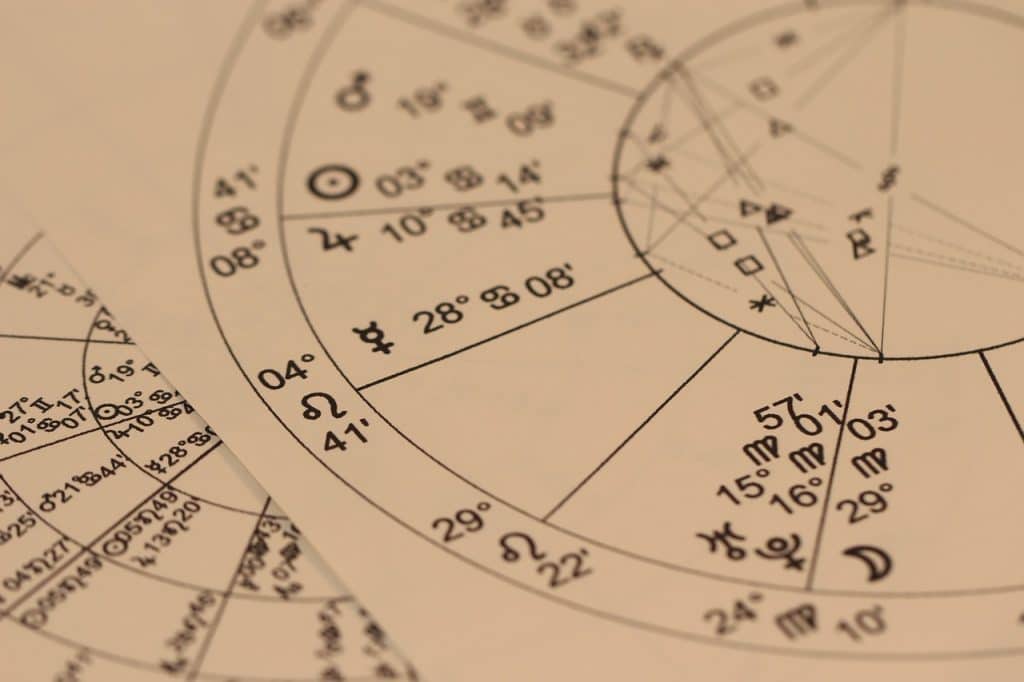
And what about the predictions for the newborn princess? Nicholas Campion, in his two-volume history of Western astrology, singles out one of them as an undisputed astrological triumph, “simple” and “effective,” a “successful forecast”. The prediction was that “events of tremendous importance to the Royal Family and the nation will come about near her seventh year (1937)”.
Notice the open-endedness: “tremendous importance” may fit any number of events, from the birth of a child to a marriage, a scandal, serious illness of some sort, and even suicide or murder. “Near” 1937 is as fuzzy a timeframe as it can be: one might argue that anything of royal importance happening between 1935 and 1940 would satisfy it.
In actual events, in December 1936 King Edward VIII (1894–1972) abdicated the throne to marry the American divorcée Wallis Simpson (1896–1986), making Margaret’s father the new king of England, George VI (1895–1952). It was the greatest scandal in the history of the British monarchy before the recent events involving former-Prince Andrew.
Here we find another staple of the astrological way to describe the future, a prophecy that is useless until after the fact it supposedly predicted. Once distilled to its core assertion – “something very important for the royal family and the nation will happen between 1935 and 1940” – the prediction becomes thin, unsubstantial, almost ethereal; the number of events that could be retrofitted to satisfy it boggles the mind. For instance, if the abdication hadn’t happened, the start of World War II in 1939 could easily have been recruited to make it “true.”
Anyway, Naylor’s knack for saying useless things that sounded like successful predictions – even when they failed – turned astrological advice into circulation steroids for newspapers. In his memoirs, the journalist Arthur Christiansen (1904–1963), who was in charge of editing Naylor’s columns, wrote that:
Naylor and his horoscopes became a power in the land. If he said that Monday was a bad day for buying, then the buyers of more than one West End store waited for the stars to become more propitious. Gradually, of course, every newspaper published a horoscope, and you paid your money and bought and sold from Monday to Friday according to which prophet you followed.
Christiansen, curiously, didn’t consider Princess Margaret’s birth chart a great triumph. Focusing on the rosy predictions for her romantic life and contrasting them with reality – the princess was impeded from marrying the man she really loved and forced into an unhappy relationship marred by scandal and infidelity – the journalist commented: “How wrong can you be!”
What Science Says About Astrology by Carlos Orsi is out on May 19th, published by Columbia University Press.